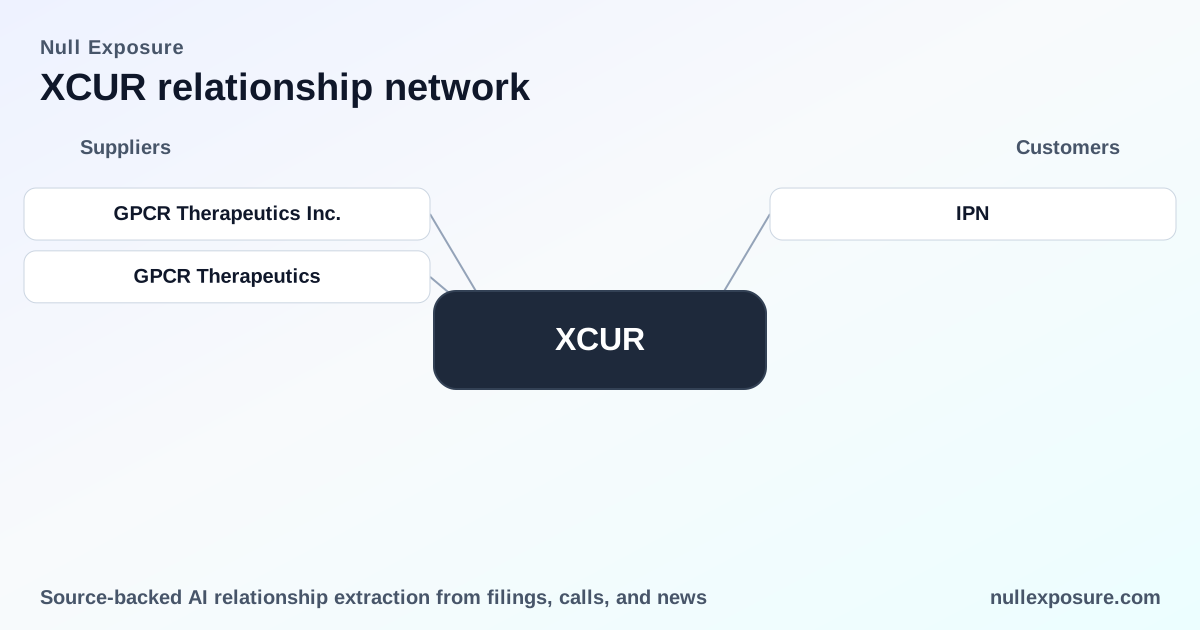
Exicure (XCUR): Licensing-first biotech with concentrated, non-recurring revenue levers
Exicure develops therapeutics built on its spherical nucleic acid (SNA) platform and, as a clinical-stage biotech, monetizes primarily through licensing, collaboration receipts, and opportunistic asset sales rather than product revenue. For investors and operators evaluating XCUR customer relationships, the practical takeaway is clear: revenue is episodic, concentrated, and driven by a small number of intellectual property transactions and licenses rather than recurring commercial sales.
If you want a concise, relationship-driven feed for deal diligence, visit https://nullexposure.com/ for curated signals and primary-source links.
What the relationship map means for valuation and risk
Exicure’s relationship and contract signals describe a small, lean commercial footprint anchored on IP transactions. From the evidence available, characterize the operating model as follows:
- Contracting posture: licensing-first. Multiple excerpts describe patent license agreements and upfront cash payments; the company functions as licensor in at least one named transaction. Company filings from 2024 document patent license agreements and associated revenue recognition.
- Revenue concentration and immaturity. The business operates as a single biotechnology segment and reported that its revenue in a year came solely from one patent license agreement, indicating extreme concentration of revenue sources.
- Non-recurring and modest materiality. Upfront payments recorded (for example, $500,000 recognized on execution of a licensing agreement) and the company’s own description of modest royalty entitlements indicate these flows are not material to enterprise scale.
- Spot monetization events supplement licensing. The company has recognized other income from discrete sales of IP and samples (e.g., $1.5 million and $637,000 events in quarterly disclosures), signaling that one-off asset sales are part of the monetization playbook.
- Spend-band and contract size signal mid-range licensing economics. Evidence consistently places upfront amounts in the $100k–$1m band for recorded license payments.
- Clinical-stage balance sheet and market profile amplify execution risk. Public metrics show no recurring revenue TTM, negative profitability, and high trading volatility (beta above 3), which means relationship execution and milestone realization are central to any rerating.
These dynamics matter for investors: future cash flow is binary and event-driven, so valuation depends on the probability and timing of successful partnerships, milestone receipts, or an eventual product commercialization path.
Relationships called out in market coverage (what to know, one-by-one)
IPN — media shorthand for Ipsen collaboration impact
An AskTraders piece (March 10, 2026) notes that Exicure attributed higher reported revenues in FY2022 to a non-cash revenue item of $2.1 million tied to its collaboration with Ipsen Biopharm Limited (IPN). This mention reflects an accounting recognition that materially affected historical topline presentation for that period. (Source: AskTraders, March 10, 2026.)
Ipsen Biopharm Limited — collaboration produced a non-cash accounting item
According to the same AskTraders article (March 10, 2026), Exicure’s collaboration with Ipsen Biopharm Limited generated a $2.1 million non-cash revenue entry in FY2022, which the market treated as a transitory boost to reported revenue. That collaboration illustrates how strategic partnerships can create headline revenue effects without creating durable commercial cash flows. (Source: AskTraders, March 10, 2026.)
(Note: both entries in the coverage reflect the same underlying news item and accounting recognition; they are reported here individually because they appear as separate relationship records in the available results.)
Named license counterparties in company disclosures: Bluejay Therapeutics
Beyond media coverage, company filings in 2024 explicitly document a patent license agreement with Bluejay Therapeutics, Inc., under which Exicure granted Bluejay an exclusive hepatitis-field license and recognized an upfront payment of $500,000 upon execution; the agreement positioned Bluejay as the licensee and Exicure as the licensor. This is an active, contractual revenue channel that fits the company’s licensing-first model. (Source: Exicure filings, February 5 / January 28, 2024 disclosures.)
How these relationships shape strategic upside and downside
If you are evaluating Exicure from an investor or operator lens, weigh these implications:
-
Upside drivers
- Successful progression of partnered programs could convert license and milestone frameworks into material cash receipts; the company’s IP is the lever for value realization.
- Opportunistic IP sales or sample monetization can provide intermittent capital inflection points that extend the cash runway.
-
Downside and risk factors
- Concentration risk: the company has acknowledged revenue solely from a single license in a reporting year; reliance on a few counterparties creates binary revenue outcomes.
- Non-recurring accounting effects: headline revenue swings (like the $2.1M non-cash item tied to Ipsen) can mislead short-term comparatives without changing underlying commercial prospects.
- Modest contract economics: disclosed upfront payments in the $100k–$1m band and expectations of modest royalties mean that scale-up depends on many successful deals or large downstream milestones.
- Liquid and investor profile risks: small market capitalization, negative margins, high beta, and low institutional ownership amplify market volatility and execution risk.
Quick due-diligence checklist for relationship evaluation
- Confirm which licenses include downstream milestones or royalties versus one-time payments. Company filings show both models in XCUR’s activity.
- Reconcile reported revenue items (cash vs. non-cash) to understand runway impact — the Ipsen-related $2.1M was non-cash in FY2022.
- Map counterparties: identify which partners are development-stage biotechs (e.g., Bluejay) versus established pharma collaborators (e.g., Ipsen).
- Track the cadence of asset sales and sample sales as a supplemental capital strategy; filings cite discrete other-income events of $1.5M and $637k in separate quarters.
Final read: operational posture and investor action
Exicure is a clinical-stage, licensing-centric biotech whose commercial footprint is narrow and event-driven. For investors the firm is a classic high-volatility, binary-outcome name: upside from successful partner development or milestone captures; downside from the lack of recurring cash flows and high revenue concentration. For operators and deal teams, the company’s playbook is clear—monetize IP through exclusive licenses and selective asset sales, while managing expectations around materiality.
For a consolidated view of Exicure’s partner signals and primary-source links to filings and market commentary, consult https://nullexposure.com/ — it streamlines the relationship-level evidence that matters for valuation and diligence.