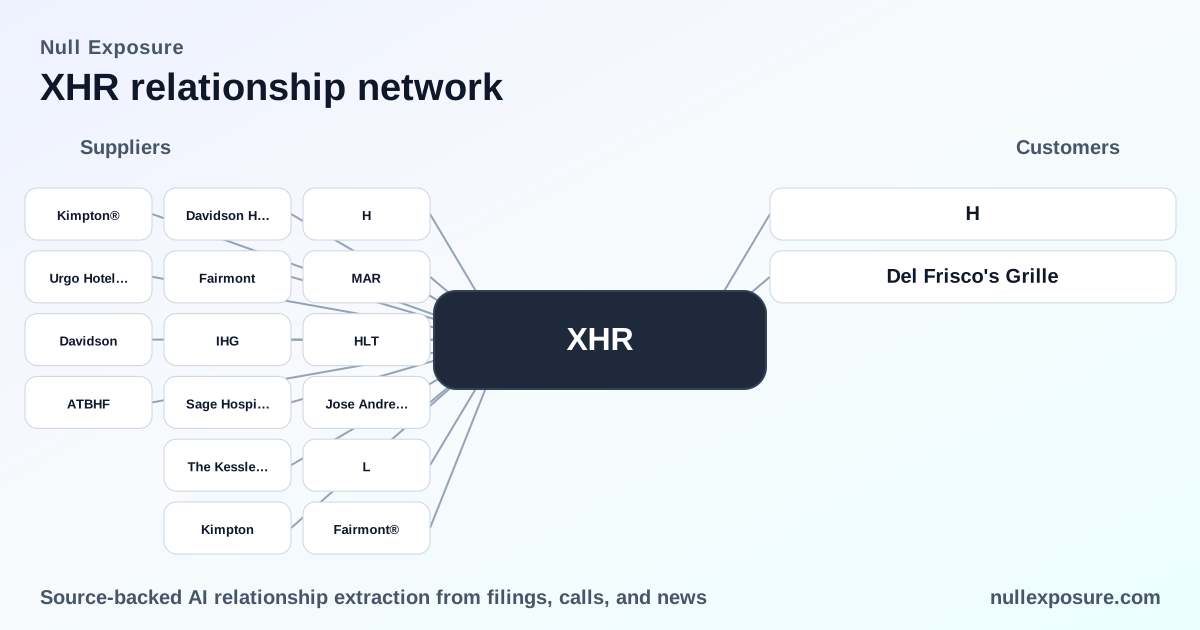
Xenia Hotels & Resorts (XHR): Customer relationships that reveal an asset-rotation REIT with landlord economics
Xenia Hotels & Resorts is a self-managed REIT that owns upscale and luxury hotels concentrated in the top 25 U.S. lodging markets and key leisure destinations. The company monetizes through property-level cash flows and structured leasing to its taxable REIT subsidiary (XHR Holding), with periodic asset acquisitions and dispositions driving returns and balance-sheet flexibility. For investors, the critical lenses are lease-derived rents, asset concentration in premium markets, and an active asset-rotation strategy that directly shapes counterparty profiles and revenue predictability. For further relationship mapping and counterparty intelligence, visit https://nullexposure.com/.
How Xenia’s customer posture shapes valuation and risk
Xenia’s operating model combines property ownership with intra-group leasing and external third‑party relationships. Several company-level signals from public disclosures and news coverage clarify that posture:
- Contracting posture is landlord-centric. Xenia states that it leases hotels to XHR Holding, Inc. and its subsidiaries and treats payments from TRS lessees as rents from real property, which translates into predictable, lease-based cash flows rather than pure operating income volatility.
- Geographic concentration is material. The firm targets the top 25 lodging markets and key U.S. leisure destinations, a concentration that supports premium RevPAR potential but increases sensitivity to regional downturns and demand shocks.
- Business model maturity is consolidated. Xenia reports a single reportable segment—investment in hotel properties—indicating a mature, asset-ownership business that centralizes risk and cash-flow drivers at the property level.
These company-level constraints imply high criticality of property-level tenants and counterparties: tenants and brand partners that influence room rates, occupancy, and ancillary revenues are central to Xenia’s valuation.
What recent relationship mentions reveal (full coverage)
Below are concise, plain-English summaries of every customer relationship mention recovered in the recent results set. Each item is rendered as a discrete relationship note with the source of the disclosure.
H (ticker H) — Hyatt as a bidder for Kimpton portfolio (news mention)
Hyatt Hotels Corp. emerged as a bidder for a portfolio of Kimpton hotels owned by Xenia, signaling that Xenia’s Kimpton assets were in play for strategic sale or brand transfer. This item was reported by View from the Wing on March 10, 2026 and is recorded under FY2019 context in the relationship dataset, indicating the transaction discussion relates to previously held Kimpton properties. According to the View from the Wing article (March 2026), Hyatt’s interest underscores market appetite among major operators for Xenia’s boutique assets.
Hyatt Hotels Corp. — reiterated bidder mention (news mention)
A second entry duplicates the Hyatt bidder reference from the same View from the Wing coverage, confirming market attention on the same Kimpton portfolio and reinforcing the signal that Xenia executes asset rotation where branded operators are natural buyers. The March 10, 2026 report places the competitive dynamic in the public domain and highlights the strategic pathway for Xenia to realize value through selective disposals to large hotel operators.
Del Frisco’s Grille — leased restaurant asset within an acquisition (news mention)
Xenia’s $53.5 million acquisition included a restaurant tenant that is leased and operated as Del Frisco’s Grille, demonstrating that Xenia’s property-level ownership sometimes includes third‑party commercial tenants that augment hotel site revenue. Hotel-Online reported this transaction detail in March 2026, noting the leased frontage on Peachtree Road and the role of leased restaurant operations in the economics of the acquired asset.
Key takeaways for investors from the relationship map
- Asset rotation is an explicit monetization pathway. Interest from Hyatt for Xenia’s Kimpton portfolio and reported disposition activity signals a deliberate strategy of selling assets to branded operators to crystallize gains. This dynamic supports capital recycling and portfolio optimization.
- Lease cash flows dominate revenue character. The firm’s leasing arrangement with its TRS and the presence of third‑party tenants like Del Frisco’s Grille indicate that a meaningful portion of cash flow sits in contractual rents and property leases rather than purely in hotel operating margin.
- Counterparty quality and brand relationships are material. Deals with major operators and national brands both enhance property valuations and substitute direct operating volatility with more predictable landlord income streams.
Risk and opportunity implications tied to these relationships
- Risk: Concentration risk in top markets raises exposure to demand cyclicality and pricing pressure in key corridors. A concentrated set of high-value properties enhances upswing capture but amplifies downside.
- Risk: Counterparty dependency on TRS leasing and a small set of brand partners creates single-point pressures if tenant economics shift or brand franchising terms change.
- Opportunity: Strategic dispositions to large operators (as evidenced by Hyatt interest) enable Xenia to convert illiquid hotel equity into redeployable capital, improving return on invested capital when executed against market windows.
- Opportunity: Value capture from ancillary leased assets—restaurants and retail frontage—adds non-room revenue and strengthens property-level cash flow resilience.
What to monitor next
Investors should watch for three signals that flow directly from the relationship activity above:
- Announced dispositions or sale contracts with large operators such as Hyatt and the realized proceeds and cap rates on those sales.
- Lease renewal terms with XHR Holding and any adjustment to the intra‑group TRS structure that would change rent recognition or cash flow timing.
- Performance and leasing status of ancillary tenants (restaurants, retail) that contribute to site-level NOI.
For a structured view of counterparties and to model potential disposition outcomes, visit https://nullexposure.com/ for deeper relationship analytics and deal-tracking.
Bottom line
Xenia runs a landlord-first, asset-rotation REIT model focused on premium U.S. lodging markets. The reported relationships—Hyatt’s bidding interest in Kimpton assets and third-party tenants such as Del Frisco’s Grille—confirm an operating model that blends stable lease income with opportunistic sales to strategic operators. For investors, this combination creates a hybrid risk-return profile that rewards careful monitoring of counterparty deals, lease structures, and regional demand trends.