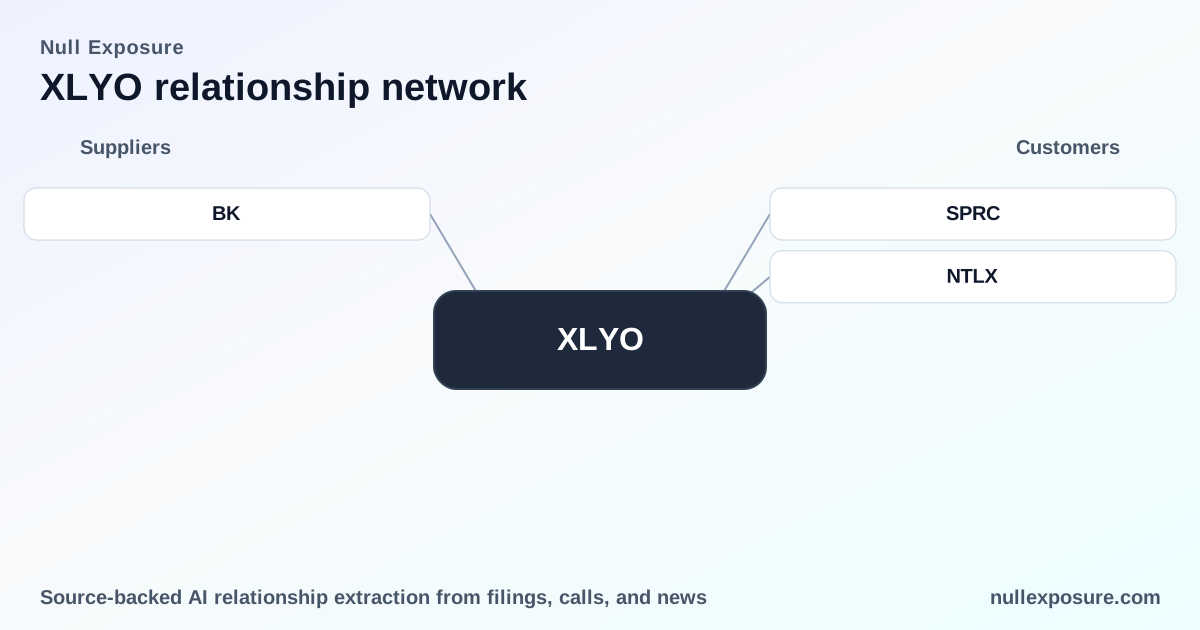
Xylo Technologies: IP monetization and counterparty footprint after the MUSE™ portfolio moves
Xylo Technologies monetizes its endoscopic hardware and optical-engineering work primarily through intellectual property sales and licensing rather than high-volume device manufacturing. Recent public disclosures show Xylo executing portfolio transfers and binding agreements that convert R&D value into near-term cash or strategic exits, with counterparties taking ownership of patents, trademarks and know‑how for endoscopic systems. For investors and operators, the core thesis is simple: Xylo’s value realization strategy is IP-first, transactional, and dependent on a small set of strategic buyers — evaluate counterparty credibility and deal economics rather than recurring revenue metrics. Learn more about how we catalog counterparty relationships at Null Exposure: https://nullexposure.com/
Market activity and press filings over Q1–Q2 2026 document a concentrated set of counterparties acquiring Xylo assets. Below I map those relationships, summarize what each counterparty is buying or agreeing to buy, and explain the portfolio-level operational signals that should inform underwriting or M&A diligence.
Why these transactions matter to investors
- Immediate liquidity signal. Converting patent portfolios into cash or equity positions reduces runway risk for a small technology company.
- Strategic de‑risking. Selling or licensing core device IP transfers commercialization and regulatory execution risk to buyers better capitalized or focused on medical devices.
- Concentration risk. A small number of counterparties implies execution risk if one deal collapses or terms prove unfavorable.
What the press record shows about counterparties
SciSparc Ltd. (ticker SPRC): buyer of the MUSE™ system IP
SciSparc executed a binding term sheet and later a definitive agreement to acquire a treasury of patents, trademarks and intellectual property rights for innovative endoscopic systems from Xylo, explicitly including the MUSE™ single‑use endoscopic device for GERD treatment; the transaction is documented in multiple filings and press releases in January–May 2026. According to a GlobeNewswire press release dated January 13, 2026, and supporting notices in Investing.com and QuiverQuant in March–May 2026, SciSparc positioned the acquisition as entry into a multi‑billion‑dollar endoscope market and completed the necessary agreement steps to take ownership of these assets. (Sources: GlobeNewswire Jan 13, 2026; Investing.com May 4, 2026; QuiverQuant Mar 10, 2026)
NeuroThera Labs Inc. (ticker NTLX): related acquisition of patents and know‑how
NeuroThera Labs entered into a binding term sheet to acquire a portfolio of patents, trademarks and know‑how from Xylo Technologies, as reported in MarketScreener on March 10, 2026; the public notice frames this as a discrete IP transfer distinct from SciSparc’s deal language. MarketScreener’s coverage identifies NeuroThera as a named counterparty executing terms to take ownership of aspects of Xylo’s intellectual property. (Source: MarketScreener Mar 10, 2026)
How to read the counterparty list — succinct implications
- Single-transaction posture: The relationship list reflects discrete IP purchases and definitive agreements rather than volume purchasing or long-term supply contracts; Xylo is monetizing through asset transfers.
- Buyer profile matters more than breadth: Because counterparties are acquiring IP portfolios, the strategic capacity of each buyer to commercialize the MUSE™ system or related technologies will determine downstream royalty potential and reputational value.
- Concentration is elevated: Two named buyers dominate the public record; this concentration increases earnings variability tied to a small set of counterparties.
Operational and business-model constraints (company-level signals) Although no formal constraint excerpts were provided in the public feed, the observed transaction pattern yields clear company-level signals:
- Contracting posture — transactional and exit-oriented. Xylo’s public record shows binding term sheets and definitive agreements, indicating a preference for one-time IP monetization or structured licensing rather than continuing OEM or volume supply relationships.
- Customer concentration — high. The small number of counterparties in the record suggests concentration risk for near-term cash flows tied to discrete deals rather than diversified recurring revenue.
- Criticality — asymmetric. For buyers acquiring the MUSE™ IP, the assets could be highly critical to market entry into single‑use endoscopes; for Xylo, criticality is lower now that value is being realized through sale rather than through continued commercialization.
- Maturity — early to mid-stage commercialization signals. The presence of patents and term sheets, rather than widespread distribution or reimbursement milestones, signals that the underlying technologies are transitioning from R&D to commercialization via third-party platforms.
Risk factors that matter for investors and operators
- Counterparty execution risk. If SciSparc or NeuroThera fail to commercialize the IP or face regulatory setbacks, Xylo’s realized proceeds could be the primary investor return rather than future royalties.
- Information asymmetry on valuation mechanics. Public announcements describe the asset transfer but provide limited detail on purchase price, escrow, or earn‑out structures; valuation realization could differ materially from headline claims.
- Reputational and technical fit. Buyers must integrate optical and endoscopic IP into manufacturing and distribution channels; failure to do so compresses any implied upside for Xylo stakeholders.
What investors should track next
- Monitor buyer regulatory filings, clinical trial starts, or product launch timelines from SciSparc and NeuroThera as leading indicators of whether the transferred IP achieves commercial scale.
- Review any supplemental disclosures from Xylo on consideration received (cash, equity, milestones) and any retained rights such as royalties or co‑development clauses.
- Watch for additional counterparties or licensing announcements that would diversify Xylo’s monetization base.
Middle-read takeaway Xylo Technologies is executing an IP-first monetization strategy, converting technical innovation into discrete portfolio transfers. That strategy reduces near-term dilution risk but elevates dependency on a small set of counterparties to create downstream commercial value. Investors evaluating Xylo should prioritize counterparty execution capability, deal economics, and any residual rights Xylo retains post-transfer. For a deeper view of counterparty timelines and filings, visit our research hub: https://nullexposure.com/
Final assessment Xylo’s recent relationship footprint signals a deliberate move to crystallize R&D value through patent and IP transfers. The core investment question is whether SciSparc and NeuroThera can convert intellectual property into scalable, reimbursable medical products. If they do, Xylo’s strategy will have successfully de‑risked technology development; if they do not, Xylo’s public record of transactions becomes a near-term liquidity story with limited upside participation.