Xponential Fitness (XPOF): Franchise relationships, reputational noise, and what investors should price in
Xponential Fitness runs a multi-brand boutique fitness franchising business that monetizes through upfront license fees, recurring royalties and technology/marketing fees, subscription access to digital content, and equipment sales. The company acts as both licensor and franchisor, selling long-term territorial rights to operators, collecting usage-based royalties (typically a mid-single-digit percentage of gross sales), and supplementing franchise economics with hardware and subscription revenue streams. Investors should value XPOF on the combination of steady annuity-like franchise cash flows and cyclical variability in studio openings, equipment installations and franchisee financial health. For a deeper look at relationship-level signals, visit the NullExposure research hub: https://nullexposure.com/.
How XPOF contracts and revenue streams shape the investment case
Xponential operates a license-first, franchise-led model. The company grants access to proprietary systems and brands under contractual franchises that are materially long-term—initial ten-year terms with renewal options—while also collecting short payment cycles on receivables (standard 30-day terms) and usage-based royalties billed monthly (the company discloses a typical royalty around 7% of gross sales). Its digital platform generates subscription revenues that are recognized over the subscription period and add recurring margin to the top line. Equipment sales create one-time revenue spikes tied to studio openings and installations.
Company-level operational signals to price into valuation and credit risk assessments:
- Contracting posture: Franchise and master-franchise arrangements are primarily licensing relationships with long initial terms and renewal options, creating durable contractual customer relationships and predictable recurring streams.
- Revenue mix concentration: The business combines services (franchise and support, training, technology and marketing fees) with hardware (equipment sales), so investor models must separate recurring royalty/subscription flows from episodic equipment revenue.
- Geographic scale and concentration: The platform is global in scope—franchise and master-franchise agreements span 49 U.S. states, Puerto Rico and roughly 30 additional countries—while North America continues to account for substantial same-store and studio growth.
- Criticality and materiality: Franchise license sales and renewals are material to growth; the company states inability to sell licenses for an extended period would materially affect results, indicating franchise pipeline risk is a first-order variable.
- Maturity and lifecycle signals: Most franchises are long-dated but subject to renewal windows; the company has also executed portfolio rationalizations (for example, the wind down of AKT franchise operations), which signals active portfolio management and selective contraction where brand economics fail.
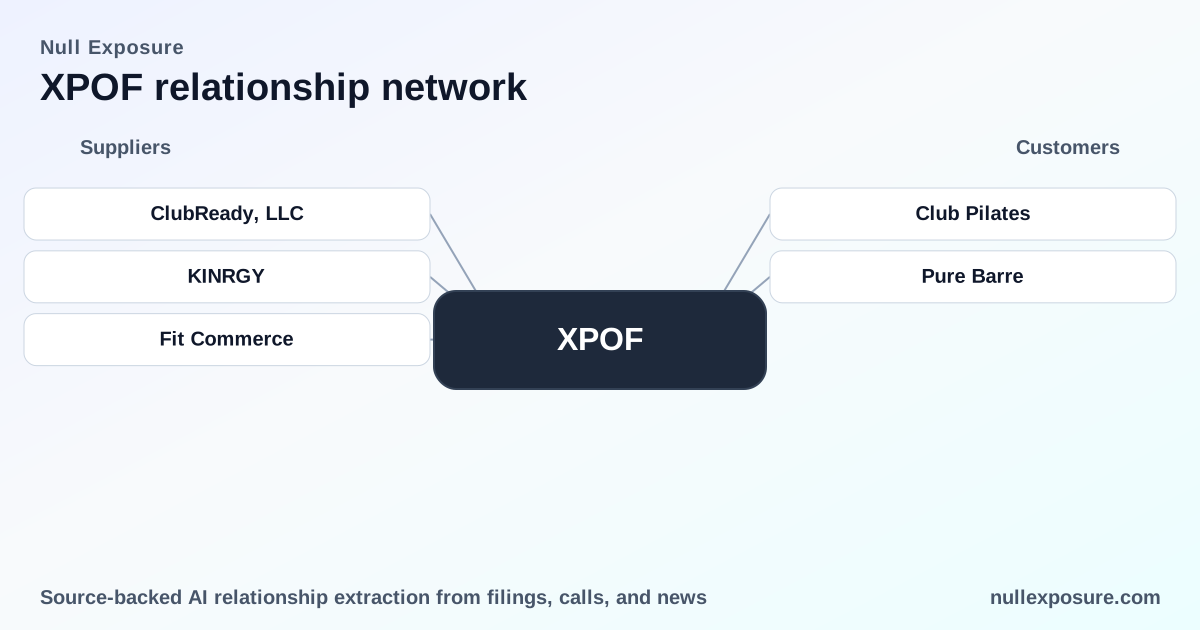
For investors tracking relationship-level exposures and litigation or reputational risk, the public record contains targeted reports and alerts about two major franchise brands. See the documented customer links below and consider how franchisee outcomes translate into royalty trends and renewal behavior. If you want a structured relationship feed for modeling, explore full profiles at NullExposure: https://nullexposure.com/.
Publicly surfaced customer relationships and what they disclose
The sources below capture media and legal attention involving two of Xponential’s core brands. Each entry is summarized in plain English with its source.
Club Pilates — BizWire investor alert citing Businessweek (FY2024)
Businesswire’s investor alert (published on FinancialContent, Feb 10, 2024) references a Businessweek exposé from December 7, 2023 that interviewed numerous former partners and franchisees who said Xponential’s franchising arrangements left some operators in severe financial distress. The alert signals reputational and litigation risk concentrated in the Club Pilates franchise channel. (Source: FinancialContent / BizWire investor alert, Feb 10, 2024, citing Businessweek Dec 7, 2023.)
Pure Barre — BizWire investor alert citing Businessweek (FY2024)
The same FinancialContent investor alert also highlights Pure Barre, reporting the Businessweek piece that included former franchisees and business partners claiming Xponential misled them and contributed to severe franchisee financial problems. This places Pure Barre in the same reputational inquiry raised for Club Pilates, with potential impacts on renewals and royalty flows. (Source: FinancialContent / BizWire investor alert, Feb 10, 2024, citing Businessweek Dec 7, 2023.)
Club Pilates — AccessNewswire filing reminder (FY2024)
An AccessNewswire release reminding investors of a deadline for potential claims repeats the Businessweek narrative, stating the exposé corroborated allegations that some franchisees were left bankrupt following their relationships with Xponential; the release was filed in the context of potential shareholder action. This reiteration increases the public visibility of franchisee complaints specifically tied to Club Pilates operations. (Source: AccessNewswire / plaintiff deadline reminder, referenced Businessweek Dec 7, 2023.)
Pure Barre — AccessNewswire filing reminder (FY2024)
AccessNewswire’s investor notice likewise calls out Pure Barre in its reminder, repeating the Businessweek account that former Pure Barre franchisees reported severe financial distress linked to their franchising agreements; the notice functions as a solicitation for potential claims and amplifies litigation risk in the public domain. (Source: AccessNewswire / plaintiff deadline reminder, referenced Businessweek Dec 7, 2023.)
What these relationship signals mean for investors and operators
- Earnings volatility from franchise health: Negative franchise outcomes documented in the press translate into two analytically important effects—downward pressure on royalties and technology/marketing fees from struggling studios, and potential decreases in franchise sale velocity if prospective franchisees perceive elevated execution risk.
- Reputational and legal downside is non-trivial: Multiple investor notices and a national media exposé escalate the probability of class actions and franchisee disputes; investors should embed conservatism in royalty-growth and renewal-rate assumptions.
- Contract durability offsets some headline risk: The ten-year initial franchises with renewal windows provide a degree of contractual durability and predictable revenue streams; however, franchise economics are material and so any sustained franchisee distress will materially alter cash flow profiles.
- Diversified monetization reduces single-point failure: The combination of subscriptions, equipment sales, and master-franchise arrangements internationally lowers dependency on any single revenue line, but equipment revenue is lumpy and subscription growth will be necessary to smooth cyclicality.
- Active portfolio management is visible: The company has already wound down underperforming brands (AKT), demonstrating management willingness to shutter or re-license brands that fail to meet financial thresholds—this increases execution risk in the near term but protects long-term cash generation.
Bottom line for investors
Xponential’s business depends on scalable licensing economics and recurring royalties, but current public relationship signals introduce reputational and legal risk concentrated in major franchise channels (Club Pilates and Pure Barre). Model downside scenarios should stress royalty growth, renewal rates and franchise-sale cadence while separating recurring subscription cash flow from episodic equipment revenue. For relationship-level data and ongoing monitoring to support relative-value or credit work, visit the NullExposure platform: https://nullexposure.com/.