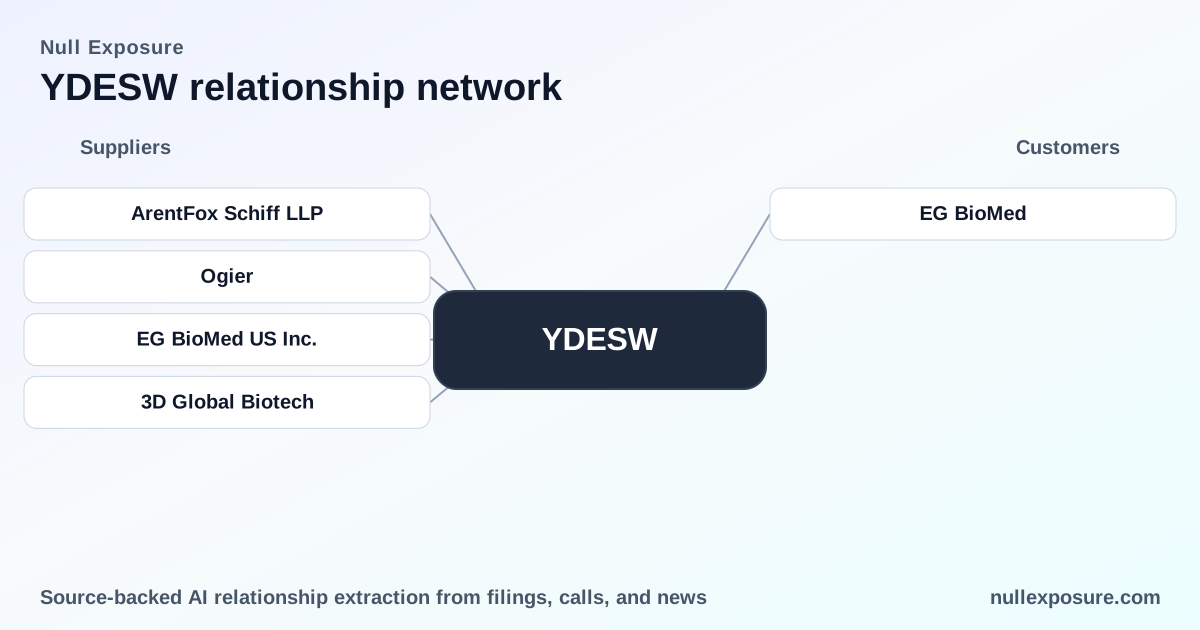
YDESW (YD Bio Limited Warrants): Partner-driven diagnostics with concentrated execution risk
YD Bio Limited operates as a clinical-stage diagnostics company that licenses proprietary DNA methylation–based cancer detection technology from EG BioMed and intends to monetize that IP through diagnostic product development, licensing arrangements, and downstream commercial sales following regulatory clearance. The warrants trading under the ticker YDESW are a derivatives exposure to that underlying strategy and to the success of the combined company following its Nasdaq business combination closing in March 2026. For a concise update on the platform and partner-focused model, visit https://nullexposure.com/.
How the business works and how it earns revenue
YD Bio’s go‑to‑market thesis is straightforward: acquire exclusive rights to a specific molecular detection technology, develop clinical-grade assays, and commercialize either directly or via licensing/partner deals. The firm’s near-term value drivers are clinical validation, regulatory progress, and commercialization partnerships that convert IP into recurring diagnostic revenue or milestone/license fees. The listing on the Nasdaq following a special purpose acquisition indicates a capital markets strategy to fund development and scale commercialization.
What the EG BioMed partnership signals for operators and investors
YD Bio’s core technical foundation is an exclusive licensing arrangement with EG BioMed for DNA methylation–based cancer detection methods. According to a PR Newswire release announcing the closing of the business combination and Nasdaq listing in March 2026, the company is developing proprietary DNA methylation detection technology through exclusive licensing from EG BioMed. This relationship supplies the critical IP that underpins YD Bio’s product roadmap and commercial thesis (PR Newswire, March 2026).
Key takeaway: The EG BioMed license is the operational linchpin; the success of YD Bio’s product roadmap depends on converting that licensed IP into validated, regulatory-compliant tests.
Every customer/partner relationship in the record
- EG BioMed — YD Bio holds exclusive licensing agreements with EG BioMed to develop DNA methylation–based detection technologies for a range of cancers, which form the technical and commercial nucleus of the company’s strategy. According to the company’s March 2026 press release announcing the closing of its business combination and Nasdaq listing, these exclusive licenses are the foundation for product development and future commercialization (PR Newswire, March 2026).
Business model characteristics and operating constraints
The available public disclosures and the partner arrangement imply a set of company-level operational characteristics that investors and operators must treat as central to valuation and execution planning:
- Contracting posture — partner-centric and exclusive: The exclusive licensing structure concentrates upstream IP control with EG BioMed while granting YD Bio primary development and commercial rights; this gives YD Bio control over commercialization but also binds success to the license terms and ongoing relationship health.
- Concentration — high single-partner exposure: The current public record shows reliance on EG BioMed for core technology, creating concentration risk in both technology and negotiation leverage.
- Criticality — licensed IP is mission-critical: The licensed DNA methylation technology is the fundamental asset; delays or disputes around the license would directly impair product development and the company’s ability to generate revenue.
- Maturity — development-stage commercialization: The company is in the clinical/validation phase rather than large-scale commercial operations; value realization hinges on clinical proof points, regulatory clearances, and subsequent go-to-market execution.
- Capital and market structure — SPAC/transaction era dynamics: The March 2026 business combination and Nasdaq listing provide newly aggregated capital but also impose public-market performance expectations and liquidity profile considerations for warrant holders.
Risk and return framework for investors
Investors in YDESW (the warrants) are effectively betting on three linked outcomes: the licensed technology’s clinical validation, successful regulatory pathways for diagnostic tests, and effective commercialization (internal or partnered). Key risk vectors include:
- Regulatory and clinical execution risk inherent in diagnostics development.
- Counterparty and contractual risk given the exclusive license structure with a single partner.
- Market adoption and reimbursement risk once tests reach commercialization.
- Public market volatility and warrant-specific dilution and exercise dynamics following the business combination.
These are not theoretical construction points; the PR Newswire disclosure of the exclusive licensing relationship underscores that the company’s asset base and near-term value creation are concentrated and partner-dependent (PR Newswire, March 2026).
What operators should prioritize
Operators steering the business should focus on three execution priorities to de-risk valuation and shorten the path to sustainable revenues:
- Demonstrate robust, externally validated clinical performance for the methylation-based assays to unlock regulatory submissions and payer conversations.
- Solidify commercial pathways early—either through distribution and reimbursement partnerships or clear go-to-market capabilities—to convert future approvals into revenue.
- Strengthen contractual resilience with EG BioMed and any other IP or tech providers to limit single-counterparty concentration risk and insulate continuity of rights.
Investors should track clinical milestones, regulatory submissions, licensing or distribution agreements, and any amendments to the EG BioMed license as primary signals of progress.
Bottom line for valuation-minded readers
YD Bio is a partner-driven, IP-centric diagnostics developer whose valuation trajectory depends on the licensed DNA methylation technology progressing through validation and regulatory gates into commercial sales or sublicensing revenue. The company’s Nasdaq listing following the March 2026 business combination provides funding and public liquidity but does not eliminate the material execution and concentration risks tied to the EG BioMed relationship. For ongoing tracking of material disclosures and to place these partner relationships in a comparative execution framework, visit https://nullexposure.com/.
Sources: PR Newswire release on YD Bio Limited announcing the closing of the business combination and listing on the Nasdaq Global Market (March 2026).