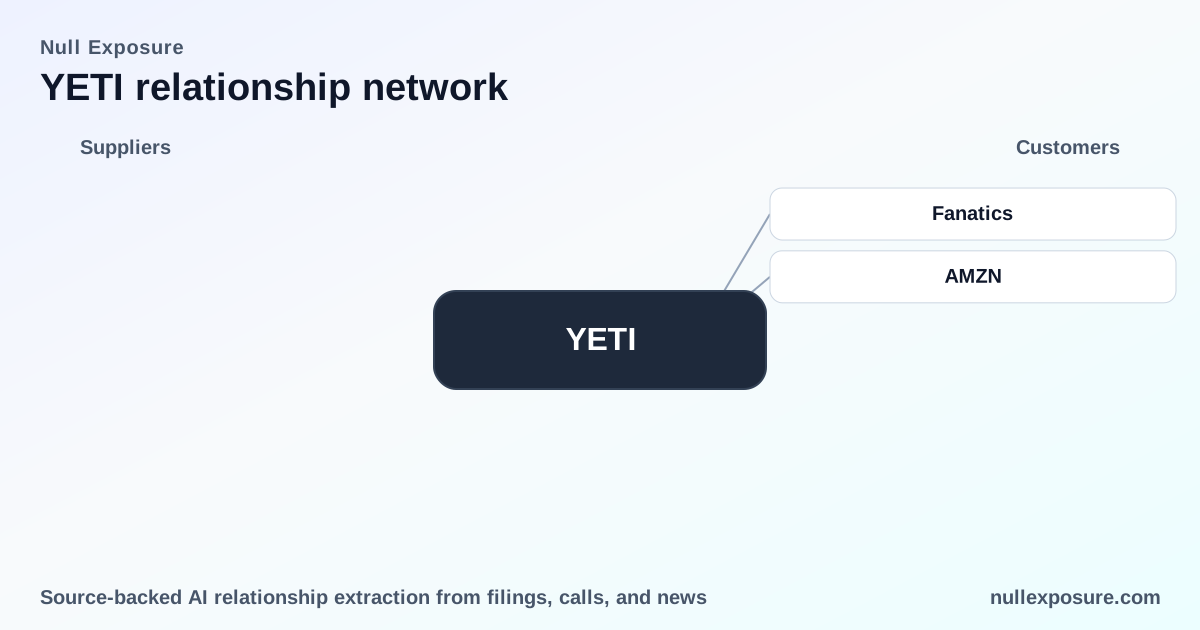
YETI’s customer map: brand-led DTC with strategic wholesale partners
YETI operates and monetizes as a premium consumer products company: it designs, markets, and sells high-margin coolers, drinkware, and accessories through a hybrid channel strategy that leans on direct-to-consumer (DTC) strength while distributing through large retail partners. Revenue comes from owned e-commerce, YETI retail stores, corporate sales programs and wholesale relationships; the business model is brand-driven, with pricing power and seasonal demand concentrated around outdoor and sports calendars.
Explore the full customer context at https://nullexposure.com/ to see how these relationships influence revenue visibility and margin stability.
How YETI actually sells — the business model in plain terms
YETI’s channel mix is a defining operating characteristic. DTC accounted for roughly 60% of net sales in 2025, with the remainder driven by wholesale. That DTC weight gives YETI margin control and a direct relationship with the end consumer, while wholesale partners provide scale and reach into national retail footprints. The company sells predominantly into North America—about 81% of net sales were U.S.-based in 2024—but operates in markets including Canada, Australia, New Zealand, Europe, and Asia.
- Contracting posture: customer arrangements are typically short-term (contracts usually less than one year), which increases sales flexibility but raises the importance of continuous product and marketing execution.
- Counterparty profile: wholesale buyers include large national retailers, indicating enterprise-level counterparties on the buy side.
- Materiality: operational disruptions or product stoppages have historically had material impacts on sales, underscoring the sensitivity of revenue to quality and distribution continuity.
Customer relationships to watch (what investors need to know)
Fanatics — sports merchandising partnership that extends YETI into team fans
YETI began a partnership with Fanatics in late 2025 to produce team-branded YETI gear for NFL, MLB and NCAA fans, a collaboration that drove elevated holiday traffic and expanded YETI’s reach into the sports-fan demographic. This is a distribution and co-branding move that leverages Fanatics’ merchandising scale. (Source: FinancialContent MarketMinute coverage, March 2026.)
Sportsman’s Warehouse (SPWH) — wholesale assortment win in specialty retail
Sportsman’s Warehouse reported that new assortments including YETI products contributed to improved comp sales, signaling resonance of YETI assortments in specialty outdoor retail and a positive wholesale placement. This strengthens YETI’s presence in specialty channels and supports wholesale revenue diversification. (Source: SGB Online report on Sportsman’s Warehouse, March 2026.)
Amazon / Amazon Marketplace — DTC reach through a dominant ecommerce partner
YETI cites the Amazon Marketplace as a material growth channel within DTC, and management highlighted broad-based DTC growth that included Amazon Marketplace alongside corporate sales and YETI stores in the FY2026 results communications. Amazon functions as both a sales channel and an amplifier of reach, particularly for scale and seasonality. (Source: YETI SEC filing and FY2026 disclosures, February 2026; plus YETI Q4 2025 earnings commentary reported by InsiderMonkey, March 2026.)
What the constraint signals imply about YETI’s operating model
- Short-term contracts increase revenue elasticity. With customer arrangements typically under one year, YETI’s wholesale partners provide distribution but not long-term revenue guarantees; success depends on iterative product cycles and merchandising wins.
- Large-enterprise counterparties create scale but also concentration dynamics. Selling to national retailers accelerates reach, but these relationships are subject to category resets and shelf assortment decisions by buyers.
- Geographic concentration in North America is a commercial lever and a risk. Roughly four-fifths of sales in the U.S. make YETI sensitive to North American consumer spending and seasonality, even as the company operates in multiple international markets.
- Materiality of interruptions elevates operational risk. Historical product stoppages had meaningful negative effects on sales, signaling that supply-chain, quality control, and recall risk track directly to quarterly revenue volatility.
- Role flexibility across channels. YETI functions as seller (DTC), reseller and buyer in wholesale arrangements — a multi-role posture that supports omnichannel coverage but requires tight channel conflict management.
Investment implications — drivers and short lists of risk
- Growth drivers: brand premiumization, product line extensions and co-brands (Fanatics-style deals), and DTC expansion (Amazon Marketplace and YETI-owned channels) support margin expansion and higher lifetime value per customer.
- Margin protectors: DTC composition at 60% of sales in 2025 gives gross-margin leverage and direct pricing control versus pure wholesale exposure.
- Key risks: revenue sensitivity to assortment decisions by large retailers, North American concentration of demand, and short-term contracting that reduces revenue visibility beyond near-term merchandising cycles.
- Operational readouts to watch: sequential DTC growth (especially Amazon Marketplace), wholesale placement cadence with national retailers, and any quality or supply disruptions that could be material to quarterly sales.
Explore a deeper customer-risk profile and distribution map at https://nullexposure.com/ to calibrate channel concentration and partner importance.
Bottom line: concentrated brand power with channel risk
YETI’s model is highly brand-dependent and DTC-tilted, giving it margin advantages and customer intimacy. Wholesale relationships with large retailers and new collaborations such as Fanatics deliver scale and demographics expansion, but short-term contracting and U.S. revenue concentration create sensitivity to merchandising cycles and macro U.S. consumption trends. For investors and operators, the primary monitoring tasks are DTC growth trends (including Amazon Marketplace performance), wholesale assortment wins or losses, and operational continuity that preserves product availability during peak seasons.