YHNA: A SPAC with a pending strategic buyer — what investors should know
YHN Acquisition I Limited operates as a special purpose acquisition company (SPAC): it raised capital through an IPO of units, holds cash and transactional rights, and monetizes by completing an initial business combination that converts the shell into an operating company or delivers liquidity to public investors. Value for shareholders is realized only through a successful deal or favorable redemption dynamics post-merger, and the recent letter of intent with a single strategic counterparty shifts YHNA from a passive search vehicle toward an explicit acquisition path. For ongoing monitoring and deal-tracking, visit https://nullexposure.com/.
The headline deal: Zhejiang Xiaojianren’s letter of intent
Zhejiang Xiaojianren Internet Technology Co., Ltd. signed a letter of intent to acquire YHN Acquisition I Limited for approximately $400 million, signalling a definitive counterparty interested in taking the SPAC private or rolling it into a larger enterprise combination. According to a SimplyWallSt report dated March 10, 2026, the letter of intent frames a material transaction that would fundamentally change YHNA’s capital structure and investor outcomes.
- Plain-English summary: Zhejiang Xiaojianren has publicly expressed intent to acquire YHNA for about $400M via a letter of intent, creating a clear buyer for the SPAC vehicle (SimplyWallSt, March 2026).
- Source: SimplyWallSt coverage of the transaction (reported March 10, 2026).
Every customer relationship on record
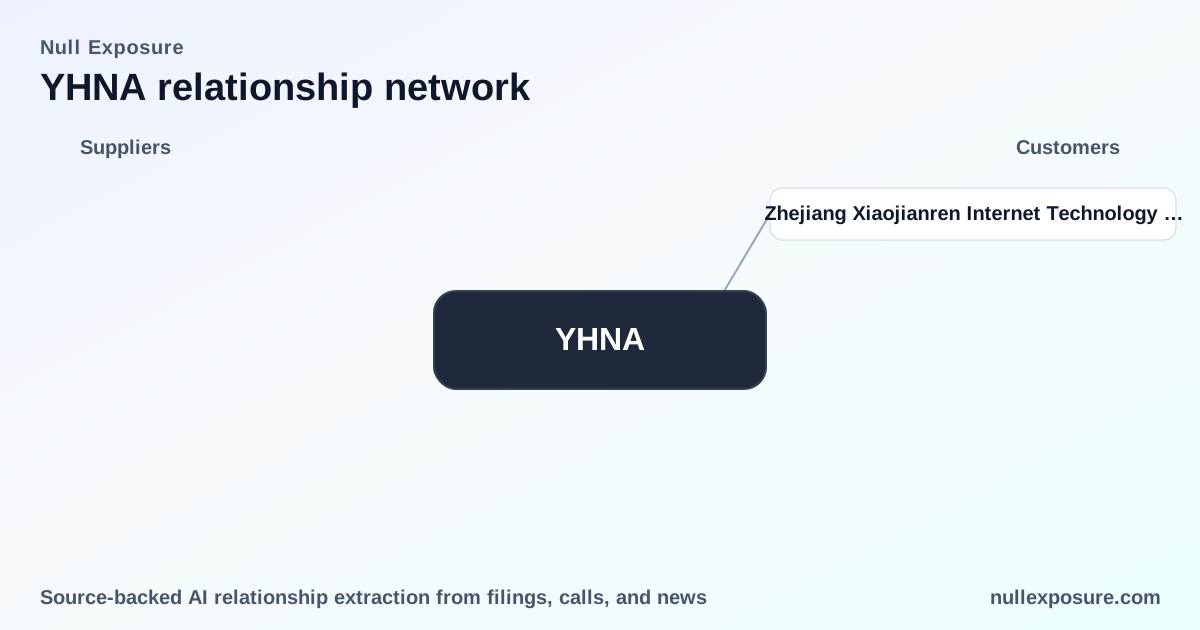
YHNA’s customer/transactional relationships returned in the available results are limited to a single documented relationship:
- Zhejiang Xiaojianren Internet Technology Co., Ltd. — Zhejiang Xiaojianren executed a letter of intent to purchase YHN Acquisition I Limited for approximately $400 million, establishing a prospective acquirer and changing the company’s negotiation dynamics (SimplyWallSt, March 10, 2026).
This result is the only customer-facing relationship in the provided data; it is therefore the central commercial event investors should evaluate.
What YHNA’s contract posture and corporate signals reveal
The company’s publicly available operational characteristics and the constraints captured in filings provide a clear picture of how YHNA is structured and how it will behave during a transaction:
- SPAC seller posture: YHNA completed an IPO on September 19, 2024, of 6,000,000 units sold at $10.00 each, generating gross proceeds of $60 million. That IPO structure confirms YHNA’s role as a capital-raising vehicle designed to sell a packaged investment right rather than generate operating revenue from customers.
- Capital and liquidity posture: With no reported operating revenue (RevenueTTM = 0) and the balance-sheet profile of a shell, the company’s principal assets are the IPO proceeds and deal-related rights; value is concentrated in merger execution and post-combination equity allocation.
- Ownership concentration and market mechanics: Insiders hold ~42.75% of shares and institutions ~60.48%, while shares outstanding total 7,750,000 with a float of 2,378,500. That ownership mix implies low public float and potential for price volatility around deal announcements or redemptions.
- Maturity and execution timeline: The IPO consummation in 2024 and a LOI in early 2026 indicate YHNA is moving from search phase to execution phase; deal completion, regulatory approvals, and shareholder votes will determine ultimate outcomes.
These constraints are company-level signals about YHNA’s business model — a capital-shell with high ownership concentration, a short public float, and no operating revenue until a business combination closes.
What the Zhejiang Xiaojianren LOI means for investors and operators
The LOI with Zhejiang Xiaojianren is material and shifts the risk/reward profile:
- Upside: A committed acquirer at an enterprise value of roughly $400M provides a path to liquidity and revaluation for public holders who do not redeem; successful closing could produce immediate mark-up relative to the SPAC’s market cap and unit pricing.
- Risks: LOIs are non-binding by design until definitive agreements and necessary shareholder and regulatory approvals are in place. Redemption behavior, adjustments in definitive deal terms, and cross-border diligence are primary execution risks. The corporate address in Hong Kong and a listing on NASDAQ introduce cross-jurisdictional complexity for regulatory and governance processes.
- Operational impact: If the acquisition proceeds, operators and counterparties should expect rapid integration negotiations and potential sponsor dilution or restructuring of capital rights.
For immediate tracking and vendor/partner diligence, monitor filings and the definitive agreement once available; the LOI is an introductory step, not the consummation.
Key metrics and practical signals to watch
Investors evaluating YHNA should prioritize the following variables that will determine post-announcement performance:
- Definitive agreement terms — purchase price, share conversion mechanics, and any earn-outs or escrow terms.
- Redemption rates at shareholder vote — high redemption can force deal recalibration or collapse.
- Regulatory and cross-border approvals — given the buyer’s jurisdiction and YHNA’s Hong Kong address, approvals may require additional timelines.
- Post-deal capitalization — dilution, sponsor roll amounts, and new institutional holdings will determine long-term equity value.
If you want an institutional-grade monitor on developments and counterparty mapping, see coverage and tools at https://nullexposure.com/.
Bottom line: clear buyer, but outcome depends on execution
YHNA has moved from search to negotiation with a clear LOI from Zhejiang Xiaojianren that values the shell at roughly $400M. That development materially changes investor calculus: the transaction creates a pathway to liquidity but does not eliminate the traditional SPAC execution risks — redemptions, regulatory approval, and definitive-document renegotiation remain decisive. Given the company’s zero operating revenue, concentrated ownership, and small public float, market reactions will be sensitive to any change in deal mechanics.
For investors and operators evaluating exposure, the most actionable next steps are to track the definitive agreement, monitor redemption dynamics, and review any disclosure on post-transaction capitalization and governance. For continued deal intelligence and relationship mapping, visit https://nullexposure.com/ for updates and analysis.