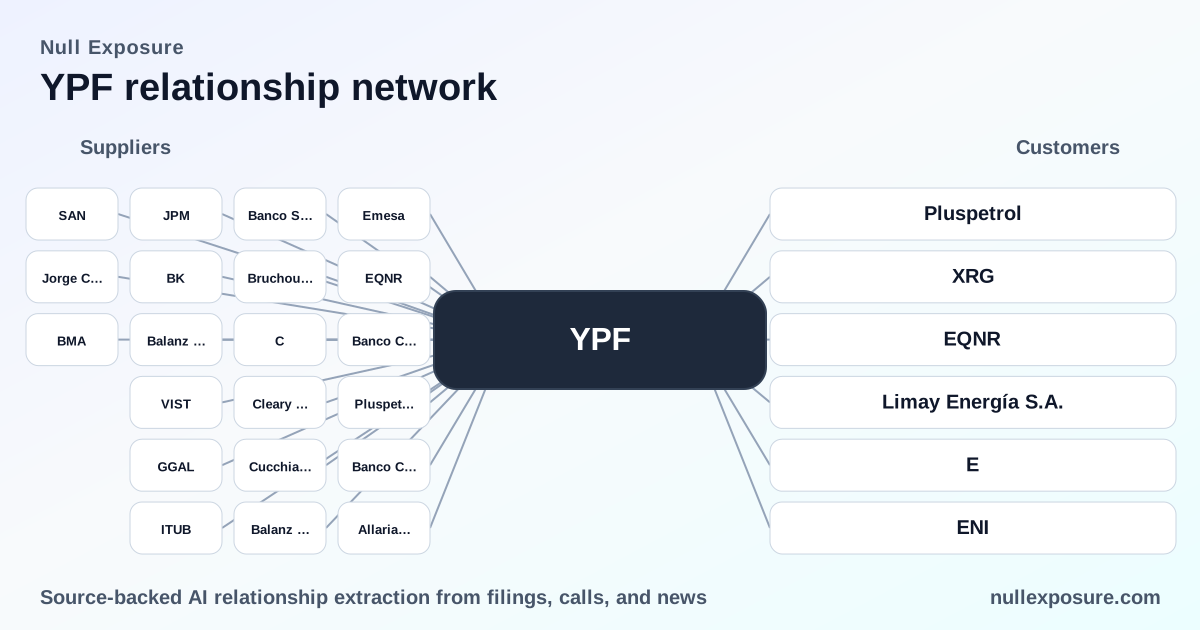
YPF’s partner map: who drives production, exports and portfolio reshaping
YPF is Argentina’s integrated oil and gas champion: it explores and produces hydrocarbons, refines and distributes fuels, and monetizes through domestic sales, export contracts and strategic asset deals. Its commercial model blends long-term export agreements and joint-development partnerships with targeted asset swaps and divestitures to unlock capital and scale up shale and LNG projects. For investors assessing counterparty exposure and operational leverage, YPF’s customer and partner roster is a direct line into its growth vector and risk profile.
Explore a consolidated view of YPF relationships at https://nullexposure.com/ for model-ready signals and primary-source tracking.
How YPF runs the commercial playbook
YPF operates with a hybrid posture: partner-led project development plus selective full-ownership positions. Management uses joint ventures and long-term lift-and-ship contracts to secure market access and de-risk infrastructure spending, while executing asset swaps and targeted sales to tighten focus on core wet-gas and Vaca Muerta shale opportunities. This produces three investment-relevant characteristics:
- Contracting posture: YPF routinely engages in joint development agreements and long-term offtake contracts rather than unilateral greenfield build-outs, reflecting a partner-centric execution model.
- Concentration of exposure: Major revenue drivers shift toward a handful of export contracts and LNG/shale projects that carry multi-year tenors, concentrating revenue dependency on export markets and partner performance.
- Operational criticality and maturity: Projects referenced in recent disclosures are at development and commercial contracting stages (e.g., export contracts through 2033 and founding partners for an Argentina LNG initiative), so capital commitments and partner execution capacity are central to near-term cash generation.
These signals position YPF as a company that manages capital by trading non-core assets and layering partnerships to scale production — a model that accelerates growth but raises partner and contract execution risk.
The partner and customer roster — one-by-one, what matters now
Below are the relationships disclosed in YPF’s recent public statements and news reporting. Each entry is a concise plain-English description with the original source noted.
XRG
YPF named XRG as an international founding partner in the Argentina LNG project, signaling a multi-party development structure for LNG capacity. This was disclosed on YPF’s 2025 Q4 earnings call, where management highlighted XRG’s commitment to the initiative (YPF 2025 Q4 earnings call, March 2026).
ENI (Eni)
ENI is cited as a founding partner for the Argentina LNG project and is reported to have acquired exploration interests from YPF in offshore Uruguay, indicating transactional cooperation across both LNG and upstream portfolios (YPF 2025 Q4 earnings call, March 2026; Euro-Petrole coverage March 2026).
Equinor / Equinor Argentina (EQNR)
YPF announced acquisitions of parts of Equinor’s Vaca Muerta assets executed in partnership with Vista Energy, and Equinor Argentina is also listed among partners in long-term shale export agreements — showing both asset-level collaboration and offtake alignment (YPF 2025 Q4 earnings call, March 2026; SimplyWallSt FY2026 coverage).
Vista Energy Lach
Vista Energy Lach is a named partner in the long-term shale oil export agreements from Vaca Muerta and is a counterparty in the joint arrangements that underpin export volumes and logistics (SimplyWallSt FY2026 coverage).
Shell Argentina
Shell Argentina is a commercial counterparty in the Vaca Muerta export agreements, joining YPF and partners on contracts that lock in export volume and tenure through mid-2033 (SimplyWallSt FY2026 coverage).
ENAP
ENAP is listed alongside YPF and other partners as a signatory to the long-term shale oil export contracts, reinforcing the international consortium model for moving Vaca Muerta production to market (SimplyWallSt FY2026 coverage).
Pluspetrol
YPF executed an asset swap with Pluspetrol in early 2026 to consolidate full ownership of three wet-gas blocks critical to the Argentina LNG project, demonstrating YPF’s willingness to trade non-core interests to secure project-aligned acreage (YPF 2025 Q4 earnings call, March 2026).
Limay Energía S.A. (Rovella Capital Group)
On January 16, 2026, YPF signed agreements to transfer 100% of conventional concessions in Manantiales Behr and related transport concessions in Chubut, plus inventory sales, for a stated consideration of US$575 million (60% at closing, remainder within 12 months subject to provincial approval), reflecting portfolio monetization activity (TipRanks coverage, January 2026).
Crown Point Energia S.A.
Crown Point completed the acquisition of a 7.19% stake in El Tordillo, La Tapera and Puesto Quiroga from YPF, a transaction that reduces YPF’s minority holdings in certain conventional blocks and redeploys capital (SimplyWallSt FY2026 coverage).
Asociación de Cooperativas Argentinas C.L.
Asociación de Cooperativas Argentinas C.L. joined Adecoagro in a binding offer to acquire an additional 50% stake in PROFERTIL from YPF for a reported consideration near $600 million, signaling YPF’s active divestment of non-core fertilizer/agribusiness assets (SimplyWallSt FY2026 coverage).
Adecoagro S.A. (AGRO)
Adecoagro, in partnership with the Asociación de Cooperativas, submitted a binding offer for additional PROFERTIL equity from YPF for approximately $600 million, illustrating YPF’s strategy to monetise chemical/agribusiness holdings (SimplyWallSt FY2026 coverage).
What this pattern implies for investors
- Revenue upside is concentrated in a small number of long-dated export contracts and a few large projects (LNG and Vaca Muerta), so execution on partner commitments and export logistics will disproportionately move cash flow. The SimplyWallSt reporting of export contracts through June 2033 — with an initial 70,000 bpd combined volume — is a material revenue engine for Argentina and for YPF’s upstream economics (SimplyWallSt FY2026).
- Portfolio management is active: YPF uses asset swaps and selective sales (Limay Energía, Crown Point, PROFERTIL offers) to fund bigger development priorities and reduce non-core exposure, which supports near-term liquidity and capital redeployment (TipRanks January 2026; SimplyWallSt FY2026).
- Counterparty risk is elevated but manageable: partnerships with global majors (ENI, Equinor, Shell, ENAP) de-risk market access and financing, but they also concentrate reliance on joint governance and cross-party delivery timelines (YPF 2025 Q4 earnings call; Euro-Petrole March 2026).
Closing takeaways for portfolio decisions
YPF is executing a deliberate shift: scale production via partner-led export contracts and LNG development, while monetizing non-core assets to fund that push. For investors, key monitoring items are partner delivery on LNG and export infrastructure, the timing of asset-sale proceeds, and contract volumes/tenors that underwrite export cash flow. For a centralized, primary-source view of YPF’s partner disclosures and transaction timelines, visit https://nullexposure.com/.
Bold outcomes from these relationships — long-term export tenors, strategic asset swaps and marquee international partners — define YPF’s next phase of value creation and are the levers investors must watch closely.