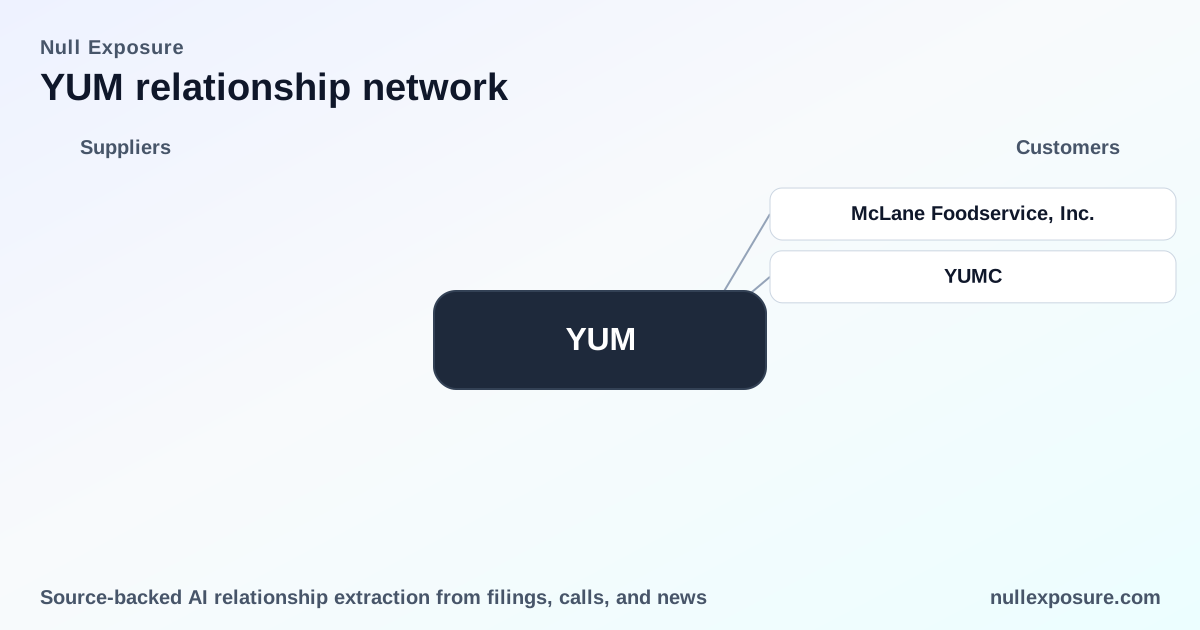
Yum Brands (YUM) — who the company sells to and why it matters to investors
Yum Brands operates and monetizes a global franchising engine: the company licenses its concepts (KFC, Pizza Hut, Taco Bell, Habit) to independent franchisees and master franchisees, collects ongoing usage-based royalties (typically 4–6% of system sales), and supplements that with strategic company-owned stores, supply/distribution relationships, and increasingly a software layer (Byte by Yum) that drives operational lock-in. That combination produces high-margin, recurring fee revenue with capital-light growth, while concentration in large master franchisees and licensing terms create both leverage and dependence for valuation-sensitive investors. For more context on how we track these customer ties visit https://nullexposure.com/.
Operating model and customer footprint
Yum runs a largely franchised network — 98% of units are operated by franchisees or licensees, and franchise agreements explicitly grant Yum intellectual property rights in exchange for continuing, percentage-based fees. The company’s reach is global (61,000+ restaurants across 155+ countries), and relationships range from individual owners to public and private master franchisees that control thousands of units. These characteristics create a usage-fee revenue engine, concentrated counterparty risk in a few large licensees, and a mature, cash-generative commercial model.
Key customer relationships (source-by-source summaries)
-
McLane Foodservice, Inc. — The company’s FY2024 10‑K identifies McLane Foodservice as the largest distributor for Yum’s KFC, Taco Bell and Pizza Hut concepts in the U.S., with Yum’s RSCS team managing the relationship. (Yum FY2024 10‑K, yum-2024-12-31, first seen Feb 2026)
-
Yum China (news, ad-hoc-news.de) — Yum China operates KFC, Pizza Hut and other brands in mainland China under an exclusive license from Yum Brands, positioning it as a critical master franchisee for the KFC concept. (ad-hoc-news.de, Mar 10, 2026)
-
Apollo Global Management — Private equity firm Apollo is reported among potential bidders for Pizza Hut as Yum explores strategic options for that underperforming chain, indicating interest from buyout sponsors in acquiring portions of Yum’s franchised portfolio. (CNBC summary of Reuters reporting, Apr 29, 2026)
-
Yum China (news, Simply Wall St — CEO sale context) — Coverage of Yum China’s insider share sale frames the company as the master franchisee sitting at the intersection of consumer spending and quick-service dynamics in China, underscoring both growth opportunity and macro sensitivity. (SimplyWallSt, Mar 10, 2026)
-
L.A. Dodgers — Yum Brands announced a strategic collaboration with the L.A. Dodgers to boost brand positioning in Southern California, reflecting marketing partnerships that amplify local franchise-level demand and customer engagement. (InsiderMonkey summary of Yum Q1 2026 call, May 2026)
-
TANNI / TravelCenters of America (CSP Daily News) — TravelCenters’ new travel center includes dining options featuring KFC, demonstrating Yum’s distribution and franchising presence within high-traffic travel retail channels. (CSPDailyNews, reported Mar 2026)
-
Yum China (news, Simply Wall St — valuation context) — Further commentary positions Yum China as the largest restaurant operator in China by store count, reinforcing the scale and strategic importance of that licensee to Yum’s overall performance. (SimplyWallSt, Mar 10, 2026)
-
Sycamore Partners — Alongside Apollo, Sycamore is named as a private equity suitor for Pizza Hut, signaling active M&A interest in single-brand carve-outs from Yum’s portfolio. (CNBC reporting of Reuters, Apr 29, 2026)
-
MZTI / Marzetti (Food Dive) — Food industry M&A coverage notes Marzetti’s sauce licensing agreements include restaurant brands, highlighting third-party suppliers and licensors that intersect with Yum channels for branded ingredient and licensing revenue. (FoodDive, May 3, 2026)
-
Sapphire Foods — Reuters-sourced coverage cited by News.Az reports that Sapphire Foods, a major franchisee/operator of KFC and Pizza Hut, reported a swing to loss as cost pressures weighed on operations, illustrating operational stress at the franchisee level that can transmit to Yum through lower royalty flows. (News.Az/Reuters, May 4, 2026)
-
Yum China (FY2024 10‑K) — Yum’s FY2024 10‑K explicitly states a meaningful portion of total business — especially KFC — is conducted in mainland China through its largest franchisee, Yum China, confirming the company-level concentration in that counterparty. (Yum FY2024 10‑K, yum-2024-12-31, first seen Feb 2026)
-
Yum China (FY2024 10‑K entry duplicated as “Yum China”) — The filing repeats that Yum China is the primary conduit for a significant share of Yum’s KFC revenue, making that master franchisee central to investor models for international growth. (Yum FY2024 10‑K, yum-2024-12-31, first seen Feb 2026)
What the contractual and strategic constraints tell investors
-
Contracting posture: licensing-first, usage-based economics. Yum predominantly licenses its IP: franchisees and licensees pay continuing fees as a percentage of restaurant sales and bear capital investment for unit-level growth. This creates high operating leverage for Yum and aligns its revenue with system sales.
-
Concentration and counterparty mix: a mix of individuals and large enterprises. Franchisees range from single-unit operators to public/global master franchisees (e.g., Yum China, Sapphire Foods), producing concentration risk where a few large partners can materially influence revenue.
-
Revenue criticality and maturity: recurring, mature cash flows. The franchised model yields stable, recurring fee streams and has historically produced strong operating cash flow; Yum’s franchise base is mature with limited direct capital exposure but persistent dependence on franchisee performance.
-
Emerging software and services angle. Byte by Yum introduces a software-led operations layer that can increase stickiness and create ancillary revenue, shifting some contract economics toward platform services over time.
Risk and opportunity framed for investors
-
Risk: concentrated exposure to Yum China and large master franchisees. Multiple filings and public reports confirm Yum China’s outsized role in KFC results; deterioration at that counterparty or macro weakness in China would meaningfully pressure Yum’s top-line royalty growth.
-
Opportunity: brand-level carve-outs and private equity interest. Reporting that Apollo and Sycamore are exploring Pizza Hut signals potential value realization through strategic sales or restructurings, which could unlock shareholder value if executed at attractive multiples.
-
Operational tailwinds: distribution and co-branding partnerships. Relationships with distributors (McLane), travel centers, and sports franchises expand footprint and create incremental unit-level sales, supporting Yum’s usage-fee model.
Final read and investor actions
Yum is a classic franchisor: capital-light, fee-driven, and dependent on a small set of very large licensees for outsized revenue contribution. Investors should weight the stability of usage-based royalties against counterparty concentration in modeling scenarios, and monitor PE interest in Pizza Hut as both a valuation catalyst and a strategic inflection point. For continued coverage and deeper relationship mapping, visit https://nullexposure.com/.
Key takeaway: Yum’s cash-generative franchising model is durable, but exposure to master franchisees—particularly Yum China—creates a single-counterparty sensitivity that dominates near-term upside and downside.