ZenaTech (ZENA): Customer Map and Commercial Implications for Investors
ZenaTech builds cloud-native enterprise software and operates an expanding Drone-as-a-Service (DaaS) line that it monetizes through recurring service contracts with commercial customers and fee-for-service engagements for surveying and operational automation. Revenue today is concentrated in small but growing recurring streams (Revenue TTM $12.9M) while the company is operating at a loss (EBITDA -$23.1M), so customer retention and multi-year contracts are the primary levers for margin improvement and valuation upside. For a concise view of the customer relationships profiled here, visit https://nullexposure.com/.
What ZenaTech sells and how customers pay for it
ZenaTech is positioned at the intersection of enterprise cloud software and field services. The product mix includes cloud applications and a commercial Drone-as-a-Service offering that integrates hardware, software, and operations. Customers pay through a combination of subscription/license arrangements for software and repeat-service contracts or per-engagement fees for drone surveying and mapping. This hybrid monetization model produces recurring revenue characteristics from software alongside volume-driven service revenue from DaaS, which makes contract length and customer scale the central commercial sensitivities for investors.
The customer relationships you need to know
Below are every customer relationship reported in the public results set for ZenaTech, with concise plain-English summaries and source references.
GreenHeart Hemp CBD — an agricultural first-mover for ZenaDrone
GreenHeart Hemp CBD is slated to be the first regular commercial customer for ZenaTech’s patent-pending drone mobile app and drone services, using the ZenaDrone capability for hemp farm operations. According to a Newsfile press release on May 4, 2026, the company conducted a successful autonomous flight test and named GreenHeart as the initial regular user. Source: Newsfile press release, May 4, 2026.
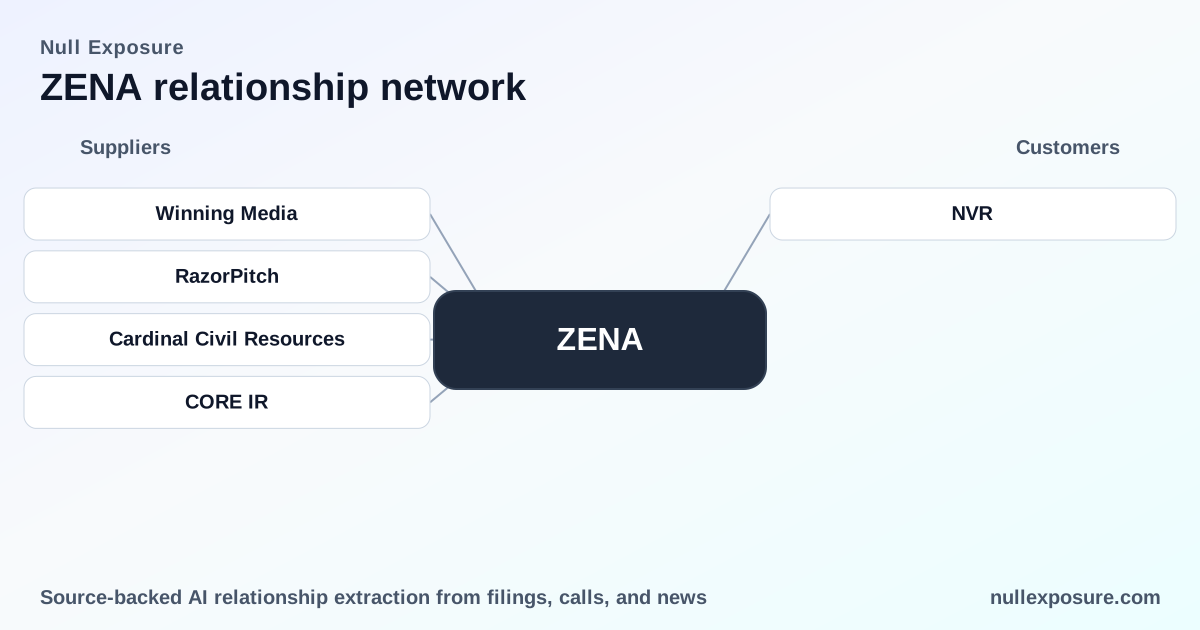
NVR — platform-level adoption across builder operations
ZenaTech’s DaaS building-services capability serves multiple homebuilding operations, including a regional launchpad across Virginia, North Carolina, and South Carolina that supports major builders. A GlobeNewswire release on February 10, 2026, describes this builder services capability and notes historical support for NVR’s operating brands. Source: GlobeNewswire news release, February 10, 2026.
Ryan Homes (NVR Inc.) — a long-tenured builder relationship exceeding a decade
Ryan Homes, part of NVR Inc., has a relationship with ZenaTech that spans more than 15 years, primarily using drone-driven surveying and site services for homebuilding operations. The duration signals a durable operational integration between ZenaTech’s DaaS offering and a major U.S. homebuilder. Source: GlobeNewswire news release, February 10, 2026.
How these customers shape risk, concentration, and runway
The customer list illustrates a deliberate commercial strategy: target high-frequency field-service use cases (homebuilding, agriculture) where drones and software deliver measurable time and cost savings. That strategy produces several investment-relevant characteristics as company-level signals:
-
Contracting posture — ZenaTech operates both recurring software contracts and repeat-service DaaS agreements. This hybrid posture requires sales efforts that close both long-term license deals and ongoing operations contracts; therefore, stability of cash flow depends on renewal of service relationships as well as software subscription retention. Financials through March 31, 2026 show Revenue TTM $12.9M and quarterly revenue growth YOY +6.71%, indicating growth that is modest but positive for a small cap enterprise software and services company.
-
Concentration — Public data show insider ownership of roughly 73.5% and institutional ownership near 3.3%, which indicates founder/operator control and limited institutional validation at scale; investors should treat customer disclosures as a critical input because a few large contracts can materially influence revenue and cash flow for a company of this market cap (~$185M).
-
Criticality to customers — Long-tenured relationships such as the 15+ year engagement with Ryan Homes point to operational criticality in at least some accounts: builders rely on drone surveying to compress site cycles and reduce rework. For agriculture (GreenHeart Hemp), drone automation is positioned as an operational efficiency that can convert into regular recurring usage if on-farm workflows are standardized.
-
Maturity of engagements — The mix includes legacy, durable builder relationships alongside nascent commercial pilots (agriculture). This suggests a two-track maturity profile: established volume in homebuilding services that supports baseline revenue, and an expansion runway into new verticals where proof-of-concept and initial pilots are converting into paying customers.
These company-level signals should guide diligence priorities: contract length and renewal history, revenue split between software and services, and the margins on recurring DaaS vs. one-off engagements.
Financial context that makes customers pivotal
ZenaTech’s operating profile amplifies the materiality of each customer relationship. The company is loss-making at the EBITDA line and has a high EV/Revenue multiple (EV/Revenue 19.21) against modest trailing revenue, which implies investors are pricing future growth and margin expansion. In that valuation context, converting pilot customers into multi-year, high-retention contracts is the key operational objective that underwrites upside. Public numbers through the latest quarter (2026-03-31) show diluted EPS -$0.96 and operating margin TTM -262.4%, reinforcing why customer quality and contract duration are primary value drivers.
Strategic takeaways for investors and operators
- Customer durability matters more than name-brand wins. Ryan Homes demonstrates durable, embedded usage while GreenHeart represents early expansion into agriculture; both are needed for a balanced growth path.
- Contracts, not pilots, will move valuation. The business needs scaled recurring DaaS contracts and more enterprise software adoption to compress losses and justify the current valuation multiple.
- Control and concentration amplify execution risk. High insider ownership concentrates strategic control; institutional backing is limited, so independent validation through large, multi-year customer commitments is critical.
For investors wanting a deeper mapping of customer-level exposures and operational counterparty risk, explore additional institutional-grade relationship analysis at https://nullexposure.com/.
Final judgment and next steps
ZenaTech operates a compelling hybrid model—enterprise cloud software plus drone-enabled field services—with early evidence of both durable builder relationships and nascent vertical expansion. The investment thesis is conditional on the company converting pilots into multi-year contracts and improving service economics; without that conversion, the current valuation reflects elevated execution risk. Diligence should focus on contract terms, renewal rates, gross margin by revenue stream, and customer concentration metrics to decide whether downside is protected and growth is sustainable.
Key actions for investors:
- Request contract-level detail on the Ryan Homes engagement and any long-term commitments with NVR.
- Track conversion of GreenHeart and similar agricultural pilots into repeatable revenue.
- Monitor quarterly disclosure for changes in institutional ownership or material customer concentrations.
Bold wins for ZenaTech will come from scaling repeatable DaaS revenue and demonstrating that software subscriptions can deliver higher margin, recurring cash flow—those are the levers that will convert customer relationships into durable shareholder value.