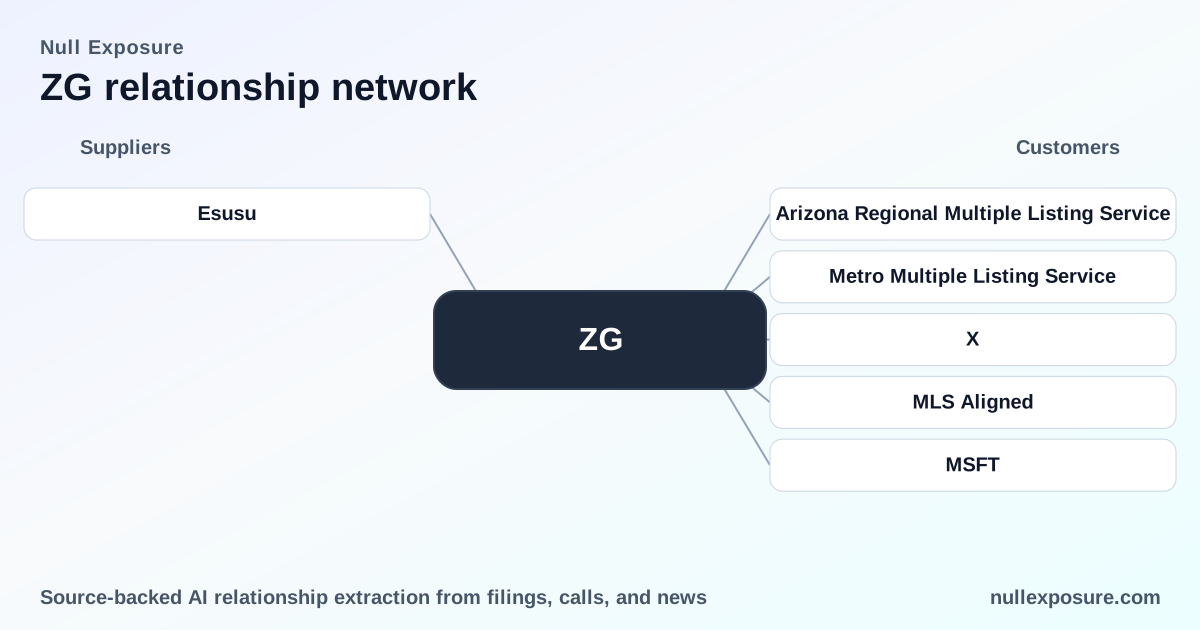
Zillow Group (ZG) — Customer Relationships That Drive the Marketplace
Zillow Group operates a nationwide digital real-estate marketplace that monetizes through a mix of subscription fees, usage-based advertising and transaction-related services. The company sells listing visibility and lead-generation to brokers and agents, advertising and builder packages, SaaS tools that power broker operations, and mortgage and title services that convert marketplace activity into transaction revenue. For a focused view of Zillow’s customer relationships and the operational constraints that matter to investors, read on — or visit https://nullexposure.com/ for deeper customer intelligence.
How Zillow’s customer economics actually work
Zillow’s revenue model combines recurring subscription arrangements with performance-based, usage pricing. StreetEasy and agent-facing products use advance-paid subscriptions tied to listing counts, while display, builder and rentals offerings are sold on CPM, CPC or cost-per-lead terms. That mixed contracting posture creates both predictable recurring cash flow and scalable, variable upside when engagement increases.
- Geographic scale is national: Zillow’s mortgage originations and rentals marketplace operate across the United States, supporting a nationwide addressable market for its advertising and software products.
- Revenue concentration is meaningful: Residential operations accounted for 66% of 2025 revenue, while rentals represented 24% and grew 39% year-over-year—together these segments drive the bulk of platform economics.
- Product mix blends software and services: Zillow’s stack includes SaaS CRM and transaction tools (Follow Up Boss, Dotloop references) and service-facing operations such as mortgage origination, title/escrow and rental lead fulfillment.
These structural facts define where Zillow captures value: highly concentrated exposure to residential real estate demand, recurring subscription revenue augmented by usage-driven advertising, and deep embedding with broker partners through software suites.
Partnerships and disputes that shape product distribution
Below are the current customer-facing relationships referenced in public reporting and media, each described in plain language with an accompanying source reference.
Major League Baseball — a high-profile distribution tie-up
Zillow entered a multi-year partnership with Major League Baseball as the league’s official real estate and home rentals marketplace provider, extending Zillow’s brand reach into national sports audiences and creating new audience and advertising inventory opportunities. According to Sahm Capital reporting (FY2026), the agreement positions Zillow to capture incremental engagement from MLB viewership.
Metro Multiple Listing Service — litigation and access friction
Zillow filed suit over plans to remove ShowingTime integrations from ARMLS and Metro MLS, contending the replacement with a proprietary Aligned Showings product restrained competition in those markets. GeekWire covered the dispute and settlement actions around this litigation (FY2024).
HomeServices of America — product rollout partner for Zillow Preview
Zillow announced a new partnership with HomeServices of America to support deployment of Zillow Preview alongside other brokerages, feeding listing volume and pre-market inventory into Zillow’s engagement funnel. Sahm Capital summarized this commercial collaboration (FY2026).
Arizona Regional Multiple Listing Service — the local MLS front of the dispute
Zillow’s legal complaint also referenced Arizona Regional MLS in the broader ShowingTime/Aligned Showings matter, framing local MLS integration and access as a strategic distribution battleground. GeekWire documented the claims and settlement context (FY2024).
X (formerly Twitter) — a channel for material investor disclosures
Zillow identified X as one of the platforms it will use to disclose material information publicly alongside its investor site and LinkedIn, signaling a modern, social-first disclosure posture that can amplify company messages. TradingView reported on Zillow’s communication channels in the context of a share buyback announcement (FY2026).
REMAX — a major brokerage partner in Preview distribution
REMAX is cited as a potential large-scale source of listing volume through Zillow Preview; if broker networks route significant pre-market inventory through Preview, Zillow’s engagement and transaction-related revenue will increase. Sahm Capital noted REMAX in coverage of Preview’s strategic rollout (FY2026).
MLS Aligned — accused of coordinated exclusion
Zillow alleged that MLS Aligned conspired to remove ShowingTime integrations in favor of Aligned Showings, an action Zillow argued reduced competition and limited ShowingTime access in certain regions. GeekWire’s reporting on the lawsuit covered these allegations (FY2024).
LinkedIn — investor and corporate communication channel
LinkedIn was listed alongside other platforms as one of the channels Zillow will use to disclose material information, reflecting an institutional communications strategy targeted at professional audiences. TradingView referenced LinkedIn in its March disclosure story (FY2026).
Microsoft (MSFT) — referenced as a platform association in disclosures
Microsoft’s LinkedIn ownership creates an implied communications linkage; TradingView’s coverage of Zillow’s planned disclosure channels included Microsoft/LinkedIn in the context of investor communications (FY2026).
Keller Williams — another large-broker distribution partner
Keller Williams is named alongside HomeServices and REMAX as a potential major supplier of listing volume for Zillow Preview, underscoring the company’s reliance on large national brokerages to feed its pre-market and transaction funnels. Sahm Capital identified Keller Williams in its Preview coverage (FY2026).
Operational constraints and what they mean for execution
The public excerpts and filings encode a set of company-level signals investors must incorporate into any valuation or risk assessment.
- Contracting posture: a hybrid model. Evidence shows both subscription (StreetEasy subscription offerings billed per property) and usage-based billing (display advertising, builder CPM, rental leads) coexist, creating mixed revenue predictability and exposure to demand cycles. The StreetEasy subscription mention is product-level evidence of recurring contracts.
- National footprint is strategic. Zillow operates coast-to-coast, with mortgage origination available in 49 states plus D.C., positioning the business to capture macro housing cycles at scale.
- Concentration and criticality. Residential and rentals together drive a material share of top-line revenue (66% and 24% respectively in 2025), making Zillow’s fortunes highly correlated with for-sale and rental market activity.
- Software and service duality. Zillow’s platform combines SaaS products (Follow Up Boss, Dotloop references) and operational services (mortgage IRLC commitments, title/escrow custodial responsibilities), creating operational complexity and regulatory perimeter risk associated with transaction services.
- Relationship roles are mixed. Excerpts show Zillow as both seller (mortgage commitments, sublease income) and service provider (SaaS, escrow), so counterparty credit and execution risk vary by product line.
These constraints imply that Zillow’s upside scales with broker adoption and marketplace engagement, while downside exists from MLS access disputes, slow housing markets, or operational hiccups in mortgage and escrow operations.
Investment implications and where to focus diligence
For investors and operators assessing Zillow’s customer relationships, prioritize these indicators:
- Broker adoption of Zillow Preview and the speed at which HomeServices, REMAX, and Keller Williams route listing volume through the product; this directly converts to improved lead density and transaction revenue.
- Resolution and precedent around MLS disputes, exemplified by the ShowingTime/Aligned Showings litigation with Metro MLS and Arizona Regional MLS; these legal outcomes affect distribution access.
- Advertising yield and CPM trends across national rentals and for-sale inventory; usage-based revenue will amplify or compress margins depending on engagement.
- Execution on disclosure and communications strategy across Zillow Front Porch, X and LinkedIn — these channels can materially affect market sentiment around share buybacks and strategic moves.
Bold takeaway: Zillow’s value hinges on converting large broker partnerships into steady, high-quality listing flow while managing operational risk across mortgage and escrow services. For a data-driven read on partner-level exposure and to monitor new relationship developments, visit https://nullexposure.com/.
Zillow’s customer map combines marketplace scale, embedded software relationships and investor-visible partnerships; active monitoring of broker behavior, MLS access rulings and demand cycles will separate upside from downside for ZG investors.