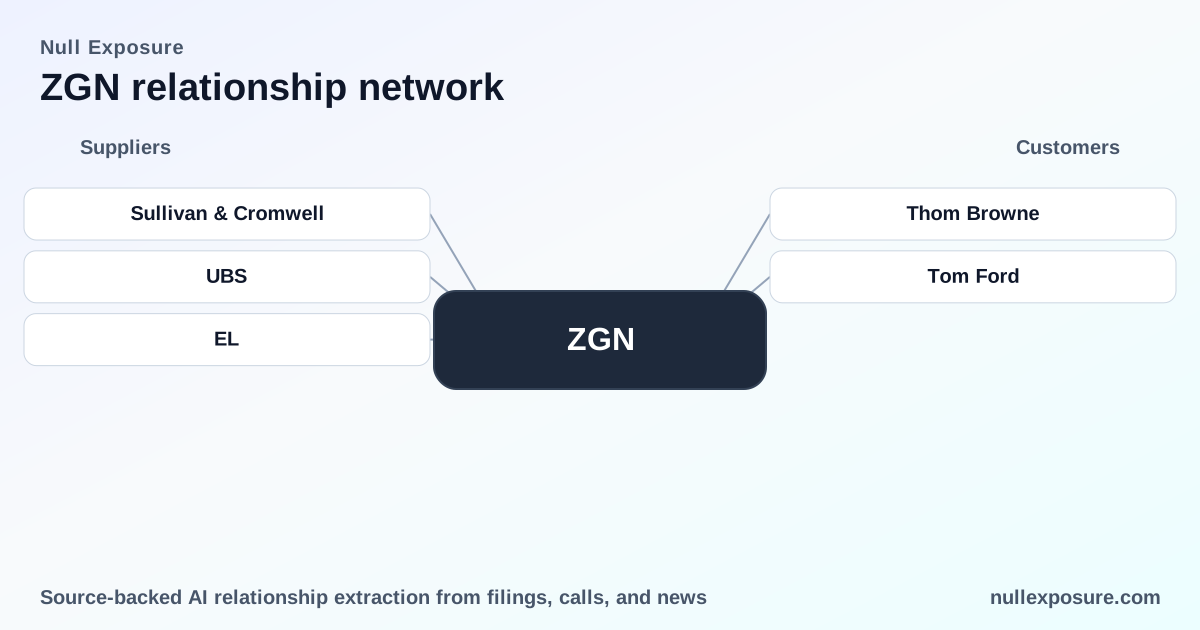
Zegna (ZGN) — Customer Relationships with Tom Ford and Thom Browne: What investors need to know
Ermenegildo Zegna NV is a vertically integrated luxury menswear group that designs, manufactures and sells apparel across a mix of owned and partner brands, monetizing through wholesale, retail and brand-led channels that capture premium margins on fabric-to-shelf control. Revenue derives from direct retail, wholesale distribution and branded partnerships, and the company’s strategy leverages brand breadth to penetrate affluent customer segments globally. For investors evaluating customer-related exposure, the immediate takeaway is that Zegna’s customer map includes recognized luxury fashion labels such as Tom Ford and Thom Browne, which function as distribution and brand channels that shape revenue stability and margin leverage. Learn more at https://nullexposure.com/.
Operational and commercial characteristics described below translate directly into how those relationships affect cash flow, concentration risk and long-term growth.
How Zegna’s customer relationships drive economics and operational posture
Zegna’s business model is defined by control over production and selective distribution, which produces higher gross margins than pure wholesale competitors. The commercial relationships identified in the reviewed materials are brand-distribution relationships rather than short-term retail accounts. From an investor perspective, that implies:
- Contracting posture: Negotiated, multi-period brand and distribution arrangements that are standard in luxury apparel, not spot-market retail transactions. These relationships are structural to product placement and pricing control.
- Customer concentration: Presence of prominent luxury brands as channels concentrates exposure in fashion-led premium consumers; this is a revenue mix signal, not a single-client dependency based on available materials.
- Criticality: Brand partnerships are strategically critical to geographic reach and segment penetration; they influence product assortments and seasonal demand.
- Maturity: The relationships operate within mature luxury distribution frameworks—store-in-store, wholesale, and owned retail—rather than nascent digital-only partnerships.
These are company-level signals derived from the reviewed results and the firm’s stated operating model; no explicit contract excerpts were provided naming contractual terms or durations.
Customer relationships covered in the record
The dataset returned two customer-facing brand relationships. Each relationship below is summarized in plain English with the original source cited.
Thom Browne
Zegna sells products through Thom Browne as one of the brands in its distribution mix, indicating Thom Browne functions as a branded channel within Zegna’s product portfolio and routing to affluent customers. A March 10, 2026 InsiderMonkey piece listed Thom Browne among the brands through which Zegna sells products (https://www.insidermonkey.com/blog/can-ermenegildo-zegna-nv-zgn-sustain-the-momentum-with-affluent-consumers-1705344/).
Tom Ford
Zegna’s product distribution includes Tom Ford fashion as a named brand channel, reflecting the company’s placement within high-end fashion assortments that target the same premium consumer base as Zegna’s namesake label. The same March 10, 2026 InsiderMonkey coverage cited Tom Ford fashion as part of Zegna’s brand distribution mix (https://www.insidermonkey.com/blog/can-ermenegildo-zegna-nv-zgn-sustain-the-momentum-with-affluent-consumers-1705344/).
What these relationships mean for revenue quality and risk
These brand relationships are not casual retail accounts; they represent engagement with established luxury labels that support premium pricing, stable gross margins and curated distribution. For investors, three implications are immediate:
- Revenue resilience through brand diversification: Selling through multiple premium brands spreads demand shocks across luxury segments and channels, supporting revenue stability during cyclical pressure in any single label.
- Margin preservation: Control over production plus branded distribution supports higher gross margins, evidenced by Zegna’s reported gross-profit profile in recent financials.
- Exposure to fashion cycle risk: Brand-led models amplify sensitivity to consumer sentiment and seasonal trends; product-level hits or misses in partner-brand assortments translate quickly into sales volatility.
Constraints and signal summary from the reviewed materials
No explicit contractual constraints, exclusivity clauses, or vendor concentration excerpts were included in the materials returned for ZGN’s customer relationships. Presenting this as a company-level signal:
- No identified contractual constraints: The reviewed record contains zero constraint excerpts specifying pricing locks, minimum purchase obligations or exclusivity tied to the listed relationships.
- Disclosure gap: Absence of contractual detail in the available sources signals the need for investors to consult filings or direct company disclosures if contractual duration, termination rights or minimums are material to modeling.
- Commercial posture: The lack of constraint excerpts is consistent with typical luxury brand relationships that are commercially negotiated and disclosed at a summary level, rather than itemized in press coverage.
Investor implications: modeling considerations and risk factors
For a buy-side or operator assessment, focus on how brand relationships translate into predictable revenue and margin streams:
- Model revenue assumptions around channel mix (owned retail vs. brand partnerships vs. wholesale), not just headline same-store sales.
- Assign a moderate concentration premium to partnerships with high-profile brands; they support pricing power but increase sensitivity to fashion cycles.
- Stress-test margins for demand softening: brand assortments and wholesale commitments typically compress margins faster than owned retail.
- Monitor public and regulatory disclosures for licensing or acquisition detail that could alter ownership or control of brand inventory and thus revenue recognition timing.
Key risk factors: seasonal demand swings, changing wholesale arrangements, and any undisclosed minimum purchase or termination clauses that would intensify downside in a revenue contraction.
Bottom line for investors
Ermenegildo Zegna’s commercial footprint includes recognized luxury brands such as Tom Ford and Thom Browne, which serve as distribution channels that support premium pricing and differentiated customer reach. The reviewed materials offer clear evidence of these brand relationships but do not disclose contractual specifics, leaving investors to rely on revenue mix analysis and company filings for duration and exposure details. For a concise, research-grade view of Zegna’s customer landscape and how it feeds into revenue and risk modeling, visit https://nullexposure.com/ for extended analysis and sourcing.
Bold takeaway: Brand partnerships reinforce Zegna’s premium positioning and margin profile, but they also concentrate exposure in fashion-cycle dynamics—contract-level disclosure is the next step for precise downside modeling.