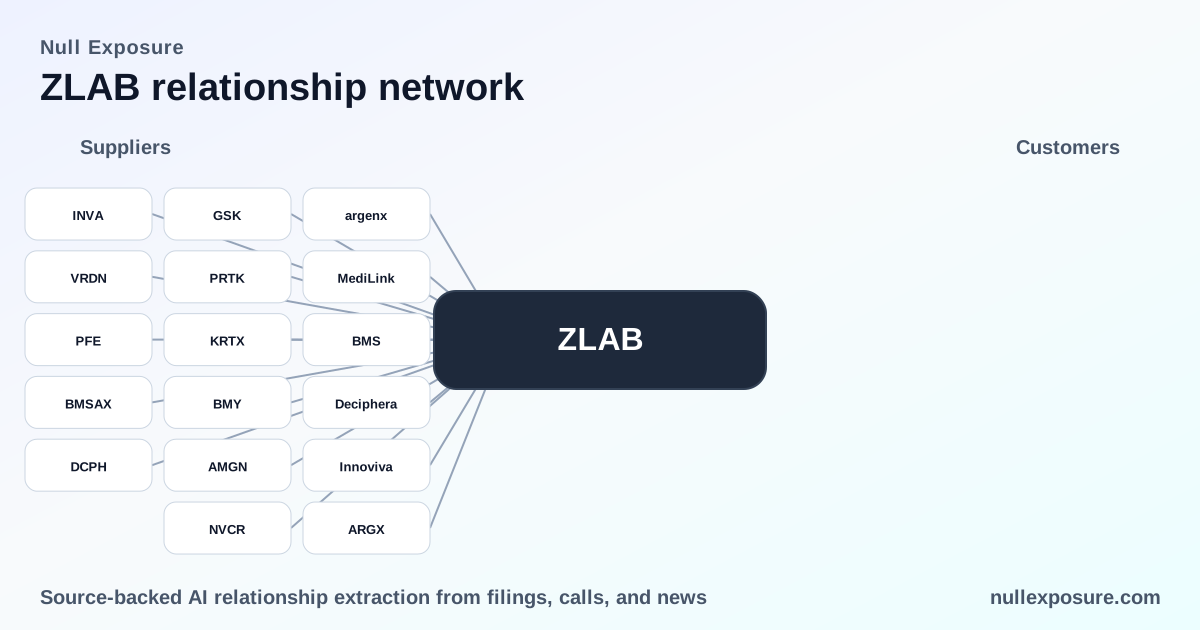
Zai Lab (ZLAB) — Customer relationships and commercial footprint investors should price in
Zai Lab is a Shanghai‑based biotechnology company that discovers, licenses, develops and commercializes therapies primarily in Greater China. The company monetizes through product sales routed chiefly through third‑party distributors and through licensing/collaboration agreements that include supply of investigational material, while retaining intellectual property on select assets. With trailing twelve‑month revenue of $460.2 million and a market capitalization near $2.38 billion, Zai Lab combines a commercial revenue base with ongoing R&D obligations and partnership activity that influence counterparty exposure and cash flow timing. For a concise relationship map, visit https://nullexposure.com/.
How Zai Lab sells and where counterparty risk concentrates
Zai Lab’s operating model is distribution‑centric and APAC‑focused. Company disclosures state that product revenue is generated through sales in Greater China and that Zai Lab sells to distributors, who then serve healthcare providers. This contracting posture creates a layered revenue recognition and collection dynamic—Zai Lab transfers goods to intermediaries rather than billing end‑users directly, which concentrates commercial risk with a small set of distribution partners and with the Chinese market.
- Geographic concentration: Zai Lab’s primary market is mainland China; its commercial rollout strategy and revenue drivers are tied to this region. According to company disclosures, ZEJULA and other commercial programs are targeted to patients in mainland China.
- Distribution dependence: Zai Lab relies on independent third‑party distributors to sell its commercial portfolio in Greater China, consistent with pharmaceutical industry norms documented in its filings.
- Commercial maturity: The firm reports seven commercial programs currently approved and marketed in mainland China and a recent uplift in net product revenue driven by new launches and NRDL listings.
These characteristics imply high customer concentration risk by geography and by channel, and they shape counterparty diligence priorities for investors evaluating receivables durability and reimbursement sensitivity. If you want a structured view of counterparties and contract posture, see https://nullexposure.com/.
Customer relationships surfaced in the coverage
The available customer‑relationship evidence in public reporting for Zai Lab is limited but instructive. The single relationship item identified in the search is:
- Amgen (AMGN): Zai Lab will retain full ownership of zoci and will supply the investigational drug for an Amgen clinical study, indicating a supply‑for‑trial arrangement in which Zai Lab preserves IP ownership while providing material to a large global collaborator. This was reported by AASTOCKS on May 4, 2026. (AASTOCKS, May 4, 2026)
What the Amgen arrangement implies
The Amgen engagement is a classic biotech collaboration structure: Zai Lab supplies investigational product while keeping ownership of the asset. That structure preserves Zai Lab’s long‑term rights over zoci while generating near‑term supply responsibilities and potential milestone or supply revenue, depending on contract economics not disclosed in the report. The arrangement signals that Zai Lab is a credible supplier of clinical‑grade material and that global partners are willing to run trials with Zai’s assets under retention of IP.
Company‑level constraints and what they mean for investors
Beyond discrete partner notices, Zai Lab’s filings and disclosures produce clear, company‑level constraints investors must price into models:
- Geography (APAC concentrated): Zai Lab generates product revenue primarily in Greater China, which concentrates exposure to Chinese regulatory shifts, NRDL listing outcomes, and domestic payer negotiations. This raises country‑level execution risk for projected topline growth.
- Contracting posture (seller to distributors): The firm sells through distributors rather than direct hospital contracting, producing intermediated revenue flows and dependence on distributor credit and inventory management. This increases the need for active distributor oversight and can compress realized margins due to rebates, returns and distributor markups.
- Distribution segment reliance: Zai Lab’s commercial go‑to‑market relies on third‑party distribution channels, which dilute direct control over market access and clinical adoption cadence.
- Relationship maturity (active commercialization): Zai Lab reports multiple approved commercial programs and recent revenue growth, illustrating that the business is past purely preclinical stages and is operating in a commercialization phase that requires scale‑up, working capital and distributor coordination.
- Financial backdrop: Trailing data show negative operating margins and EBITDA alongside analyst interest (consensus midpoint target price near $35.34 and a mix of buy/strong buy recommendations), underlining a growth narrative balanced by ongoing losses and execution risk.
Each of these constraints functions as a company‑level signal that affects how investors should underwrite counterparties and recovery scenarios. The disclosures stating net product revenue increases in 2024 and distributor reliance are direct inputs from Zai Lab’s public filings referenced in its investor materials.
Risks and upside tied to customer relationships
- Risk — concentrated channel exposure: Heavy reliance on Greater China and distributor partners increases sensitivity to local reimbursement decisions, distributor credit stress, and inventory cycles.
- Risk — opaque commercial terms: Collaboration announcements such as the Amgen supply arrangement typically omit pricing, milestone, or buy‑back provisions; investors must assume limited near‑term revenue impact unless the company discloses otherwise.
- Upside — strategic partner validation: Supply agreements with global biopharma players validate Zai Lab’s clinical assets and manufacturing capabilities, which can accelerate development value and open licensing or co‑development pathways.
- Operational leverage: As Zai Lab scales existing commercial programs, improved gross margins and local reimbursement wins (for example NRDL listing outcomes) can materially affect cash flow given current negative operating leverage.
Bottom line for investors and next steps
Zai Lab combines an active commercial portfolio in China with partnership activity that validates its pipeline while exposing the company to concentrated geographic and channel risk. Key investor takeaways: Zai Lab monetizes primarily through distributor sales in Greater China, retains IP on some partnered assets while supplying investigational material to collaborators, and operates with negative margins but growing product revenue. Monitor distributor concentration, NRDL and payer outcomes, and the company’s disclosures around commercial contract economics.
For investors focused on counterparty exposure, prioritize diligence on distributor credit profiles, contract terms for supply and licensing agreements, and cadence of NRDL/reimbursement wins. For a practical relationship map and actionable counterparty intelligence, explore https://nullexposure.com/.