ZURA: Who’s funding the next phase and what that means for investors
Zura Bio (NASDAQ: ZURA) operates as a clinical-stage biotechnology company developing novel therapies for autoimmune and rare diseases and, to date, generates no commercial revenue. The company monetizes through equity financing, strategic investor syndicates, and the prospective value creation of clinical-stage assets that can be licensed or partnered; capital markets and institutional backers therefore determine near-term runway and valuation. For investors assessing customer and capital relationships, the June 2023 financing and its lead participants are the most material commercial signals today. For deeper relationship intelligence on life‑science financings visit https://nullexposure.com/.
A concise recap of the June 2023 financing — the commercial fact pattern
In June 2023 Zura completed a significant equity offering that provided the company with approximately $80 million in proceeds. That transaction is the focal point for understanding who supplies Zura’s operating capital and how concentrated its funding sources are.
Deep Track Capital — a lead institutional backer
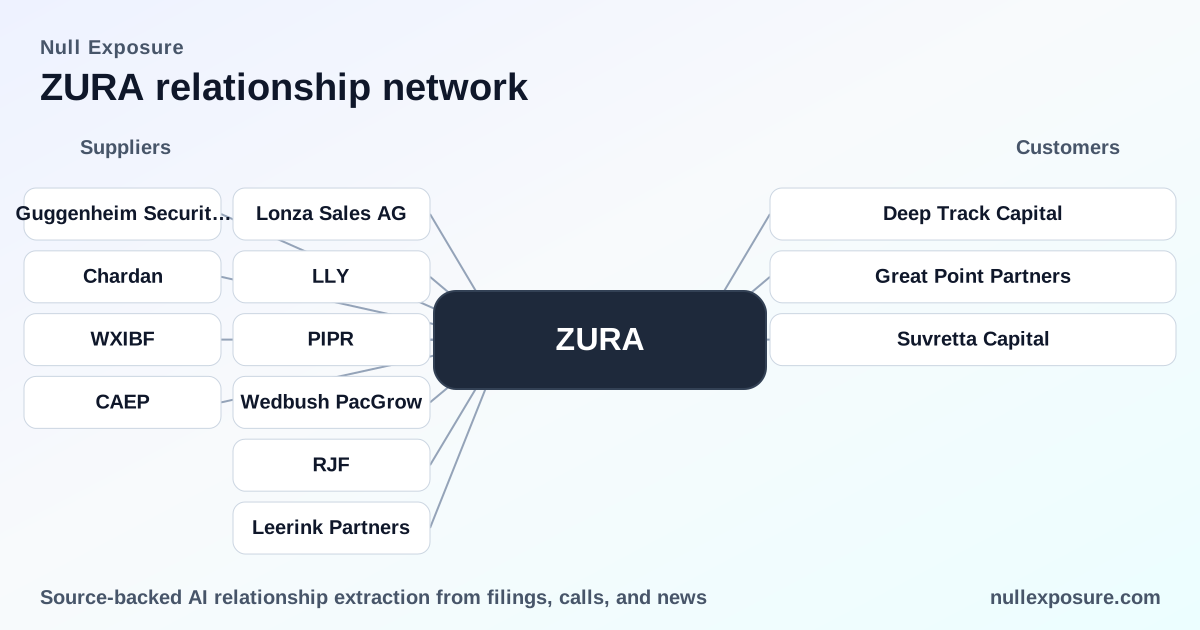
Deep Track Capital led the offering that supplied a large portion of the approximately $80 million financing, signalling a direct institutional commitment to Zura’s clinical program development and near‑term cash runway. According to a Business Wire press release dated June 6, 2023, Deep Track Capital was named as a leading participant in the offering. https://markets.financialcontent.com/stocks/article/bizwire-2023-6-6-zura-bio-completes-approximately-80-million-financing-with-the-focus-on-advancing-zb-106-a-potential-first-in-class-anti-il-17-and-anti-baff-dual-antagonist?Language=english
Great Point Partners — a strategic co-lead in the round
Great Point Partners served as a co-lead in the financing alongside Deep Track Capital, providing meaningful capital infusion that supports Zura’s development milestones and validates external investor interest in ZB-106. The Business Wire notice listing the participants confirms Great Point Partners’ role in the June 2023 offering. https://markets.financialcontent.com/stocks/article/bizwire-2023-6-6-zura-bio-completes-approximately-80-million-financing-with-the-focus-on-advancing-zb-106-a-potential-first-in-class-anti-il-17-and-anti-baff-dual-antagonist?Language=english
Suvretta Capital — participation from a life‑sciences investor group
Suvretta Capital was also identified among the leading investors that participated in the approximately $80 million financing, representing additional institutional validation of Zura’s clinical strategy and enhancing syndicate diversity. The same Business Wire release (June 6, 2023) lists Suvretta Capital as a named participant in the transaction. https://markets.financialcontent.com/stocks/article/bizwire-2023-6-6-zura-bio-completes-approximately-80-million-financing-with-the-focus-on-advancing-zb-106-a-potential-first-in-class-anti-il-17-and-anti-baff-dual-antagonist?Language=english
Why these relationships matter for valuation and execution
The June 2023 financing is the clearest commercial signal available: Zura’s near-term execution depends on capital markets and institutional investors, not product revenues. The identities of the lead investors matter because:
- They shape runway and follow-on funding prospects; a syndicate led by experienced life‑science investors increases the likelihood of additional rounds on favorable terms if clinical readouts progress.
- They affect perceived credibility with potential partners and acquirers, which in turn impacts licensing terms and M&A optionality.
- They imply a concentration of capital: a few lead investors hold outsized influence over governance and future transactions.
For investor due diligence, these capital relationships are effectively Zura’s primary “customer” — they buy equity and therefore determine whether the company can test, de‑risk, and commercialize its assets.
Operating model and business‑model constraints investors should read through
Zura’s operating model and business model present predictable structural characteristics:
- Contracting posture: equity-finance dependent. Zura contracts its runway to the capital markets; the company historically raises cash through institutional offerings rather than generating operating revenue.
- Concentration: capital concentrated among a small set of institutional investors. The June 2023 syndicate led by Deep Track, Great Point and Suvretta indicates concentrated funding sources that will influence governance and exit planning.
- Criticality: investor capital is mission‑critical. With zero reported revenue and continued negative EBITDA, outside financing is the critical input to execute clinical milestones and deliver value.
- Maturity: clinical-stage R&D profile. Zura sits in a pre-revenue, R&D-heavy phase where value is binary and milestone-driven; commercial maturity will depend on successful trials or a strategic partnership.
These are company‑level signals derived from public filings, reported financings, and the capital structure; they explain why the identities of financing participants are material to investors.
Financial and governance signals to watch next
Zura’s public data show a market capitalization of roughly $505 million, no revenue reported, negative EBITDA (approximately -$75.2 million), and a diluted EPS around -$1.08 for the latest reporting period. Institutional ownership is meaningful (about 56% institutional holders), while insiders retain roughly 21% of equity — a balance that supports both discipline and potential dilution decisions. Analysts’ consensus target price is $15.50, which investors should weigh against the company’s revenue‑less status and binary clinical risk.
Monitor these items closely:
- Cash runway and the timing of next capital event.
- Clinical milestones tied to ZB‑106 and any partnering announcements.
- Changes in the investor syndicate composition or increases in insider sell activity.
Upside catalysts and primary risks
- Upside catalysts: positive clinical data, licensing or collaboration deals that reduce dilution, or successful commercialization paths that transition Zura from a financing-dependent model to revenue generation.
- Primary risks: continued zero revenue coupled with ongoing cash burn requires frequent access to equity markets; concentrated investor base increases governance risk; clinical trial failure would materially impair valuation.
Investors should value Zura as a capital‑intensive, clinical‑stage biotech where institutional relationships are the functional equivalent of customers. The June 2023 financing is the single most actionable relationship disclosure available to date.
For institutional subscribers seeking a deeper mapping of Zura’s investor syndicate and governance implications, further analysis is available at https://nullexposure.com/.
Bottom line for investors
Zura’s trajectory is determined by clinical progress and the willingness of a concentrated set of institutional investors to continue providing capital. The June 2023 financing led by Deep Track Capital, Great Point Partners, and Suvretta Capital is the pivotal commercial relationship that underpins the company’s near‑term prospects. Track cash runway, syndicate behavior, and clinical readouts to assess valuation inflection points.