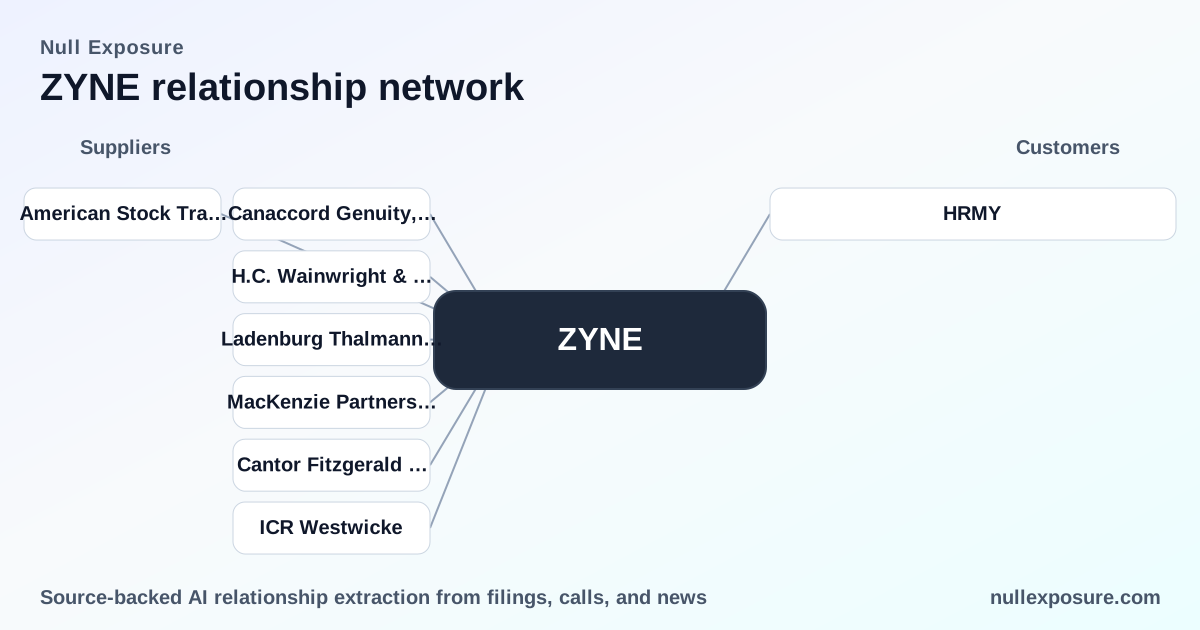
ZYNE Customer Relationships: Post‑Acquisition Reality Check for Investors
Zynerba Pharmaceuticals historically monetized through clinical-stage drug development and strategic transaction outcomes rather than steady product sales: the company structured value capture around an upfront acquisition payment plus contingent milestone payments tied to clinical, regulatory and sales outcomes. For investors evaluating ZYNE customer relationships, the critical lens is how those milestone structures and recent clinical data drive contingent value and integration risk rather than recurring revenue. Explore underlying relationship intelligence at https://nullexposure.com/.
The short narrative: sale, contingencies, and clinical risk
Zynerba’s commercial profile shifted decisively when a strategic buyer agreed to an upfront purchase price and a layer of contingent payments that depend on reaching clinical and commercial milestones. That structure concentrates value delivery into a few discrete events—an upfront cash inflection and subsequent binary milestone payoffs—and therefore concentrates investor exposure to clinical trial outcomes and integration execution.
What the relationships in the record show
Below I list each relationship entry from the record and summarize the business-relevant point for investors.
- Harmony Biosciences — acquisition terms reported (PharmExec, FY2023). Harmony agreed to acquire Zynerba for an upfront $60 million and up to $140 million in additional contingent payments tied to clinical, regulatory and sales milestones, establishing Zynerba’s monetization as transaction‑driven with significant milestone dependence (PharmExec, March 10, 2026).
- HRMY (duplicate entry for Harmony) — same acquisition terms (PharmExec, FY2023). The record includes a second, identical capture of the same PharmExec report noting the $60 million upfront and potential $140 million contingent consideration, reinforcing that the acquisition terms were a primary contractual event driving value (PharmExec, March 10, 2026).
- Harmony Biosciences — post‑acquisition clinical setback (Ad‑Hoc News, FY2025). After Harmony completed the acquisition in October 2023, Harmony reported that a crucial Phase 3 trial (RECONNECT) failed to meet its primary endpoint, which directly reduces the likelihood and timing of milestone payments tied to that program (Ad‑Hoc News, May 4, 2026).
Each of these three results is relevant to how Zynerba’s customer and counterparty exposure translates into investor outcomes: two records document the transaction and mechanics of payment, and the third documents the clinical outcome that affects those mechanics.
Operational signals and constraints affecting valuation
There were no formal constraints extracted in the record as structured metadata; however, the relationship evidence generates several company‑level operating signals investors must treat as constraints on value realization:
- Milestone‑dependent contracting posture. The acquisition structure — a modest upfront payment with substantial contingent consideration tied to clinical, regulatory and sales milestones — indicates Zynerba’s monetization strategy relied on post‑closing performance triggers rather than immediate, recurring revenue streams. That implies valuation is highly path‑dependent on future event completion timing.
- Concentration of value. The majority of transaction value is concentrated in contingent payments, creating binary outcomes that materially swing recoverable value up or down depending on trial and regulatory outcomes.
- Criticality of clinical readouts. The Phase 3 RECONNECT failure is a direct operational constraint: it reduces the probability of milestone payout and shortens the pathway to full integration by the acquirer, increasing downside for holders hinging on those contingent receipts.
- Maturity and exit posture. The sale to Harmony closes Zynerba’s lifecycle as an independent commercial enterprise; this reduces ongoing customer‑relationship complexity but also means remaining investor return is driven by contingent claim resolution and integration performance rather than organic growth.
These signals are company‑level and follow from the relationship data rather than a separately extracted constraints feed.
What this means for investors and operators
- Valuation sensitivity is high. With the bulk of deal economics tied to milestones, the stock or claim recovery profile is highly sensitive to individual clinical readouts. The RECONNECT failure is a material negative that reduces the present value of contingent consideration.
- Counterparty execution matters. Harmony’s integration and its decisions about further development or commercialization now drive any remaining upside. Investors must switch focus from Zynerba’s standalone development execution to Harmony’s capital allocation and program prioritization.
- Liquidity profile has changed. The transaction transforms expected cash flows from product development upside to contingent receipts; investors should price in the timing uncertainty and binary outcome structure.
Practical checklist for analysts covering ZYNE
- Reprice contingent consideration using updated probabilities post‑RECONNECT; treat timelines as uncertain and apply conservative discounting to milestone tranches.
- Monitor Harmony’s public filings and communications for explicit statements on milestone accruals or program termination decisions. Harmony’s stance on further investment determines whether any contingent payments remain plausible.
- Track regulatory and sales signals only if Harmony signals continued commercialization intent; otherwise, contingent sales‑based milestones become unlikely.
Where to go for deeper relationship signals and continuous tracking
For research teams and operators who need ongoing updates on counterparties, acquisition terms, and post‑transaction clinical developments, structured relationship monitoring is essential. NullExposure maintains live relationship intelligence and archived source links to trace how contingent deals evolve over time. Visit https://nullexposure.com/ for full access to the relationship records and ongoing alerts.
Bottom line: concentrated, event‑driven value with diminished upside after a failed readout
Zynerba’s remaining investor outcomes are dominated by a small set of contractual events created by the Harmony purchase: upfront cash already received and contingent payments that are now less likely after the Phase 3 failure. Analysts should treat ZYNE exposure as a contingent claim on Harmony’s future decisions about the acquired program portfolio rather than as exposure to recurring product revenue or an ongoing standalone customer base.