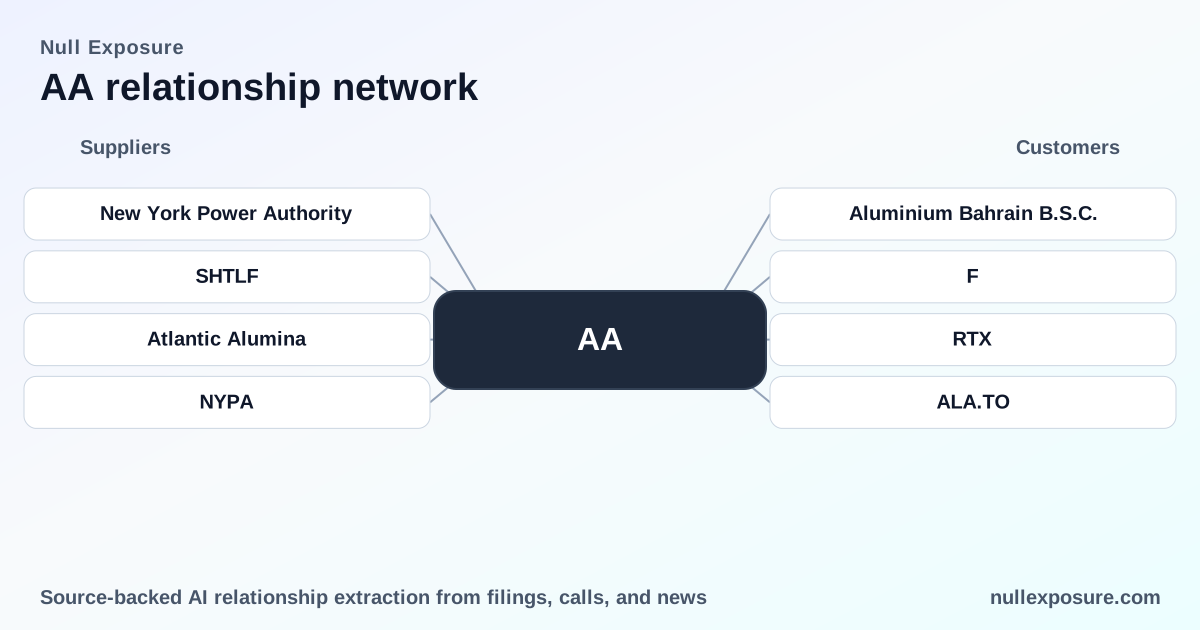
Alcoa (AA) supplier map: where energy, bauxite and contracts drive the margins
Alcoa operates as an integrated bauxite-to-aluminum producer, monetizing through upstream mining (bauxite), midstream refining (alumina) and downstream smelting and aluminum product sales; its profitability is tightly coupled to energy costs, long-term raw‑material arrangements and capital allocation to idled or restarted smelters. With trailing revenue around $12.7B and EBITDA near $1.7B, the company balances commodity cyclicality with contractual protections — investors should treat supplier and energy counterparties as first‑order drivers of margin volatility and project economics. For a supplier-risk and counterparty view tailored to investors, visit https://nullexposure.com/.
The supplier relationships investors must track today
Below I summarize each relationship referenced in public materials and media coverage; each entry is followed by the documentary or press source.
New York Power Authority (NYPA / New York Power Authority)
Alcoa has committed to a long-term energy arrangement supplying the Massena, NY site with hydropower capacity that underpins restart and operation economics; press reported a 10‑year agreement providing roughly 240 MW of renewable energy starting April 1, 2026, with optional extensions. The Massena site’s access to hydropower via the Moses‑Saunders dam is cited repeatedly in media coverage discussing a potential sale or operational pivot of the facility. (Sources: Finviz coverage of Alcoa’s 2026 metals outlook, March 9, 2026; Alcoa 2025 Form 10‑K; TheEnergyMag and Bitcoin.com news pieces, April–May 2026.)
SHTLF (as reported in Alcoa filings)
Alcoa’s 2024 Form 10‑K documents bauxite offtake agreements with South32 (reported under ticker/SHTLF) to supply bauxite against existing long‑term supply contracts, reflecting contractual anchoring of upstream feedstock for alumina operations. This is presented in Alcoa’s filings as a part of their secured raw‑material footprint. (Source: Alcoa 2024 Form 10‑K, aa‑2024‑12‑31.)
South32
The company also discloses the same bauxite offtake relationship with South32 in its filings, reinforcing that Alcoa sources material through both owned resources and contracted third‑party supply to meet refinery needs. (Source: Alcoa 2024 Form 10‑K, aa‑2024‑12‑31.)
Atlantic Alumina
Investor Q&A and earnings transcripts reference Atlantic Alumina and discussions about increasing alumina and gallium production; analysts asked whether Alcoa would consider participation, indicating the company is monitoring regional alumina capacity and potential strategic ventures or supply partnerships. (Source: Q4 2025 earnings call transcript as reported by The Globe and Mail / Motley Fool, March 2026.)
How these relationships reveal Alcoa’s operating posture
Alcoa’s public disclosures and media coverage paint a mixed contracting posture: the company runs a portfolio of long‑term energy and raw material contracts alongside short‑term facilities and supplier‑finance programs. That mix creates both resilience and refinancing/timing risk.
- Long‑term energy commitments and optional renewals: Alcoa reports energy purchase obligations extending into the 2040–2041 timeframe, and media documents a multiyear NYPA deal effective 2026, which insulates smelter operations from spot power shocks but locks in forward cost exposure. (Company filings; press coverage.)
- Long‑ and short‑term bauxite sourcing: The company obtains bauxite from owned resources and through both long‑term and short‑term contracts and leases, which reduces raw‑material concentration but leaves some exposure to supplier availability and country risk. (Company filings.)
- Working capital and supplier finance usage: Alcoa operates supplier‑finance programs and receivables transfer arrangements with maturities and thresholds, and invoices under those programs carry payment terms of roughly 50–110 days, which affects supplier liquidity and Alcoa’s payables profile. (Company filings.)
- Credit and liquidity cadence: A primary revolving credit facility (and related corporate debt issuance) creates a refinancing calendar — for example, the revolving facility was scheduled to mature in June 2027 and a Rule 144A note due 2031 is outstanding — highlighting near‑term refinancing execution as a governance consideration. (Company filings.)
These points are company‑level signals drawn from Alcoa’s disclosures rather than being attributed to any single counterparty unless the filing explicitly names that counterparty.
Contract maturity, geographic spread and spend profile
Alcoa’s contractual footprint is global and capital intensive:
- Geographic dispersion: Security and collateral arrangements for credit facilities reference material subsidiaries across Australia, Brazil, Canada, Luxembourg, the Netherlands, Norway and Switzerland, indicating cross‑jurisdictional legal and operational complexity. (Company filings.)
- Maturity ladder: Debt and energy obligations show a staggered but material maturity profile — a major revolving facility with a 2027 maturity, long energy purchase obligations to 2040–2041, and a 2031 green‑note — creating both short‑term refinancing focus and long‑dated structural commitments. (Company filings.)
- Spend scale: Letters of credit, surety bonds and bank guarantees aggregated into the low‑hundreds of millions (e.g., $245M in surety bonds, $316M in guarantees and letters of credit cited) indicate large counterparty exposures and contractual security that impacts available liquidity and contingent liabilities. (Company filings.)
For a concise supplier exposure dashboard tailored to investors, see https://nullexposure.com/.
Investment implications — risks and opportunities
- Energy contracts are a double‑edged sword: long‑dated power deals like the NYPA arrangement reduce volatility in smelter margins but create operational leverage to demand and regulatory shifts in power markets and community expectations. This is a material risk/benefit driver.
- Raw material sourcing is hedged but not immune: long‑term offtakes with parties such as South32 reduce procurement risk, yet geopolitical or mine‑level outages would still pressure supply and costs. Bauxite contracts are critical to refinery throughput.
- Refinancing and liquidity are near‑term focal points: the revolving credit maturity profile and the use of receivables facilities mean execution on capital markets and bank relationships is a near‑term investor watch item.
- Supplier finance and payment‑term structure: programs that extend supplier payment terms (50–110 days) improve Alcoa’s cash conversion but transfer liquidity pressures to vendors; this is a credit‑chain risk that investors should monitor.
Bottom line for portfolio managers
Alcoa’s supplier map shows a deliberate tilt toward contractual stability for energy and bauxite while using short‑term capital markets tools to smooth operations. For investors, the key questions are execution on the NYPA energy economics at Massena, the integrity of bauxite offtakes (e.g., South32), and the company’s ability to manage near‑term refinancing and working‑capital structures. The combination of long‑dated energy obligations and large contingent guarantees makes supplier‑counterparty monitoring a central part of any Alcoa investment thesis.
If you want a structured counterparty risk profile for Alcoa and comparable basic‑materials suppliers, explore detailed models and supplier scoring at https://nullexposure.com/.