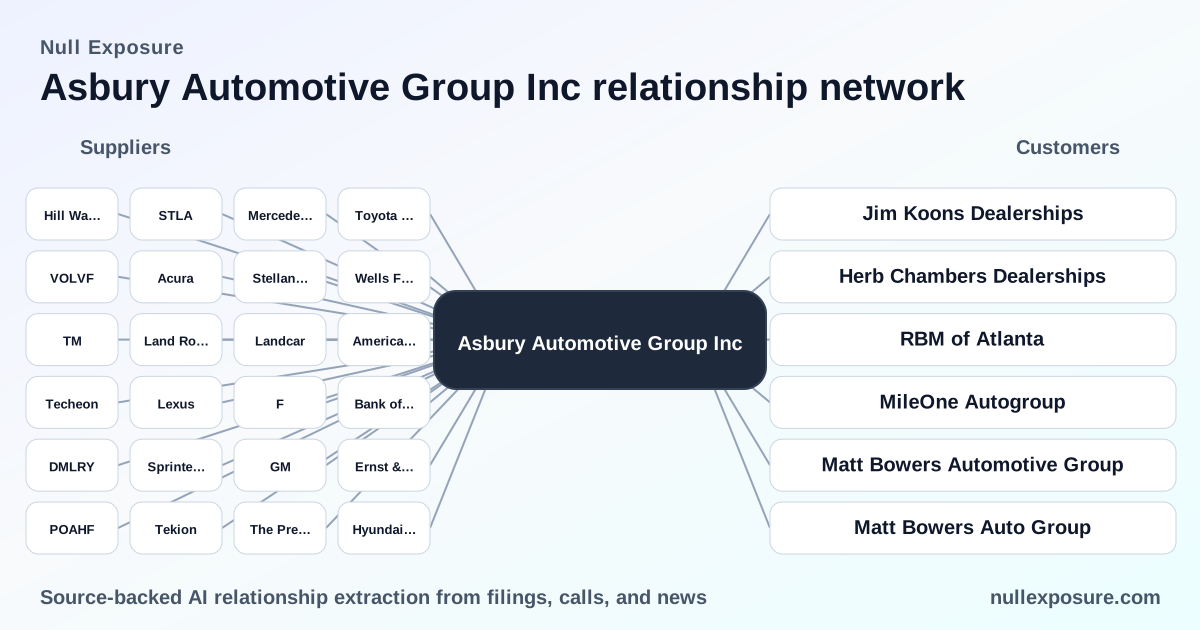
Asbury Automotive Group (ABG): supplier map, commercial posture and investor implications
Asbury Automotive Group operates as a national automotive retailer that monetizes through new and used vehicle retailing, finance & insurance (F&I) products, parts and service, collision repair, and strategic dealership M&A. Revenue flows depend on manufacturer allocations and dealer/franchise agreements, supplemented by captive floor‑plan financing and real estate credit facilities; margins are driven by after‑sales services and F&I. For investors and operators, the critical question is how concentration with large manufacturers and reliance on third‑party platforms translate into operational leverage and interruption risk.
Explore ABG’s supplier and service relationships in depth at https://nullexposure.com/ for primary sourcing and continuous updates.
How Asbury contracts and where leverage sits
Asbury’s operating model is franchise and dealer‑agreement centric. The company runs dealerships under manufacturer franchises and purchases inventory largely via captive finance and floor‑plan facilities; those manufacturer relationships are both revenue drivers and a supply constraint. ABG discloses a set of framework agreements and dealer addenda that supplement standard franchise contracts, imposing operational requirements beyond base dealer agreements (FY2024 Form 10‑K). The company also carries multi‑year credit facilities and real estate loan agreements that create medium‑term financing covenants with banks.
- Contracting posture: Dealer agreements range from one year to indefinite terms with renewal expected in the ordinary course, but supplemental framework agreements create ongoing operational obligations (company statement in FY2024 10‑K).
- Concentration & criticality: Manufacturers constitute a material and at times critical concentration of inventory supply and revenue; the 10‑K lists manufacturers representing 5%+ of new‑vehicle revenue for 2024 (FY2024 10‑K).
- Service vendor risk: ABG depends on third‑party dealership systems and vendors; prior vendor cyber incidents affected sales, service and accounting functions (FY2024 10‑K).
- Financial maturity: A senior credit facility maturing in October 2028 defines the multi‑year financing horizon and refinancing exposure (FY2024 filing).
If you want a consolidated view of ABG counterparty exposures and documentary citations, see our research hub at https://nullexposure.com/.
What investors need to know: strategic constraints and implications
- Manufacturer dependence is operationally critical. New vehicle availability and parts flow are controlled by OEM allocation policies; shortfalls translate directly to top‑line swings and downstream service opportunities. This is a firm‑level materiality signal (FY2024 10‑K).
- Framework agreements increase operational rigidity. Multiple manufacturers impose supplemental requirements that can limit pricing, branding and service decisions—these are ongoing contractual constraints cited in the 10‑K.
- Platform migration creates near‑term disruption with long‑term efficiency upside. Asbury’s multi‑store migration to a new dealer management system (DMS) is already producing pilot productivity gains while creating integration costs and temporary disruption (press coverage Q1–Q2 2026).
- Bank and real‑estate financing anchor the balance sheet. Multiple master loan and real estate credit agreements with major banks create refinancing and covenant timelines investors must monitor (FY2024 10‑K).
Counterparty map: every supplier and service relationship in ABG’s public record
Below are concise, plain‑English summaries for each relationship captured in ABG’s results feed, with source citations.
- Bank of America, N.A.: ABG records loaner‑vehicle notes payable to Bank of America in its FY2024 Form 10‑K, indicating Bank of America’s role as a lender on certain vehicle financing arrangements (ABG FY2024 10‑K).
- American Honda Motor Co., Inc.: ABG lists Honda and Acura as active new‑vehicle manufacturers for its dealerships, reflecting franchise inventory and after‑sales reliance (ABG FY2024 10‑K).
- Hyundai Motor North America: Hyundai and Genesis are identified as suppliers of new vehicles for ABG stores, representing active manufacturer relationships (ABG FY2024 10‑K).
- Mercedes‑Benz USA, LLC: ABG operates Mercedes, Smart and Sprinter branded franchises and reports those manufacturer relationships in its FY2024 filing (ABG FY2024 10‑K).
- Stellantis N.V.: Stellantis (Chrysler, Dodge, Jeep, Ram, Fiat) is catalogued as an OEM source for new vehicles, and ABG noted operational challenges in some Stellantis stores in recent commentary (ABG FY2024 10‑K; Q4 2025 earnings call transcript, Mar 2026).
- Toyota Motor Sales U.S.A., Inc.: Toyota and Lexus franchises are listed as active suppliers of new vehicles and parts to ABG dealerships (ABG FY2024 10‑K).
- Wells Fargo Bank, National Association: ABG’s subsidiaries entered a master loan agreement with Wells Fargo for real estate financing, documented in the FY2024 10‑K discussion of existing real estate credit agreements (ABG FY2024 10‑K).
- Ernst & Young LLP: Ernst & Young is ABG’s independent auditor, providing audited consolidated financial statements and internal control opinions (ABG FY2024 10‑K).
- The Presidio Group (Intellectia/StockTitan/WardsAuto coverage): The Presidio Group served as exclusive M&A advisor to Asbury on recent dealer transactions and sale processes documented in multiple news reports in early 2026 (Intellectia, StockTitan, WardsAuto, Feb–Mar 2026).
- Landcar (Total Care Auto): ABG operates “Total Care Auto, Powered by Landcar,” a service‑contract and vehicle protection product provider and collision repair network referenced in earnings releases and press coverage (Intellectia, MarketWire, Mar 2026).
- Ford Motor Company / Ford (10‑K entries for Ford/F): ABG maintains Ford and Lincoln franchises and a floor‑plan facility relationship to purchase those vehicles, identified in the FY2024 10‑K (ABG FY2024 10‑K).
- General Motors Company / GM: Chevrolet, Buick and GMC franchises supply new vehicles to ABG; GM is listed among manufacturers representing material shares of new vehicle revenues (ABG FY2024 10‑K).
- Stellantis (news coverage duplicates): Multiple Q4 2025 call transcripts and press reports reference performance and store‑level challenges with Stellantis brands, underscoring operational exposure to that OEM (InsiderMonkey; The Globe and Mail, Mar 2026).
- Land Rover (StockTitan): Park Place and related operations cited Land Rover among luxury brands represented at ABG‑owned or operated dealerships, per news coverage (StockTitan Mar 2026).
- Acura (StockTitan): Acura appears in press descriptions of luxury brand lineups in ABG‑affiliated dealerships and partner groups (StockTitan Mar 2026).
- Tekion (multiple news sources): ABG is migrating dealerships to Tekion’s Automotive Retail Cloud DMS, with pilot stores showing productivity gains and the company warning of temporary integration costs during roll‑out (The Globe and Mail; MarketBeat; Investing.com; TradingView, Mar–May 2026).
- FICO (news mention): FICO’s decisioning technologies were referenced in third‑party coverage of industry vendors; ABG commentary mentioned decisioning and optimization benefits in broader market context (SimplyWall.St, May 2026).
- Sprinter Vans (StockTitan): Sprinter Vans are listed among branded offerings handled at certain Park Place and luxury dealership operations reported in press (StockTitan Mar 2026).
- Lexus (StockTitan/Yahoo): Lexus is named among luxury franchises in ABG operations and partnership descriptions in multiple news items (StockTitan; Yahoo Finance, Mar 2026).
- STLA (Stellantis ticker, multiple news items): Media transcripts and earnings coverage reference performance at stores selling Stellantis brands under the STLA umbrella (InsiderMonkey; The Globe and Mail, Mar 2026).
- Techeon / Techeon (earnings transcript): ABG reported transitioning additional stores onto a new DMS (noted as Techeon/Techeon in coverage), finishing the year with 38 stores on the new system per an earnings transcript (InsiderMonkey, Q4 2025 call).
- DMLRY / Mercedes‑Benz (StockTitan): Coverage of Park Place operations lists Mercedes‑Benz among the luxury brands represented, cited in local development stories (StockTitan Mar 2026).
- Volvo (StockTitan): Volvo is referenced among luxury brands at Park Place and similar dealership portfolios in news reports (StockTitan Mar 2026).
- Porsche (StockTitan): Park Place coverage cites Porsche as one of the luxury brands in new dealership construction and operations (StockTitan Mar 2026).
- Hill Ward Henderson (legal counsel): Legal counsel from Hill Ward Henderson served in transactions involving Asbury, as reported in transaction coverage (StockTitan Mar 2026).
- Sundal Collier ASA (liquidity provider): A liquidity provider agreement involving Sundal Collier ASA was reported in market notices in April 2026 (MarketBeat/GlobeNewswire Apr 2026).
- Toyota / TM (news coverage duplicates): Deal‑level buy/sell reporting shows ABG sold at least one Toyota store in early 2026 transaction listings (Automotive News, Feb 2026).
- Additional press duplicates and minor brand references: Multiple media items repeat coverage of brands and vendors above (TradingView, MarketBeat, Intellectia, StockTitan, Mar–May 2026), documenting both OEM relationships and vendor/DMS migration updates.
Bottom line: investor implications
- Exposure profile: ABG’s revenue and inventory model creates high operational dependence on a handful of large OEMs and on floor‑plan finance; both are material to results.
- Execution risk vs. upside: The ongoing DMS migration (Tekion) is a strategic efficiency play but introduces short‑term integration cost and productivity volatility.
- Credit and refinancing watch: Senior and real‑estate credit facilities establish refinancing points into 2028 and require monitoring as macro rates and liquidity conditions evolve.
- Active M&A and advisory relationships: Use of boutique M&A advisors and legal counsel signals continued portfolio optimization, which will reshape franchise mix and geographies over time.
For a live, source‑linked supplier map and contract constraint matrix for ABG, visit https://nullexposure.com/ where we aggregate filings and press citations for investor due diligence.