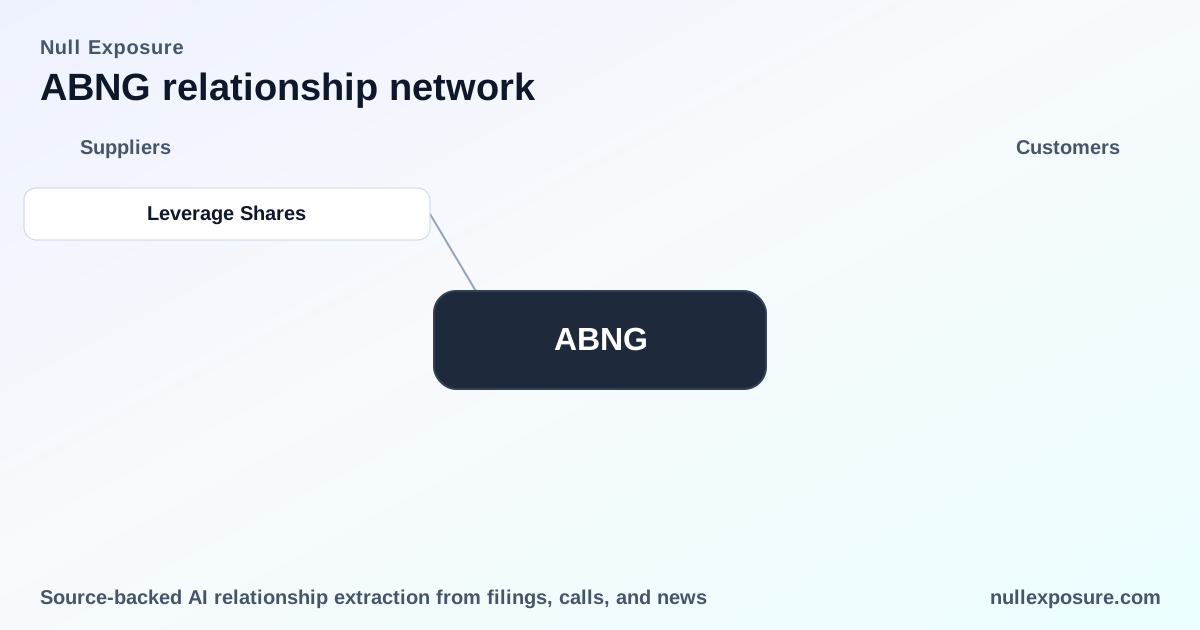
ABNG supplier map: who runs the 2x ABNB exposure and what it means for investors
ABNG is an exchange-traded product that provides leveraged exposure to Airbnb (ABNB) and monetizes through the conventional ETF/ETP model: product fees, trading spreads, and sponsor services tied to portfolio construction and liquidity provision. For investors and operators assessing counterparty and operational risk, the primary supplier relationship for ABNG is the product sponsor/manager that designs, lists, and supports the instrument — understanding that counterparty is the axis around which fee capture, execution reliability, and regulatory compliance rotate. For a deeper supplier footprint and ongoing monitoring tools visit https://nullexposure.com/.
H2: How ABNG operates and how it makes money ABNG is structured as a leveraged product that delivers twice the daily performance of a reference equity (ABNB). The vehicle captures revenue in three basic ways: implicit trading revenue from bid/ask spreads and liquidity provision, explicit management or product fees charged by the sponsor, and incidental operational revenue such as securities lending or financing spreads where applicable. The sponsor also controls product design choices — rebalance cadence, collateral policy, and allowable instruments — that determine tracking behavior and operational exposure. Investors should treat the sponsor relationship as the central vector for both revenue capture and concentrated counterparty risk.
H2: The supplier relationships that matter Below I list every relationship surfaced in the supplier results for ABNG and summarize what each link implies for investors and operators.
H3: Leverage Shares — product sponsor and brand Leverage Shares is listed as the sponsor behind the product titled “Leverage Shares 2x Long ABNB Daily ETF ABNG.” This indicates Leverage Shares is the named issuer/manager responsible for product design, listing, and market-facing disclosures. According to QuiverQuant reporting dated March 9, 2026, the product is referenced under that exact label, confirming the sponsor relationship and product ticker (ABNG). (Source: QuiverQuant, March 9, 2026 — https://www.quiverquant.com/stock/ABNG/)
H2: What the relationship list implies about concentration and counterparty exposure The supplier results for ABNG show a single, explicit supplier relationship: the product sponsor. Where the data set lists only a sponsor and no ancillary suppliers, several company-level signals are relevant:
- Concentration: A single sponsor relationship points to a concentrated operational model in which sponsor performance and continuity are critical to product reliability and investor protections.
- Counterparty criticality: The sponsor is functionally critical — they set the investment objective, rebalance rules, and interface with exchanges and market makers — so any sponsor operational failure would materially impact product behavior.
- Contracting posture and maturity: The absence of additional named suppliers in the results suggests the product relies on market-standard third parties (exchanges, custodians, clearing brokers) that are not surfaced here rather than a broad supply chain; for investors, that implies contracting posture is likely dominated by standard market agreements rather than bespoke supplier networks.
- Disclosure gap: No supplier constraints or contract excerpts were returned in the data payload; as a company-level signal, this equates to no flagged constraints in the supplied record rather than a guarantee that none exist in legal filings.
H2: Operational and risk implications for investors and operators There are operational realities inherent to leveraged ETPs that follow from the sponsor relationship and the concentrated supplier picture above:
- Counterparty risk is primary: With the sponsor as the central counterparty for product governance, sponsor creditworthiness, compliance program strength, and operational resilience are direct inputs into product risk.
- Liquidity and execution dependence: Even with a reputable sponsor, daily rebalancing and leveraged exposure make the product’s realized performance sensitive to market liquidity and roll execution; sponsors coordinate with market makers, which are often ad hoc and not listed in the results.
- Regulatory and disclosure sensitivity: Leveraged products are subject to specific regulatory oversight and investor suitability considerations; the sponsor controls disclosures, so quality and frequency of sponsor reporting are essential due diligence points.
- Fee and tracking economics: Management fees, financing costs for leverage, and trading costs determine long-run returns versus the reference index; sponsors capture fee revenue, and their incentives determine product design (e.g., daily reset vs. longer-term leverage).
H3: Practical due diligence checklist for ABNG counterparties
- Verify sponsor corporate disclosures, registration, and track record for leveraged products.
- Confirm counterparty relationships with custodians, prime brokers, and authorized participants through prospectus and regulatory filings.
- Monitor trading liquidity and intraday spreads to assess execution costs for entering/exiting positions.
- Track sponsor announcements, governance changes, and any constraints or contractual amendments that could alter product behavior.
For a consolidated view of supplier mappings and ongoing monitoring, consult https://nullexposure.com/ for vendor-by-vendor breakdowns and update feeds.
H2: What to watch next
- Sponsor disclosures: Quarterly updates or prospectus amendments will change the operational terms that matter to investors (rebalancing cadence, collateral policy, fee changes).
- Market liquidity signals: Spreads and volume on ABNG are the real-time indicator of execution cost.
- Regulatory guidance: Any regulatory developments governing leveraged ETPs will directly affect product design and permissible investor base.
H2: Final takeaways
- Leverage Shares is the core supplier to ABNG, and that relationship is critical to both revenue capture and operational risk.
- Data returned shows no explicit supplier constraints, which as a company-level signal requires active verification in sponsor filings rather than passive reliance on the absence of flags.
- Investors should prioritize sponsor due diligence, liquidity analysis, and monitoring for disclosure changes as primary risk management levers.
If you want a deeper supplier-by-supplier dossier or continuous monitoring for ABNG and similar products, visit https://nullexposure.com/ for comprehensive supplier maps and alerting.