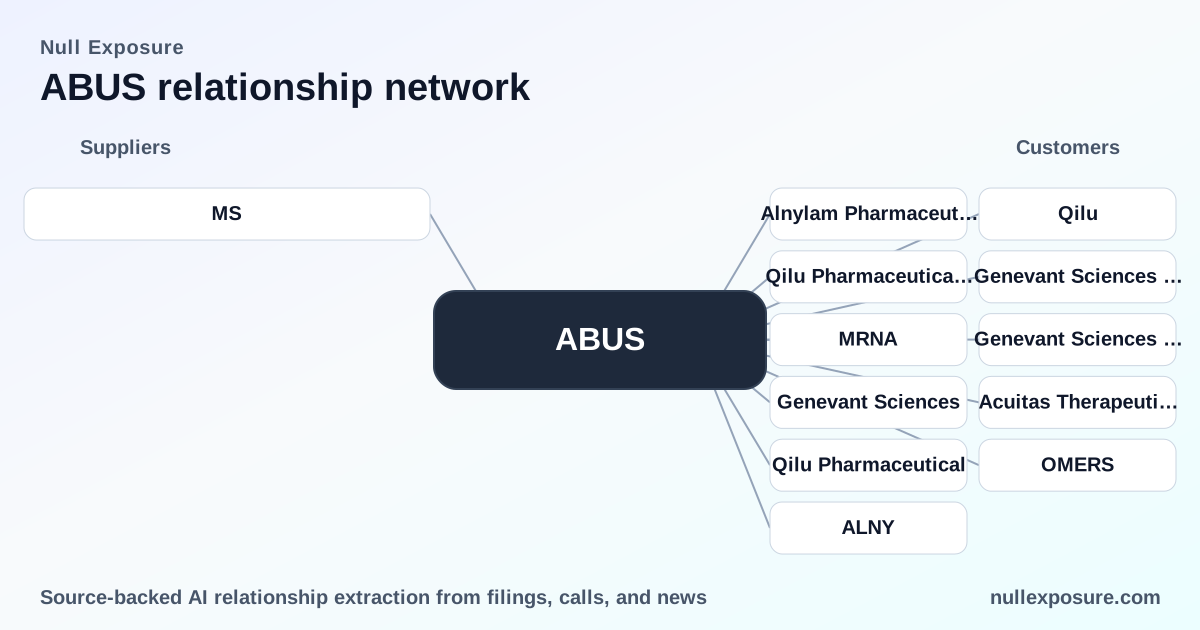
Arbutus Biopharma (ABUS): supplier relationships that shape development and balance sheet optionality
Arbutus Biopharma develops therapeutics to cure chronic hepatitis B and monetizes through drug development, licensing and occasional asset monetization (including royalty sales and settlements). The company operates a broadly outsourced model: clinical and manufacturing activities are run by third parties, and non-core patent disputes have been resolved through external settlements and structured financings — both of which materially affect cash flow and strategic optionality for investors. For a focused view of supplier counterparty exposure, this note synthesizes public relationship records, contract posture signals, and the operational implications for shareholders and operators. For a broader supplier-risk review, visit https://nullexposure.com/.
How Arbutus runs R&D and what that means for counterparties
Arbutus intentionally keeps development capital light by outsourcing almost all hands-on development and manufacturing. Company filings through the latest quarter (2025-12-31) confirm that Arbutus relies exclusively on third parties to formulate and manufacture product candidates and on CROs and investigators to run trials, creating a supplier-dependent operating model with several practical consequences:
- Contracting posture: Arbutus contracts with CROs and CMOs rather than vertically integrating; contracts determine timing, quality and regulatory readiness. Contract terms and vendor performance therefore drive trial timelines and commercialization readiness.
- Concentration and criticality: The company labels manufacturing and clinical services as critical functions; reliance on a narrow set of external providers increases single-point-of-failure risk for development programs.
- Maturity of relationships: Outsourcing is established and active — Arbutus currently sources drug substance and drug product for specific programs from third-party manufacturers for ongoing trials.
- Geographic footprint: Clinical activity is global, with trials across North America, Europe, Asia and Oceania, which expands supplier base complexity and regulatory engagement.
These structural choices convert supplier counterparty performance into a central investment variable: operational execution risk, not internal science alone, dictates near- and mid-term value realization.
Material relationships on the public record (every listed result)
Below are the supplier or counterparty references identified in public sources tied to Arbutus. Each entry includes a concise plain-English summary and a source note.
-
Morgan Stanley & Co. LLC — In a July 2019 transaction, Morgan Stanley acted as the sole structuring agent when Arbutus sold part of its ONPATTRO (patisiran) royalty interest to OMERS, indicating use of structured capital markets advisory to monetize royalty assets. Source: GlobeNewswire press release, July 2019.
-
MS (ticker MS) — The same GlobeNewswire July 2019 release is also recorded under the short name “MS”; it confirms Morgan Stanley’s role as sole structuring agent on the royalty sale, reinforcing that Arbutus uses financial intermediaries to convert royalty streams into near-term cash. Source: GlobeNewswire press release, July 2019.
-
ROIV (Roivant Sciences) — A May 2026 market report notes that Roivant, through its Genevant subsidiary, reached a $2.25 billion global settlement with Moderna and Arbutus to resolve patent infringement litigation, showing that Arbutus has engaged in high-value IP settlements that affect balance-sheet and licensing positions. Source: Investing.com coverage, May 2026.
Why these relationships matter for investors and operators
Each recorded relationship provides a different lens on how Arbutus manages capital, IP and supplier exposure.
-
Financial engineering and monetization (Morgan Stanley): The 2019 royalty sale structured by Morgan Stanley is evidence that Arbutus uses asset monetization to raise funds without diluting equity. That lever provides optionality but also signals that recurring earnings from marketed products (or royalty assets) are part of the company’s liquidity strategy. Source: GlobeNewswire, July 2019.
-
IP risk resolution and industry positioning (Roivant/Genevant settlement): The multi-billion dollar settlement documented in 2026 resolves patent disputes that previously created litigation and licensing uncertainty; resolving IP claims both removes disruption to R&D and can alter future licensing leverage. Source: Investing.com, May 2026.
-
Outsourcing as a lever and a liability: Reliance on CROs and CMOs puts execution and timing in the hands of contractors. If a contract fails or a vendor underperforms, product timelines and costs shift directly to Arbutus, and by extension, to investors.
Operational implications — what to watch on the next cycle
Monitor these items to translate supplier signals into actionable investment insights:
- Contract concentration: Identify whether a single CMO or CRO is supplying multiple programs. High concentration is a near-term operational risk for development timelines.
- Contractual protections: Check for service-level guarantees, penalty clauses and alternative-supplier clauses in disclosed agreements; stronger protections lower development timing risk.
- Royalty monetization cadence: Track further royalty sales or structured financings as a balance-sheet management sign; repeated monetizations indicate reliance on non-operating cash sources.
- IP settlement consequences: Watch for post-settlement licensure terms or cross-licensing that could affect future revenue streams and partnering options.
For active due diligence across these vectors, see the supplier-risk tools at https://nullexposure.com/.
Quick risk checklist for investors
- Operational concentration: High — Arbutus outsources manufacturing and clinical operations.
- Supplier criticality: Critical — third parties are integral to trial success and regulatory timelines.
- Liquidity tools: Demonstrated use of royalty monetization and third-party structuring to raise cash.
- Legal/strategic exposure: Material IP litigation has been settled for significant sums, changing licensing posture.
Bottom line
Arbutus runs a capital-efficient, outsourced development model where suppliers — both financial intermediaries and CRO/CMO partners — drive near-term execution and liquidity outcomes. Investors should treat supplier contracts and monetization events as first-order variables when modeling value and downside. Operators and procurement leads should prioritize contracting robustness, supplier diversification, and contingency capacity to reduce single-point-of-failure exposure.
For a deeper supplier-by-supplier risk breakdown and monitoring options, explore additional resources at https://nullexposure.com/.