ABXL supplier relationships: who shows up in the filings and headlines, and what it means for investors
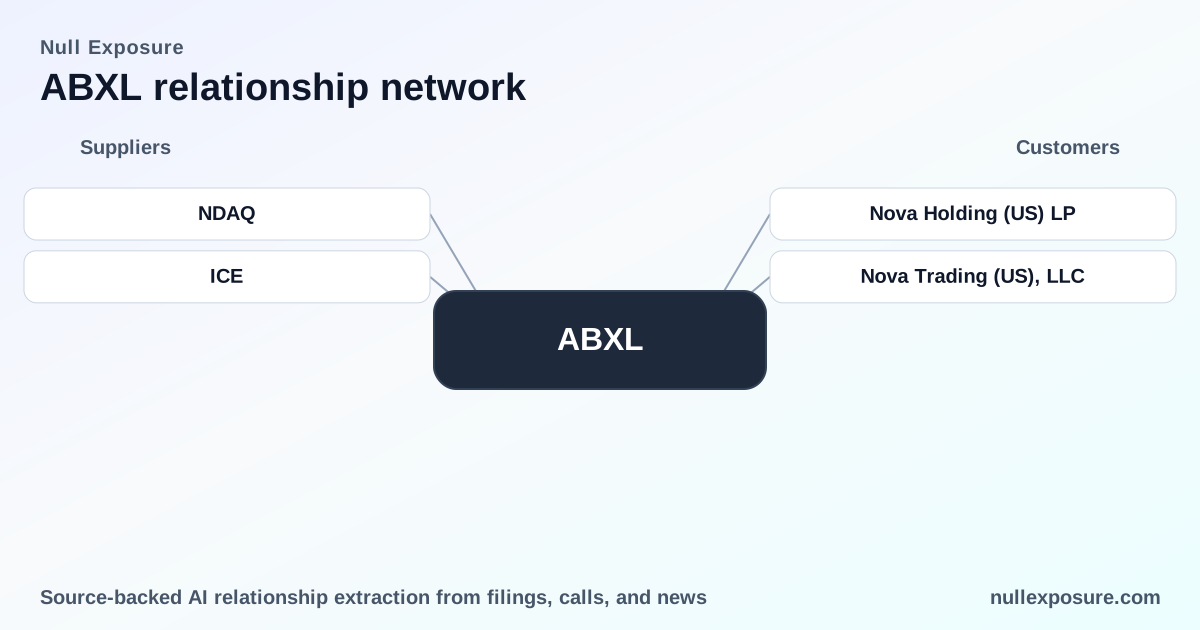
ABXL is presented as a biopharmaceutical company that develops proprietary drug candidates and monetizes through clinical progress, licensing and partnerships. For investors and operators evaluating supplier exposure, the public record tied to the ABXL supplier scope surfaces a small set of counterparties referenced in media coverage: two major U.S. exchange operators and a third-party analytics vendor. These relationships do not change the company’s core monetization thesis — clinical advancement and strategic collaborations drive value — but they do signal operational touchpoints that can influence regulatory narratives, market access and reputational risk.
For a concise supplier map and continuous monitoring, see Null Exposure’s supplier view: https://nullexposure.com/
What the media references tell investors in one line
The corpus of supplier-related mentions is concentrated and specific: exchange-listing language around a transfer of listing (Nasdaq / NYSE / NDAQ / ICE) and a separate media allegation tying an AI-life-expectancy vendor (Lapetus Solutions) into pricing tools. These are operational and reputational signals, not revenue drivers.
Detailed supplier mentions you need to know
Below I cover every relationship cited in the supplier results, with a plain-English summary and the reporting source.
ICE / New York Stock Exchange
Abacus (reported in the source material) announced a transfer of a Class A listing from Nasdaq to the New York Stock Exchange; the reporting names ICE as the NYSE operator involved. According to a Yahoo Finance release dated March 9, 2026, the company stated it would transfer its Class A listing to the NYSE. (Yahoo Finance, March 9, 2026)
Nasdaq Stock Market LLC / NDAQ
The same March 9, 2026 Yahoo Finance release noted the company’s Class A common stock continued trading on Nasdaq under its ticker until market close on December 29, 2025, reflecting a scheduled delisting transition. That reporting references Nasdaq/NDAQ as the departing exchange counterparty. (Yahoo Finance, March 9, 2026)
New York Stock Exchange (duplicate mention of ICE)
The New York Stock Exchange is named explicitly in the March 9, 2026 coverage as the receiving exchange for the listing transfer, reinforcing that the shift in venue was a public, documented action in FY2025 reporting. (Yahoo Finance, March 9, 2026)
Lapetus Solutions
Media reports in March–May 2026 cite former employees and outside counsel allegations that the company integrated “AI powered” Lapetus Solutions reports into a proprietary pricing tool and reduced collection of alternative life-expectancy data, a practice described as inconsistent with certain SEC disclosures. This material surfaced through a GlobeNewswire release (March 26, 2026) and follow-up coverage in May 2026 referencing investigative activity. (GlobeNewswire, March 26, 2026; subsequent coverage May 2026)
How these supplier mentions affect investor risk and operational posture
These supplier-level references provide three practical takeaways for investors evaluating ABXL-linked counterparties:
-
Regulatory and market-access exposure is visible. The exchange transfer language confirms a formal market-structure interaction — a company moving primary trading venues is a discrete operational event that requires regulatory coordination and can affect liquidity and investor perception. The March 2026 reporting documents that process with Nasdaq and the NYSE as the counterparties. (Yahoo Finance, March 9, 2026)
-
Reputational and model-risk questions from third-party analytics vendors matter. Reporting around Lapetus Solutions ties a third-party provider into pricing practice allegations; investors should treat third-party analytics as a vector for governance and disclosure risk, not core revenue impact. (GlobeNewswire, March 26, 2026)
-
Concentration and criticality are limited but nontrivial. The exchange relationships are structural (one-time venue changes), while the Lapetus reference is operational (ongoing analytics input). Neither supplier set appears to represent single-source critical manufacturing or clinical supply chains, but both categories — market operators and analytics vendors — influence liquidity, disclosure obligations and public trust.
Company-level constraints and what they reveal about operating model
The extracted constraints provide useful signals about ABXL’s operating posture and market role:
-
Geographic reach is national in scope. Evidence indicates operations across 49 U.S. states plus the District of Columbia, which implies broad jurisdictional exposure and the need to manage state-level regulatory and compliance regimes. This is a company-level signal derived from operating statements referencing nationwide activity.
-
Buyer posture in lifecycle assets. The company is characterized as an active purchaser in life settlements through a Longevity Market Assets subsidiary and related subsidiaries; documents state a long history of purchasing life insurance policies and originating settlements. This buyer role signals a contracting posture where the company sources assets (policies) from owners or brokers, generating revenue through originations and secondary-market transactions.
Operational implications:
- Contracting posture: active acquirer — the firm purchases assets rather than being solely fee-for-service, which concentrates counterparty risk around sellers, brokers and data vendors.
- Concentration: Media and constraint signals do not show single-vendor concentration for core manufacturing, but third-party analytics and listing venues are concentrated exposures that affect market access and disclosure.
- Criticality: Exchange relationships are critical for liquidity and investor access; analytics vendors are critical to pricing and valuation processes.
- Maturity: The buyer- and originations-focused narrative suggests a business with established transactional experience rather than an early-stage research-only profile.
For more granular relationship flags and monitoring, visit Null Exposure’s supplier intelligence hub: https://nullexposure.com/
What investors should watch next
- Monitor SEC filings and exchange notices for formal transfer completion language and any associated disclosures about listing conditions or delisting risk; the March 2026 press coverage set the calendar for a move between venues. (Yahoo Finance, March 9, 2026)
- Track any legal or regulatory developments tied to the Lapetus-related reporting, since allegations around pricing methodology and disclosure can precipitate investigations or corrective disclosures. (GlobeNewswire, March 26, 2026)
- Validate counterparty contracts and vendor due diligence for analytics providers to ensure governance controls, audit rights and model validation are contractually enforceable.
Conclusion The supplier mentions tied to ABXL in public reporting are concentrated around exchange venue mechanics and a single analytics vendor allegation. Neither signal changes the core biopharma monetization thesis directly, but both introduce operational, disclosure and reputational risk vectors that investors must track. For continuous visibility into these supplier relationships and timely alerts, Null Exposure maintains the supplier map and ongoing monitoring at https://nullexposure.com/