Arcosa (ACA): Supplier relationships, deal advisers and the procurement constraints that matter to investors
Arcosa manufactures and sells infrastructure products for construction, energy and transportation markets, monetizing through segment-level product sales, project services and recurring materials procurement. The company’s operating model is procurement-intensive: revenue scales with project backlog while margins depend on raw-material flows and supplier commitments—making supplier contracts and financing relationships direct drivers of execution and cash conversion. Investors should track supplier spend concentration, the stability of banking covenants, and the advisers Arcosa uses when executing strategic asset sales. For additional context on supplier exposures and counterparties, visit https://nullexposure.com/.
Why supplier contracts are a core part of the investment case
Arcosa’s industrial businesses—Engineered Structures and Transportation Products—rely on continued access to raw materials and specialty components. Non‑cancelable purchase obligations totaled $252.9 million as of December 31, 2024, with $165.1 million committed to raw materials and components, which signals multi‑period procurement commitments and a procurement posture that is at least semi‑long term. This is a company‑level signal: it indicates high recurring spend, meaningful exposure to commodity and supplier concentration, and a more mature procurement cycle where suppliers are contracted ahead of production runs.
From a practical investor standpoint:
- Contracting posture: Evidence supports longer-duration obligations rather than purely spot purchasing, which reduces short‑term volatility but raises execution risk if demand softens.
- Spend concentration: The scale of non‑cancelable obligations places Arcosa in a >$100M spend band, requiring active supplier management and potential single‑vendor risk in categories.
- Operational criticality: Raw materials feed core revenue streams, so supplier disruption has direct margin and revenue consequences. These are company-level constraints drawn from the company filing as of December 31, 2024; they inform how counterparties and financiers value Arcosa’s cashflows.
Deal advisers on the barge sale — who advised Arcosa
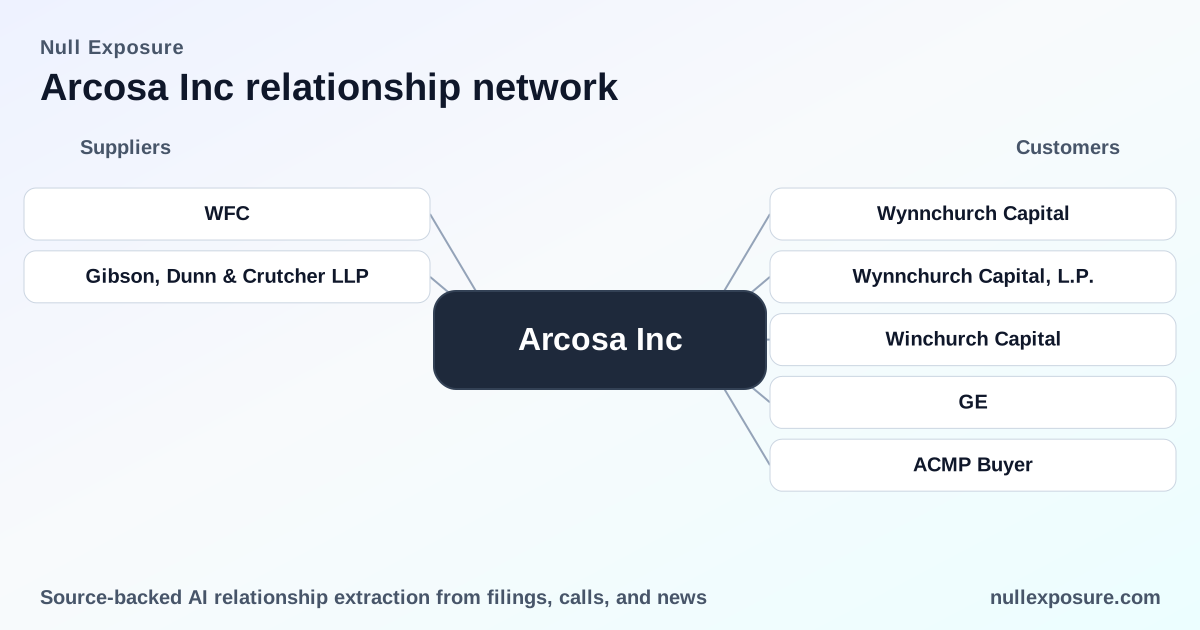
Wells Fargo acted as financial adviser to Arcosa on the divestiture of its barge business, a role that gives the bank visibility into strategic execution and valuation decisions for carved‑out assets. This was reported in Dallas Innovates on March 9, 2026. According to that report, Wells Fargo served as Arcosa’s financial advisor in the transaction.
Gibson, Dunn & Crutcher LLP served as legal counsel to Arcosa on the same transaction, providing the firm with responsibility for transaction documents, representations and regulatory clearance. Dallas Innovates and a Pulse2 report both note Gibson Dunn’s role on March 9, 2026. Having a top‑tier firm as counsel signals conventional deal governance and reduces legal execution risk in the carve‑out.
Banking relationships that shape liquidity and covenant oversight
JPMorgan continues to serve as the administrative agent on Arcosa’s loan facility, and recent filings indicate the structure, covenants and maturities remained consistent with the prior loan agreement. That description comes from a Form filing summary captured on May 2, 2026. A stable administrative agent relationship with JPMorgan indicates continuity in covenant monitoring and lender communications, limiting refinancing surprises in the near term.
Broker activity that reflects insider share movement
Arcosa submitted a Form 144 reporting a proposed sale of 7,966 common shares through Morgan Stanley Smith Barney LLC, with an aggregate market value of approximately $762,903.82 and an approximate sale date of August 11, 2025, as disclosed in a filing referenced on May 2, 2026. This is routine insider liquidity executed through a major broker rather than an indication of systemic governance issues.
Relationship-by-relationship investor digest
Below are concise, plain‑English summaries of each counterparty relationship found in public reporting, with source context.
- Wells Fargo (WFC) — Wells Fargo acted as Arcosa’s financial adviser on the sale of Arcosa’s barge business, advising on valuation and transaction strategy. Reported by Dallas Innovates on March 9, 2026.
- Gibson, Dunn & Crutcher LLP — Gibson Dunn provided legal advice to Arcosa for the same barge divestiture, handling transaction documentation and legal clearance. Reported by Pulse2 and Dallas Innovates on March 9, 2026.
- JPMorgan (JPM) — JPMorgan remains the administrative agent on Arcosa’s loan facility; company filings indicate covenants and maturities stayed consistent with the prior loan structure. Noted in a filing summary available May 2, 2026.
- Morgan Stanley Smith Barney LLC (MS) — Morgan Stanley executed a reported Form 144 sale of 7,966 Arcosa shares on behalf of an insider, with an indicated aggregate market value of roughly $762,900 and an approximate sale date of August 11, 2025; disclosed in filings referenced May 2, 2026.
Each relationship above is material at different levels: advisers and law firms influence strategic transaction outcomes; the administrative bank controls covenant dialogue and liquidity optics; brokers facilitate insider liquidity that markets watch for governance signals.
Investment implications and what to monitor next
Arcosa’s supplier posture and counterparty roster create practical monitoring items for investors:
- Track disclosed non‑cancelable obligations and their roll‑forward to assess whether procurement commitments are expanding or contracting against revenue.
- Monitor bank covenant language and lender composition, since JPMorgan’s role as administrative agent centralizes covenant enforcement and renewal negotiation.
- Watch future divestitures and the advisers named; repeat use of top‑tier banks and law firms suggests disciplined execution and cleaner closings.
- Assess supplier concentration risk in segment-level disclosures; a >$100M spend band implies certain suppliers could be financially or operationally critical.
For a deeper view into supplier exposure analytics and related counterparty mapping, consult our research hub at https://nullexposure.com/.
Bottom line: where risk and execution meet
Arcosa’s business is procurement‑intensive and strategically managed at the segment level; longer‑dated purchase obligations and >$100M committed spend underline the importance of supplier continuity and raw‑material flow to margins. The recent barge divestiture was executed with major financial and legal advisers, while JPMorgan’s administrative agent role provides continuity on financing oversight. For active investors, the critical signals are procurement roll‑forwards, covenant drift, and any shifts in banking or adviser relationships that could affect liquidity or transaction timing.
Key takeaway: supplier agreements and banking relationships are not background noise for Arcosa—they are operational levers that translate directly into margin stability and free cash flow realization.