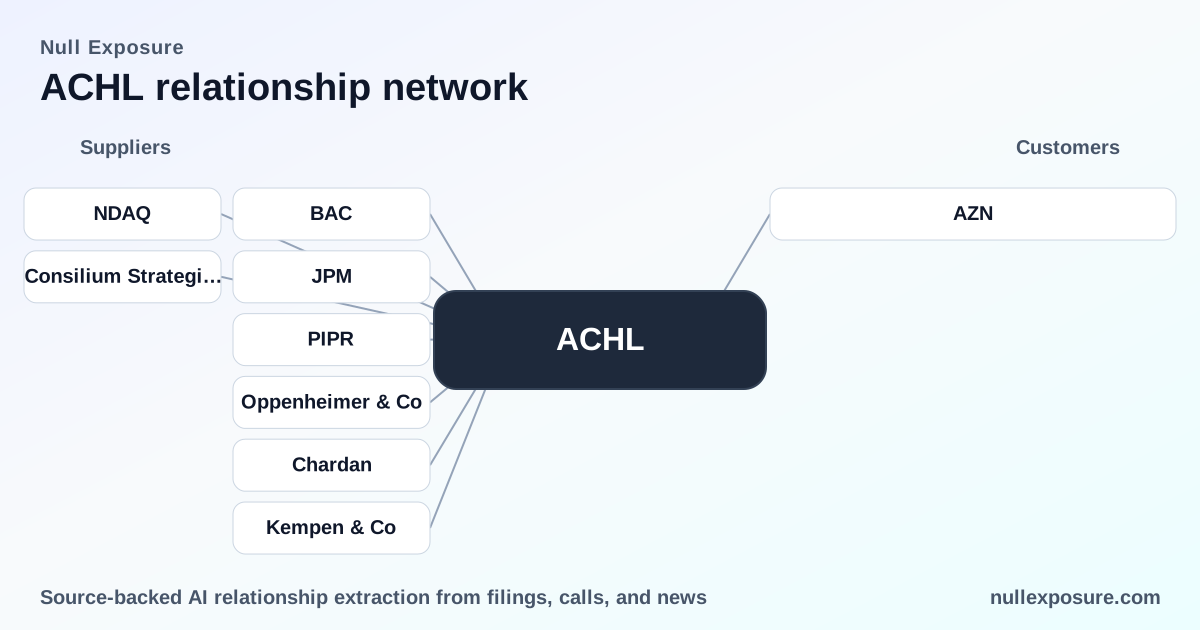
Achilles Therapeutics (ACHL) — supplier relationships and what they mean for investors
Achilles Therapeutics is a clinical-stage immuno-oncology company that develops precision T‑cell therapies for solid tumors. The firm currently monetizes through capital markets activity and strategic advisory engagements while it advances clinical programs; no product revenue is reported TTM and the balance sheet is managed through equity offerings and strategic processes. This profile makes ACHL a capital-dependent biotech whose supplier map is dominated by investment banks, listing infrastructure, and external communications advisers — relationships that collectively determine access to liquidity, market access, and public perception. For an actionable supplier-risk read, visit https://nullexposure.com/.
High-level takeaways for investors
Achilles operates with a classic clinical-stage biotech vendor posture: outsourced capital‑markets execution and investor communications are mission‑critical, while manufacturing and commercialization vendors are not visible in the public relationship set. Relationship concentration is high across a small group of global and specialist banks, and the Nasdaq listing authority is a structural counterparty for continued market access. These dynamics translate into a short runway between financing events and a reliance on external advisors to extract value from assets.
Who they work with — relationship-by-relationship
BofA Securities
BofA Securities has acted both as a joint book‑running manager on a historic offering and as a retained financial advisor in strategic reviews, indicating a sustained advisory and execution role in ACHL’s capital strategy. According to a GlobeNewswire strategic update (September 19, 2024) and a Yahoo Finance release on an offering close (FY2021), BofA has been engaged for value‑maximizing transactions and deal execution.
J.P. Morgan
J.P. Morgan served as a joint book‑running manager on at least one equity offering, placing it among the global banks used by ACHL for primary-market access. That role is documented in a Yahoo Finance report on the closing of an offering (FY2021).
Piper Sandler
Piper Sandler also participated as a joint book‑running manager on the same offering, reflecting ACHL’s use of specialist healthcare investment banks alongside bulge‑bracket underwriters. The underwriting role was reported on Yahoo Finance (FY2021).
Oppenheimer & Co
Oppenheimer & Co acted as a co‑manager on the offering, providing distribution and execution support typical of mid‑market underwriting syndicates. The co‑manager listing is included in the offering coverage on Yahoo Finance (FY2021).
Chardan
Chardan was named as a co‑manager for the transaction, consistent with ACHL’s engagement of boutique capital markets boutiques to broaden investor reach. This participation appears in the same offering announcement reported on Yahoo Finance (FY2021).
Kempen & Co
Kempen & Co joined as a co‑manager on the offering, adding European distribution capabilities to the syndicate mix. This participation is listed in the offering announcement on Yahoo Finance (FY2021).
Nasdaq Stock Market LLC
Nasdaq is the listing venue and active regulatory counterparty: Achilles received a Nasdaq deficiency notice regarding the minimum bid price requirement in FY2023 but later had approval to transfer its ADSs from the Nasdaq Global Market to the Nasdaq Capital Market in FY2024. The deficiency notice was reported by Markets FinancialContent (April 25, 2023) and the transfer approval by Yahoo Finance (FY2024), reflecting ongoing compliance interaction with the exchange.
Consilium Strategic Communications
Consilium Strategic Communications is listed as the company’s investor relations and external communications contact for offering‑related announcements, underscoring the firm’s reliance on retained PR/IR consultants to manage market narratives. Contact details and IR representation are presented in the offering communications posted on Yahoo Finance (FY2021).
Why these relationships matter to capital allocators
- Capital access is centralized. ACHL’s supplier set shows a concentrated syndicate strategy: a handful of underwriters and advisors control the company’s primary access to public capital. That elevates counterparty importance when timing future financings or strategic alternatives.
- Listing compliance is a binary operational constraint. Interaction with Nasdaq has been material to maintain tradability and market structure positioning — a deficiency letter and a subsequent transfer of listing venue are not operational trivialities for investor liquidity.
- Market narrative is externally managed. Retained communications advisers are the primary channel for investor-facing disclosures and can materially influence reception of financings and strategic updates.
For investors tracking supplier risk and advisory concentration, review ACHL’s supplier mapping and counterparties on https://nullexposure.com/ for comparative context.
Operating-model characteristics and constraints
Although no explicit constraints were provided in the relationship feed, the observable supplier footprint implies several company‑level operating model traits:
- Contracting posture: Transactional, engagement‑by‑deal with underwriters and advisers rather than long‑term, captive partnerships — consistent with a clinical-stage biotech focused on financing and strategic exits.
- Concentration: High concentration among financial advisors; a small number of banks handle underwriting and strategic advisory duties.
- Criticality: High for advising and listing counterparties — underwriters and Nasdaq have direct, material impact on liquidity and corporate continuity.
- Maturity: Relationship maturity is transactional and event‑driven; underwriter and adviser roles are renewed or changed around specific offerings and strategic reviews. These are company-level signals derived from the supplier roster rather than contractual disclosures.
Investment risks and what to watch next
- Financing risk is front‑row: With zero reported revenue TTM and negative EBITDA, the business depends on capital raises; underwriter selection and market receptivity drive dilution and value realization.
- Exchange compliance risk: The Nasdaq interactions underline that listing status and market segment shifts directly affect liquidity and investor confidence.
- Concentration risk in advisory execution: A narrow group of banks reduces competitive tension during financings and increases dependence on those counterparties’ distribution capability. Investors should watch subsequent press releases for new advisor engagements, capital‑raise terms, and any additional listing actions.
Final read and action points
Achilles Therapeutics operates like a capital‑market dependent biotech: market access, not product revenue, currently drives supplier importance. The supplier map of underwriters, co‑managers, a listing exchange, and an IR/communications firm is coherent with value extraction through financings and strategic processes rather than operational vendor complexity. For depth comparisons and a forward-looking supplier risk score, start with a supplier mapping review at https://nullexposure.com/.
For investors or operators needing a concise supplier-risk brief or a tailored counterparty assessment for ACHL, visit https://nullexposure.com/ and request a custom review.