ACHR-WS: Supplier relationships, what they actually mean for investors
Achieve Life Sciences (ticker ACHR-WS) is a clinical-stage biopharmaceutical company focused on developing cytisine-based therapies for smoking cessation and nicotine addiction. The company’s value proposition and monetization pathway rest on progressing clinical programs, securing regulatory approvals, and commercializing or licensing its lead asset; strategic partnerships and legal validation of securities are ancillary levers that support clinical development and capital formation. This note reviews the supplier-scope relationship results returned for the ticker and translates them into practical signals for investors and operators evaluating vendor risk and partner exposure. For deeper supplier-mapping and exposure analytics, visit https://nullexposure.com/.
Quick read: why these relationship hits matter for diligence
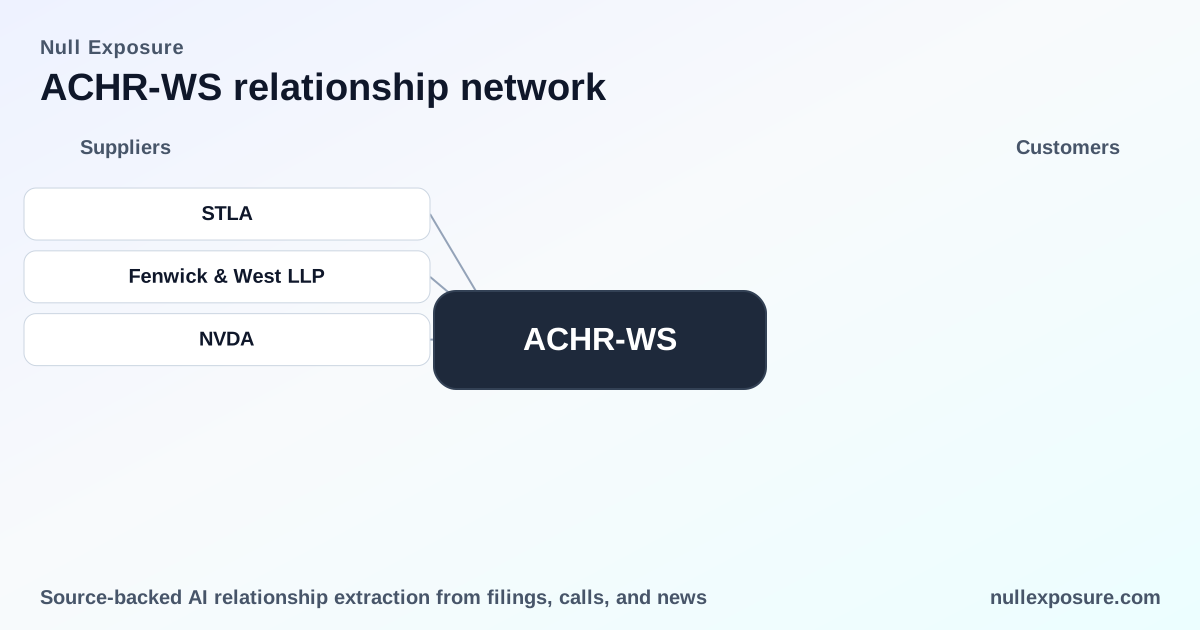
The supplier results returned for ACHR-WS in the feed are not directly tied to Achieve Life Sciences’ core operations; instead the items reference counterparties associated with Archer Aviation. That divergence is an important operational signal: either upstream data mapping linked the wrong corporate identifier or external news coverage conflated tickers. Investors should treat these hits as data-noise unless corroborated in Achieve’s SEC filings or company disclosures. For a systematic supplier risk view, see https://nullexposure.com/ — it will save hours on manual reconciliation.
Relationships returned in the supplier feed (each result summarized)
-
Stellantis — The entry reports Stellantis contributing capital, advanced manufacturing technology and personnel to scale production at Archer Aviation with an aim of 650 aircraft annually by 2030. This is a capacity-and-investment relationship tied to aerospace manufacturing rather than Achieve Life Sciences’ pharmaceutical activities; the item is sourced from Assembly Magazine (reported March 2026). https://www.assemblymag.com/articles/98959-archer-aviation-completes-construction-of-air-taxi-assembly-plant
-
Fenwick & West LLP — The feed includes a reference to Fenwick & West providing legal opinions on the validity of shares in an Archer Aviation Form 8‑K, with the opinions included as exhibits to the current report; the citation is from a March 2026 online posting summarizing the 8‑K. This is a legal-services relationship confirming securities/legal work for Archer, not a supplier engagement for Achieve’s drug programs. https://www.minichart.com.sg/2026/03/06/archer-aviation-inc-files-form-8-k-current-report-and-legal-opinions-march-5-2026/
-
Nvidia — A news item notes a collaboration between Archer and Nvidia to develop aviation AI using Nvidia’s IGX Thor computing platform; this is a technology partnership focused on eVTOL avionics and autonomy. The source is a market-news post from March 2026 discussing investor sentiment ahead of a conference. https://ts2.tech/en/archer-aviation-stock-ticks-up-before-the-open-as-investors-eye-todays-needham-conference-slot/
What the relationship set implies about Achieve’s supplier posture
Because the supplier hits reference aerospace and legal work for an unrelated company, the immediate implication is data alignment risk rather than a material change in Achieve Life Sciences’ supplier ecosystem. At the company level (not tied to any single relationship in the feed), the absence of explicit supplier constraints in the collected results produces several actionable signals:
-
Contracting posture: As a clinical-stage biopharma, Achieve’s contractual posture is typically partner-centric — R&D collaborations, CROs, contract manufacturers and licensing agreements dictate execution speed and capital requirements. The current feed provides no explicit contractual clauses or limits, so investors should assume standard early‑stage reliance on external clinical and manufacturing providers.
-
Concentration and criticality: The business is concentrated around a single lead asset, cytisine. That concentration elevates the criticality of any genuine CMOs or clinical vendors; loss of a core supplier would be material. The returned results do not identify such partners.
-
Maturity and tail-risk: Achieve is early-stage, so supplier maturity is likely mixed: established CROs alongside smaller specialty vendors. No supply-chain contingencies or binding constraints were returned in the supplier data, creating an information gap investors must fill through direct filings and vendor questionnaires.
Operational and investment implications
-
Primary risk is informational, not operational — for now. The three relationship hits are misaligned with Achieve’s therapeutic focus, signaling either an entity-resolution error in the supplier feed or noisy news aggregation. For procurement teams and investors, the priority is to reconcile vendor registries with corporate disclosures and confirm the identity of any counterparties reported against ACHR-WS.
-
Legal validation entries (Fenwick & West) illustrate a secondary diligence vector. Legal opinions on securities are typical in capital markets transactions; if similar legal work had been reported for Achieve, that could indicate recent capital raises or equity actions — but no such Achieve-specific filings are present in the returned results. Confirm any securities-related legal activity directly with SEC filings.
-
Technology and manufacturing references (Nvidia, Stellantis) are irrelevant to Achieve’s drug-development pathway but useful as a red flag. These items demonstrate how cross‑industry news can pollute supplier intelligence and distort risk scoring unless filtered by industry and entity-identity controls.
A mid-analysis recommendation: validate supplier outputs against primary filings and internal vendor lists at the earliest stage — if you need a consolidated supplier verification workflow, start at https://nullexposure.com/.
Actionable next steps for investors and operators
- Confirm Achieve’s actual vendors and counterparties by reviewing the company’s most recent SEC filings and investor presentations; where filings are silent, request an up‑to‑date vendor register through investor relations.
- Treat the Stellantis/Nvidia/Fenwick hits as data-noise until corroborated by Achieve disclosures; adjust any automated vendor-risk models to penalize mismatched industry links and entity-resolution anomalies.
- For procurement/ops: require primary-source documentation (contracts, SOWs, invoices) from any vendor reported by third-party feeds before escalating supplier-critical designations.
For a practical supplier-exposure scan and to reconcile noisy relationship signals like these against verified filings, explore our platform at https://nullexposure.com/.
Bottom line
The supplier-scope results returned under ticker ACHR-WS reference third parties tied to Archer Aviation, not Achieve Life Sciences’ clinical or commercial activities. That mismatch is the primary investment signal: inadequate entity-resolution in the feed, not a change in Achieve’s vendor base. Investors should prioritize primary-document verification (SEC filings, executed vendor contracts) to replace noisy third‑party hits with confirmed supplier exposure. For streamlined reconciliation and supplier-risk reporting, visit https://nullexposure.com/ to reduce manual reconciliation and close visibility gaps.