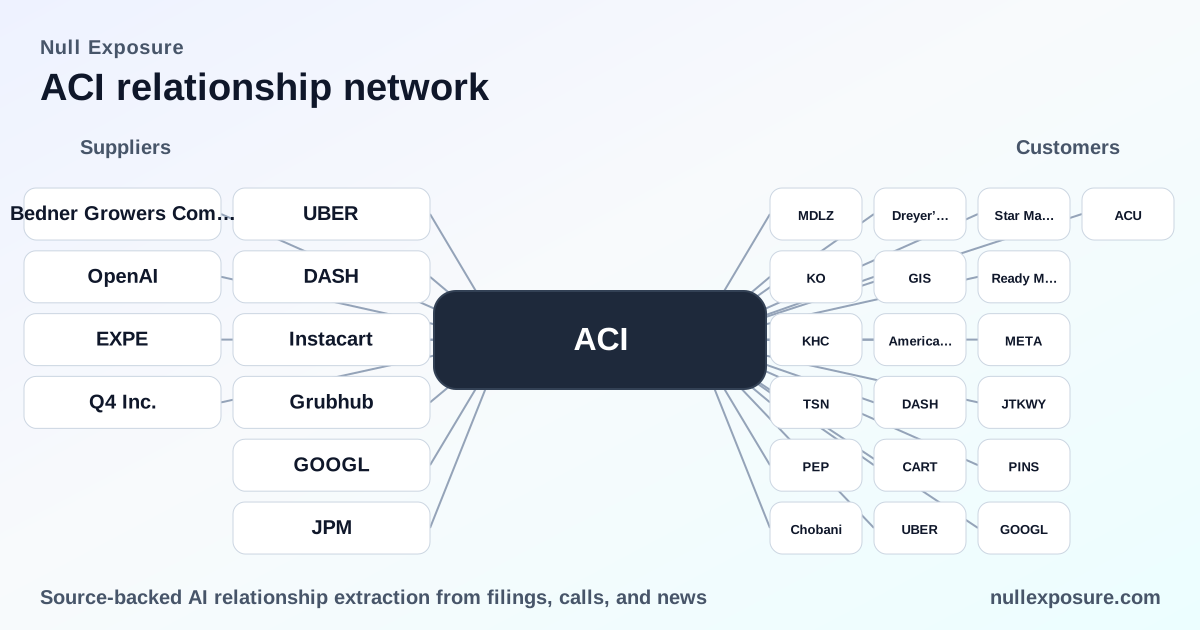
Albertsons (ACI): Supplier relationships that determine margins, risk and digital reach
Albertsons operates a high-volume, low-margin grocery and pharmacy business that monetizes primarily through retail sales, loyalty-driven incremental spend and growing digital channels; the company sources goods globally, manages tight inventory cycles with predominantly short-term supplier contracts, and extracts margin through private‑label manufacturing and platform partnerships that extend convenience and marketing reach. For investors, supplier relationships are both an operational lever (cost, availability, quality) and an earnings lever (digital partnerships, loyalty monetization). Track the mix of short‑term procurement, marquee technology partners, and large-dollar purchasing obligations — those three dynamics drive near‑term margin volatility and medium‑term strategic optionality. Learn more at Null Exposure.
Business model in plain terms: where suppliers touch the P&L
Albertsons sells groceries and pharmacy products at scale. Revenue is driven by store sales, private‑label lift and loyalty engagement; margins are sensitive to procurement cost, distribution fuel and last‑mile delivery economics. Procurement is predominantly short‑term, so inflation or supply shocks translate quickly to gross margin. The company also runs owned manufacturing for a portion of private brands while sourcing the balance from third parties, which creates mixed supplier concentration and control across categories. Company filings describe large purchase obligations exceeding $100 million, indicating material supplier spend that is both operationally critical and financially significant. For deeper supplier analytics and relationship mapping visit Null Exposure.
- Contracting posture: Short-term supply contracts dominate, limiting long-term price protection but allowing agility in buying.
- Geography and sourcing: Sourcing spans global vendor networks, introducing regulatory and reputational exposure beyond domestic suppliers.
- Role diversity: Albertsons is both a buyer (retail procurement) and a manufacturer (partial Own Brands production), and uses third-party service providers for distribution and digital services.
- Financial magnitude: Purchase obligations reported at high-dollar bands signal concentrated supplier spend that can influence working capital and renegotiation leverage.
The supplier roster investors should know about
Below are every supplier and partner surfaced in recent reporting and media coverage, each summarized in plain English with source attribution.
Uber
Albertsons partners with Uber to provide delivery and curbside fulfillment services across thousands of stores to meet customer demand for convenience. This relationship is cited in trading coverage summarizing Albertsons’ SEC disclosures on drive‑up and delivery partners (reported March 9, 2026).
DoorDash
DoorDash is named alongside other gig platforms as a delivery partner powering curbside pickup and home delivery, supporting Albertsons’ omnichannel order fulfillment capability. The platform relationship is highlighted in summaries of Albertsons’ FY2025 SEC filing (TradingView, March 2026).
Instacart
Instacart is a core grocery delivery and pickup partner that broadens Albertsons’ digital ordering reach and customer convenience options, according to reporting on the company’s FY2025 disclosures (TradingView, March 2026).
Grubhub
Grubhub is included with other third‑party delivery services used to satisfy demand for convenience ordering across Albertsons’ estate, per coverage of the company’s FY2025 statements (TradingView, March 2026).
Google Cloud
Albertsons publicly describes a “marquee collaboration with Google Cloud” as part of its digital innovation efforts, positioning Google Cloud as a strategic technology supplier for data and infrastructure modernization (Albertsons newsroom blog, 2025). This is a strategic supplier relationship with potential to improve merchandising, inventory and customer personalization economics.
JPMorgan Chase Bank, N.A.
JPMorgan served as the counterparty in a $750 million accelerated share repurchase (ASR) agreement, a capital allocation and liquidity relationship that impacts shareholder return and balance sheet management; the transaction was announced in a MarketScreener release and referenced in Albertsons’ 10‑Q for the quarter ending September 6, 2025 (MarketScreener and company 10‑Q, FY2025). This is a material financial services relationship tied to capital strategy rather than procurement.
Bedner Growers Company
A food‑safety incident traced cucumbers to Bedner Growers Company, which led to product recalls and an FDA‑related news item; this supplier link highlights the reputational and operational risk of produce sourcing (Newsweek, 2026). Food safety with fresh produce suppliers is a direct margin and brand risk.
OpenAI
Albertsons announced participation in an OpenAI advertising pilot and cited the use of AI (Agencik AI) to power merchandising intelligence, indicating OpenAI’s role as a data/insights supplier for marketing and category management (MarketScreener fact sheet and earnings call transcript coverage, Feb–Mar 2026). AI partnerships are framed as a route to lift promotional efficiency and category margins.
Expedia
Albertsons extended its loyalty platform via a partnership with Expedia to launch a travel booking feature that allows loyalty members to earn cash back redeemable for grocery purchases; this broadens engagement and pushes ancillary revenue synergies (company 10‑Q and MarketScreener reporting, FY2025). Loyalty‑to‑travel partnerships are a non‑traditional supplier relationship with direct customer‑lifetime‑value implications.
Q4 Inc.
Q4 Inc. is cited in the company blog as a vendor powering investor relations functionality on the site, representing an investor‑communications technology relationship (Albertsons newsroom blog, 2025). This is a smaller but strategic supplier for capital markets engagement.
What these relationships imply for investors: risk, leverage and runway
Collectively, the supplier list maps to three investor‑relevant themes:
- Operational sensitivity from short-term procurement. Albertsons’ heavy use of short‑term purchase contracts means input cost swings pass quickly to margins; this increases earnings volatility but also gives management agility to reset prices and assortments. (Company disclosures and related excerpts in FY2025 filings.)
- Platform and tech partnerships are strategic margin levers. Collaborations with Google Cloud and OpenAI are framed as drivers of merchandising efficiency, personalization and advertising monetization, while Expedia expands loyalty economics beyond grocery. These tech relationships create optionality for incremental revenue without traditional COGS exposure.
- Delivery partners shift cost structure and customer access. Dependence on gig platforms (Uber, DoorDash, Instacart, Grubhub) improves reach but introduces variable per‑order costs that pressure grocery margins unless offset by higher basket sizes or fulfillment efficiencies.
Review supplier concentration and contractual posture with a focused framework: contract term length, spend band, supplier criticality (fresh produce vs. cloud), and substitutability. For a mapped view of these relationships and the contractual signals that matter to investors, visit Null Exposure.
Final takeaways and what to monitor next
- Short‑term buying and large purchase obligations make procurement the primary near‑term margin risk.
- Tech partnerships (Google Cloud, OpenAI) are high‑leverage, lower‑capex paths to margin improvement if execution on data and personalization is realized.
- Food safety and produce supplier incidents (Bedner Growers) remain immediate reputational risks that can compress traffic and add recall costs.
- Capital allocation actions with financial counterparties (JPMorgan ASR) demonstrate active balance‑sheet management that affects free cash flow and shareholder returns.
Monitor quarterly disclosures for changes in supplier spend bands, the rollout pace and monetization of digital pilots, and any escalation in produce or supply disruptions. For a complete, investor‑grade supplier map and relationship scoring, explore the tools and analysis at Null Exposure.
Investors should treat Albertsons’ supplier base as an integrated risk and opportunity matrix: procurement dynamics determine near‑term margin direction, while strategic tech and loyalty partnerships define medium‑term upside.