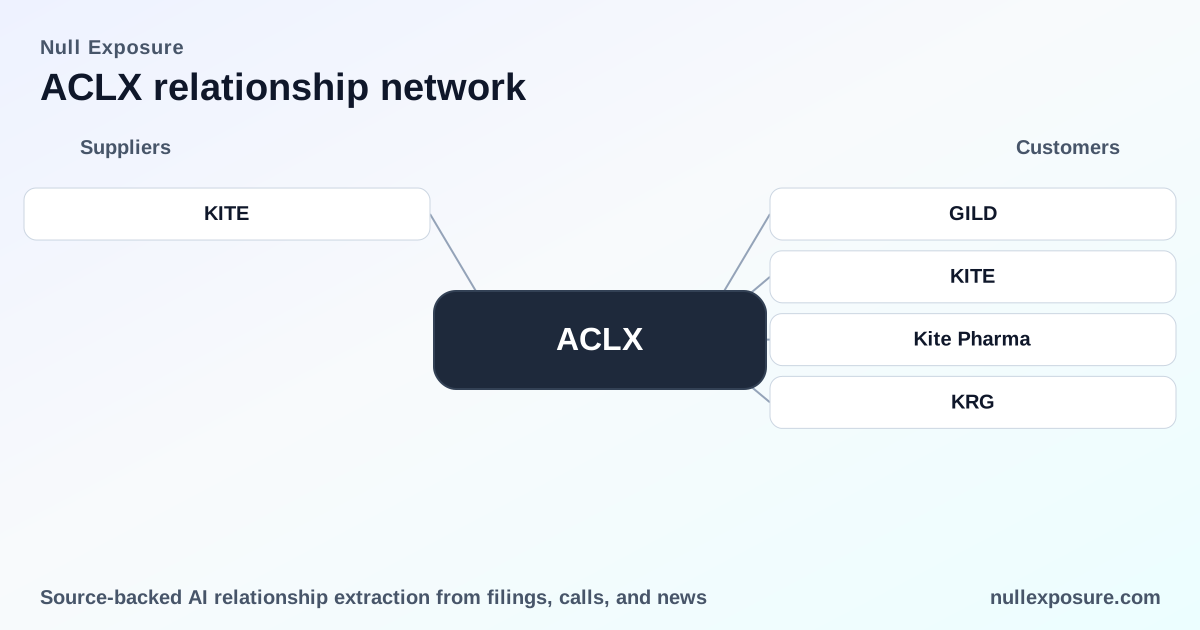
Arcellx (ACLX): supplier map and the manufacturing handoff to Kite
Thesis: Arcellx is a clinical-stage cell therapy developer that monetizes long-term through product commercialization and partner-supported manufacturing, not through meaningful product revenue today; the company outsources core manufacturing and logistics functions and is increasingly leaning on established cell-therapy manufacturers to scale clinical and eventual commercial supply. Investors should treat Arcellx as a biologics developer with concentrated third‑party manufacturing exposure and upside tied to successful transfer of processes to large-scale partners. Learn more about supplier risk and exposure at https://nullexposure.com/.
H2: Why manufacturing partnerships shape Arcellx’s valuation Arcellx’s business model centers on proprietary cell therapy candidates and the progression of those assets through clinical development to commercialization. With minimal product revenue (Revenue TTM: $22.3 million) and negative operating margins, the company fundamentally converts R&D progress into enterprise value via trial data and manufacturing readiness. Critical to that conversion is consistent, scalable supply: net clinical outcomes require reproducible cell-manufacturing, reliable apheresis logistics, and robust packaging/distribution. To operate, Arcellx contracts out manufacturing, release testing, and trial logistics — a posture that creates both operational leverage and concentrated counterparty risk.
- Contracting posture: Arcellx relies on third parties for vector manufacture, release testing, apheresis logistics, and packaging/distribution, which positions the company as an R&D-focused sponsor that buys scale from specialist manufacturers.
- Concentration and criticality: Manufacturing and logistics are mission-critical; a disruption at a single major supplier would directly affect timelines and commercial readiness.
- Maturity and stage: Arcellx is clinical-stage; reliance on external manufacturing is normal at this stage, but the company’s transition of processes to large-scale partners indicates an explicit move toward commercial readiness.
If you’re evaluating supplier counterparty risk for investment or operations, the company-level supplier exposures are summarized below. For a granular supplier map and signals, visit https://nullexposure.com/.
H2: What’s on the record about Kite Pharma H3: Kite Pharma — manufacturing transfer for scale and reliability TradingView reported on March 9, 2026 that Arcellx has transferred its cell manufacturing process to Kite, which will handle future clinical and commercial production to ensure scalability and reliability in supply; this represents a material operational shift toward an established cell‑therapy manufacturer (TradingView, Mar 9, 2026). Source: https://www.tradingview.com/news/tradingview:045acaa59f8e2:0-arcellx-inc-sec-10-k-report/
H3: Kite Pharma cited in later-stage manufacturing discussions tied to Gilead infrastructure OncoDaily noted on March 9, 2026 that Arcellx’s later-stage development includes a manufacturing transfer into Gilead’s cell therapy infrastructure via Kite Pharma, signaling integration into a broader commercial manufacturing network managed by an established CDMO/operator (OncoDaily, Mar 9, 2026). Source: https://oncodaily.com/techology/gilead461928
H2: Every relationship found in the supplier results The dataset returned two separate mentions; both reference the same counterparty, Kite Pharma, but from different reporting contexts. Each mention confirms a manufacturing transfer and alignment with Gilead’s cell therapy capabilities through Kite. Those two sourced mentions together document this single, material supplier relationship and its role in scaling Arcellx’s manufacturing from clinical to commercial volumes (TradingView; OncoDaily, both Mar 9, 2026). Source: TradingView article and OncoDaily article (links above).
H2: Company-level constraints and what they indicate for operators and investors Arcellx discloses several supplier and operational constraints in its regulatory materials. These are company-level signals that inform contracting posture, concentration, and geographic exposure:
- The company explicitly relies on third parties for manufacture and release testing of viral vectors and product candidates, and for patient apheresis logistics, packaging, labeling, storage and distribution. This indicates a durable outsourcing model where Arcellx focuses on R&D and partner execution.
- The firm contracts with a Chinese biotechnology company to manufacture vector material for certain programs, signaling APAC geographic exposure in its supply chain and associated regulatory/logistics considerations.
- The company previously held a Manufacturing Services Agreement with Lonza Houston, Inc., which expired in December 2024; that explicit mention of Lonza is meaningful because it documents recent churn in manufacturing relationships and a shift in CDMO coverage.
- Relationship roles are concentrated in manufacturing and service provision and are currently characterized as active engagements for clinical supply and trial conduct.
These excerpts come from company filings and public disclosures where Arcellx lays out its reliance on third parties for key manufacturing and logistic activities. Collectively, they point to high operational reliance on external manufacturers, some geographic concentration, and active transition of manufacturing responsibilities.
H2: Investment implications — risk, optionality, and what to watch
- Risk: single-point manufacturing concentration. The transfer to Kite/Gilead infrastructure reduces short-term scale risk, but creates counterparty concentration where supplier operational issues could delay trials or launch. Monitor contract scope and exclusivity terms.
- Opportunity: faster commercial readiness. Moving manufacturing to an experienced cell-therapy network like Kite and Gilead’s infrastructure is a positive operational de-risk that supports commercialization timelines and quality control.
- Geographic and regulatory exposure. Use of a Chinese manufacturer for vector production introduces APAC regulatory and supply-chain considerations; investors should track where finished product release and testing are performed.
- Maturity signal. The transition from CDMOs such as Lonza (contract expiration in Dec 2024) toward integrated large‑scale partners is consistent with a company positioning assets for beyond‑phase trials and potential launch.
H2: Tactical next steps for counterparties and portfolio managers For investors and operations teams, priority actions are clear:
- Validate the scope and terms of the Kite/Gilead manufacturing transfer (capacity commitments, quality metrics, contingency plans).
- Assess contract concentration and secondary supplier options, particularly for vector supply and apheresis logistics.
- Monitor regulatory filings for updated supplier disclosures and any commercial manufacturing agreements filed with regulators or disclosed in investor materials.
If you need a mapped supplier view and ongoing monitoring of Arcellx’s counterparty exposures, visit https://nullexposure.com/ for detailed signals and relationship timelines.
Conclusion Arcellx’s operating model is classical for a clinical-stage cell therapy company: intense R&D concentration paired with outsourced manufacturing and logistics. The publicized handoff of manufacturing to Kite and integration into Gilead’s cell-therapy network is a strategic move that reduces scale risk but concentrates counterparty exposure. Investors should weigh the operational benefits of partner scale against the business risk of supplier concentration and APAC vector sourcing. For continuous supplier monitoring and to validate counterparties, see https://nullexposure.com/.