Acasti / ACST (now Grace Therapeutics): supplier relationships that matter for investors
Acasti Pharma — now operating under the Grace Therapeutics name and ticker GRCE — is a small-cap therapeutics firm that built value through the development and potential commercialization of an omega‑3 prescription therapy (CaPre). The company monetizes principally through drug development outcomes: clinical advancement and regulatory approvals create the path to licensing, partnered commercialization, or direct product revenues, while public markets and investor relations activities support capital formation and market access.
For a concise view of the supplier and partner landscape that investors and operators should evaluate, see the company profile and relationship indexing at https://nullexposure.com/.
What the public record lists as ACST's partner network
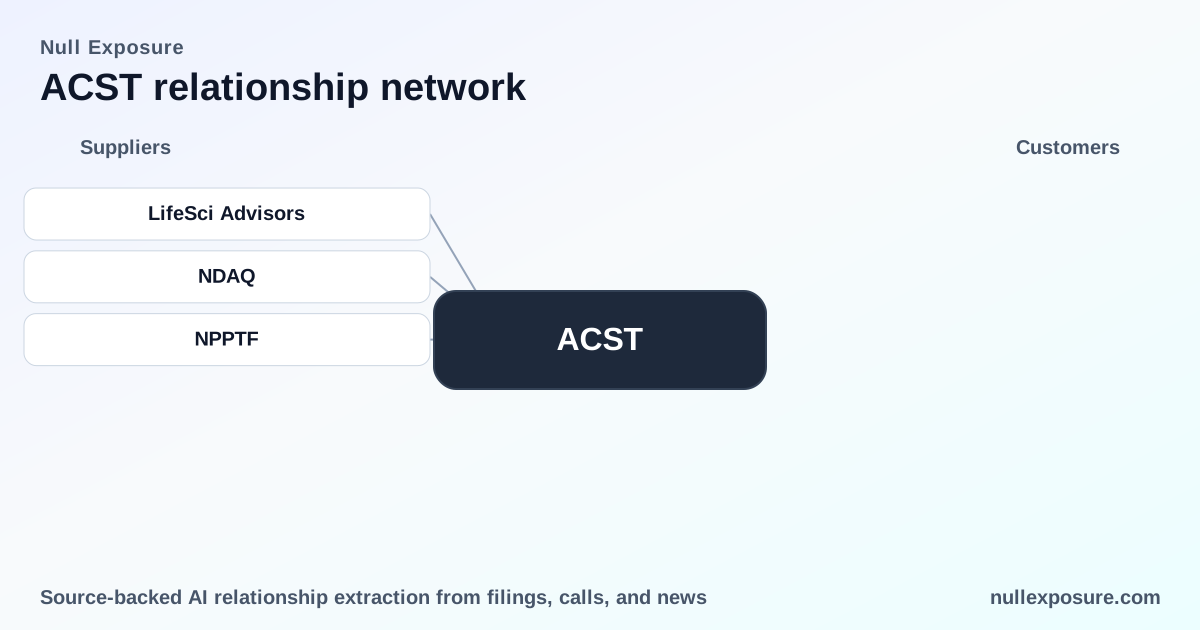
Below are the relationships captured in the record for ACST (supplier scope). Each entry is summarized in plain English and linked to the original reporting.
LifeSci Advisors — investor relations support and contact
LifeSci Advisors is listed as Acasti/Grace Therapeutics’ investor relations contact, with Mike Moyer identified as Managing Director and a phone/email contact provided in the March 2026 press bulletin. This indicates the company outsources or contracts investor relations to a specialist boutique, which drives visibility to institutional and retail investors. (Source: StockTitan news post, March 9, 2026.)
Nasdaq — listing and public-market identity (GRCE)
Grace Therapeutics began trading on Nasdaq under the symbol GRCE at market open on October 28, 2024, and the company updated its branding accordingly. Public listing on Nasdaq anchors the company’s market liquidity, valuation transparency, and regulatory reporting posture. (Source: StockTitan news post referencing Nasdaq notice, March 9, 2026; corporate disclosure dated October 28, 2024.)
Neptune — historical origin and IP lineage
Acasti was spun out from Neptune (NPPTF) along with specific assets and a license to key patents to create a therapeutically focused vehicle pursuing CaPre, an omega‑3 prescription candidate for cardiometabolic applications. This spin‑out is the origin of the company’s core technology and intellectual property position. (Source: Proactive Investors report, FY2019.)
Why these relationships matter for investors and operators
These three relationships collectively define capital access, market identity, and technological provenance — the three pillars for a pre‑commercial therapeutics supplier.
- Investor relations outsourcing (LifeSci Advisors): Hiring a specialist IR firm signals a proactive market‑facing posture; IR contractors are not revenue drivers but are critical to capital market communications, corporate narrative control, and the cadence of investor access. Expect more polished disclosures and targeted shareholder engagement as a result.
- Nasdaq listing: A Nasdaq listing imposes governance and disclosure standards and enables institutional participation. Listing reduces liquidity friction but increases regulatory compliance costs and public scrutiny, making capital raises more straightforward but higher‑visibility.
- Neptune spin‑out and licensed IP: The company’s technological foundation and patent licenses originate from Neptune’s earlier commercial and R&D position in omega‑3 therapeutics. Historical IP provenance reduces the time and cost of initial technology assembly but creates dependency on the strength of acquired licenses and any continuing covenants.
Operating-model constraints and what they signal about ACST (company-level)
No supplier‑level contractual constraints were explicitly provided in the record for ACST; that absence is itself a signal at the company level. From the available information, derive these operating and business model characteristics:
- Contracting posture — externalized vs. captive: The use of a boutique IR firm demonstrates a preference for externalized, specialized contracting rather than building in‑house capability for investor communications. Expect similar externalization for non‑core functions (communications, certain development services).
- Concentration — narrow supplier and value base: As a therapeutics developer spun out of Neptune with a single lead program (CaPre), the business exhibits high concentration in product pipeline and IP. Supplier relationships (CROs, licensors, communications partners) are likely concentrated and mission‑critical.
- Criticality — high dependency on a few relationships: Intellectual property licenses and access to capital are critical dependencies; disruptions to either can materially affect the company’s ability to progress clinical work or manage regulatory timelines.
- Maturity — early‑stage and transitionary: The company remains in an early commercial maturity phase (development to commercialization transition). The Nasdaq listing improves capital access, but operational scale and supplier diversification appear limited based on available records.
These constraints imply a risk profile typical of small therapeutic suppliers: binary development risk, dependency on external capital and contractors, and concentrated operational relationships.
Practical takeaways for investors and operators
- Investor relations matter as a lever: The engagement of LifeSci Advisors is a deliberate choice to shape the public narrative; track IR outreach and earnings/clinical‑update cadence for inflection points in valuation.
- Public listing sets the stage, not the finish line: Nasdaq trading (GRCE) facilitates capital raises but also raises expectations. Monitor SEC filings for financing activity, equity dilution, and changes to executive compensation or governance.
- IP provenance is an asset and a constraint: The Neptune spin‑out provided immediate IP and scientific heritage, but investors must examine license terms and any retained rights or milestone obligations before assigning value.
If you want a compact, continuously updated map of these and other supplier relationships, visit https://nullexposure.com/ to see the full profile and alerts.
How to use this analysis in due diligence
- Request copies of the IP license agreements inherited from Neptune; verify any milestone, royalty, or termination clauses.
- Validate the scope and duration of the LifeSci Advisors engagement to determine when communications will accelerate around clinical events or financing.
- Track Nasdaq filings for recent Form 8‑K disclosures and capital markets activity since the October 2024 re‑listing under GRCE.
For a curated view of third‑party relationships and contract signals that matter to financial and operational due diligence, explore our supplier profiles at https://nullexposure.com/.
Final verdict for investors and operators
Acasti/Grace Therapeutics is a focused, early‑stage therapeutic supplier whose value is tightly coupled to a single program and its inherited IP, supported by a public listing and specialist IR coverage. That structure delivers upside if clinical and regulatory milestones are achieved, but it creates concentration and partner dependency risks that require active monitoring of IP terms, financing events, and supplier engagements.
For ongoing monitoring and to integrate this supplier intelligence into investment workflows, visit https://nullexposure.com/ and subscribe for alerts and deeper relationship analytics.