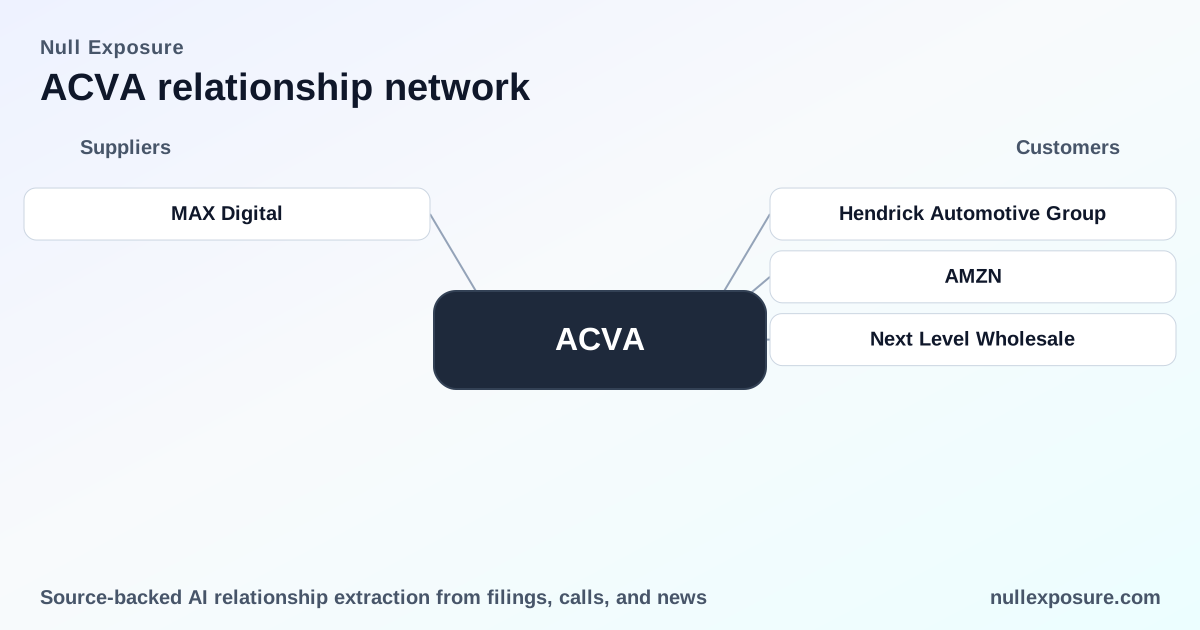
ACV Auctions (ACVA) — supplier relationships, operational constraints, and investor implications
ACV Auctions operates a digital wholesale vehicle marketplace that connects dealers, handles logistics and ancillary services, and charges transaction and service fees to monetize volume-driven flows. The company earns marketplace commissions and reports transportation fees on a gross basis, operating as the principal in logistics arrangements while layering services for dealers. For a deeper read on supplier exposures and strategic relationships visit https://nullexposure.com/.
How ACV makes money and why supplier relationships matter
ACV runs a two-sided marketplace: dealers consign and buy vehicles through its platform while ACV provides inspection, valuation technology, buyer discovery, and logistics. Revenue TTM of $759.6M and gross profit of $207.9M (latest quarter to 2025-12-31) indicate a business already at scale but still operating with negative margins (operating margin TTM -13.9%, diluted EPS -$0.39). The company discloses transportation revenues on a gross basis and acts as a principal in carrier arrangements, which amplifies both top-line and operational risk tied to third‑party carriers and logistics execution.
Recent strategic move: MAX Digital acquisition
ACV announced the acquisition of MAX Digital in March 2026 to broaden dealer-facing digital services and content offerings. The deal is positioned to extend ACV’s product set to dealer partners and accelerate cross-selling of marketing and digital tools alongside the core auction business. According to the PR Newswire release, “We are thrilled to be able to offer MAX Digital's services to our existing dealer partners.” (PR Newswire, March 2026).
Company-level constraints that affect supplier risk
The coverage dataset identifies two clear company-level signals that shape ACV’s supplier posture:
- Geography: ACV’s headquarters and primary operations are concentrated in North America, principally the United States and Canada; corporate address is Buffalo, NY.
- Relationship role: ACV acts as a service provider and as the principal for transportation arrangements, leveraging a nationwide network of third-party carrier partners and reporting transportation fees on a gross basis.
These constraints imply concrete characteristics of ACV’s operating model:
- Contracting posture — principal with delegated execution. ACV contracts with carriers as the principal and bills buyers for transportation, creating revenue capture but also balance-sheet and liability visibility for logistics failures or disputes.
- Concentration — regional exposure. Operations are concentrated in North America, which focuses regulatory, macro and market cycle exposure to U.S./Canadian wholesale auto markets rather than a diversified international footprint.
- Criticality — logistics are core to the marketplace. Transportation and carrier networks are critical service inputs; poor carrier performance directly degrades buyer and seller experience and therefore marketplace liquidity.
- Maturity — networked, operational scale. The company reports a nationwide carrier network and dedicated service teams, supporting the view that logistics are not ad hoc but an embedded, mature capability.
For a concise vendor risk view and ongoing supplier tracking, see https://nullexposure.com/.
Contracting posture and direct operational implications
Acting as the principal for transportation means ACV controls pricing and customer interactions but carries execution risk. Billing transportation gross inflates reported revenue during stable operations, while carrier disputes, fuel-cost shocks, or capacity constraints translate into operational headwinds and potential margin compression. Investors must separate marketplace economics from logistics revenue to assess core take-rate trends.
Geographic concentration and policy exposure
Concentration in the U.S./Canada simplifies go-to-market and regulatory oversight but increases exposure to North American credit cycles, dealer inventory swings, and regional regulatory shifts for vehicle sales or transport. Expansion outside North America would materially change supplier diversification; current signals point to a regional operating focus.
Operational criticality and maturity of supplier relationships
ACV’s nationwide carrier network and dedicated service teams signal operational maturity—a built capability rather than a temporary fix. This reduces execution risk relative to nascent providers, but as a core service it remains a single point of failure for marketplace reliability if carriers experience systemic disruptions.
Complete supplier relationships (covered in the public record)
- MAX Digital — ACV announced the acquisition of MAX Digital in March 2026 to offer the company’s digital services to ACV’s dealer base, extending marketing and digital content capabilities. Source: PR Newswire release on ACV’s acquisition of MAX Digital (March 2026).
This article covers all supplier-related relationships identified in the reviewed results.
Investment implications and risk checklist
- Scale vs. profitability: ACV is large enough to generate meaningful revenue ($759.6M TTM) but still exhibits negative operating margins and EBITDA losses, making path-to-profitability and margin leverage key value drivers.
- Revenue composition risk: Because transportation is recorded gross and ACV acts as principal, top-line growth can be driven by logistics volume even if core marketplace take-rates are static; investors should decompose revenue into marketplace commissions versus pass-through logistics to understand durable margin trends.
- Concentration risk: North America focus simplifies execution but concentrates macro and regulatory risk.
- M&A and product extension: The MAX Digital acquisition signals a push into dealer services beyond auctions—this enhances cross-sell potential but requires integration discipline.
Relevant public metrics: Market cap ~$847.7M; Price-to-Sales ~1.12; EV/Revenue ~1.07; Forward P/E ~24.3 (where applicable to expectations). Analyst consensus leans toward a mix of buy and hold ratings, with an analyst target around $9.12.
For a vendor-focused diligence engagement or to model supplier-driven revenue adjustments, visit https://nullexposure.com/ for tailored analysis.
Bottom line — what investors and operators should monitor
ACV combines a marketplace with logistics execution and is monetizing both marketplace fees and gross transportation revenues while operating as the principal in carrier relationships. That dual role provides revenue diversification and control but concentrates execution risk in logistics. Watch carrier capacity and cost trends, integration outcomes from acquisitions like MAX Digital, and the company’s ability to convert scale into sustainable operating margins. For continued tracking of supplier exposures and relationship changes, use the resources available at https://nullexposure.com/.