ADC-P-A: A concise supplier-side read for investors and operators
ADC-P-A is a publicly traded preferred equity instrument of a REIT focused on net-lease properties across retail, healthcare and industrial sectors, monetizing through long-term lease income and capital appreciation of real estate holdings. The preferred shares capture a fixed-income–like claim on REIT distributions while exposing investors to the operating performance and capital strategy of the parent real estate platform. For investors and counterparties, the relevant lens is cash-flow durability from net leases, credit posture, and disclosure transparency. Learn more at https://nullexposure.com/.
How ADC-P-A generates value and why that matters to partners
ADC-P-A’s economic engine is straightforward: the underlying REIT acquires and manages single-tenant, long-term net-leased properties that generate predictable rental streams. The preferred instrument converts that rental predictability into a priority distribution for holders, delivering an income-focused profile that sits ahead of common equity in the capital stack.
- Contracting posture: ADC-P-A’s revenue model depends on long-duration leases that shift many operating costs to tenants, creating stable landlord cash flows.
- Sector diversification: Positions in retail, healthcare, and industrial provide counter-cyclical balance—retail and healthcare drive occupancy stability, industrial supports redevelopment and logistics demand.
- Monetization mechanics: Cash available for preferred distributions is derived from lease collections and property-level operating surpluses; the preferred claim is paid according to the REIT’s capital structure.
These characteristics make ADC-P-A relevant to institutional investors seeking income with limited upside, and to suppliers and service partners that depend on consistent property-level cash flows. For a broader supplier-supplier and investor network view, see https://nullexposure.com/.
What the market relationship landscape shows right now
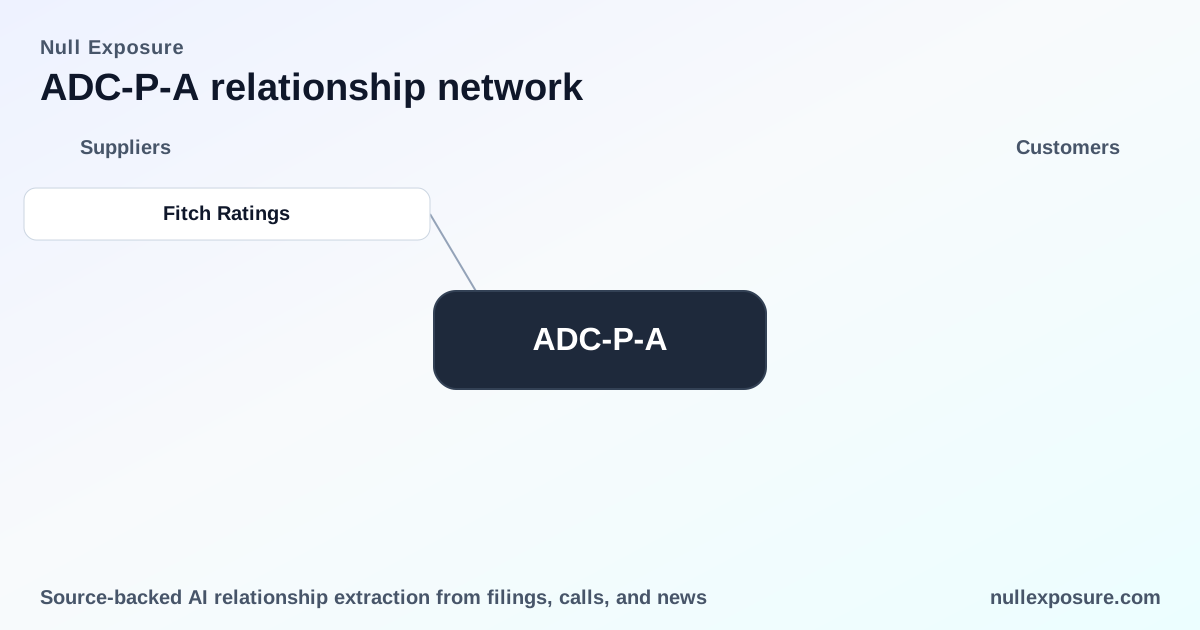
There is a single material external relationship captured in the available record: a credit rating action. This relationship matters because ratings directly influence borrowing cost, counterparty confidence, and preferred security valuation.
Fitch Ratings — A- issuer rating, stable outlook
Fitch has assigned an A- issuer rating with a stable outlook, signaling investment-grade credit quality and reinforcing the REIT’s ability to sustain preferred distributions under standard market conditions. According to TradingView’s coverage of the Fitch action (March 9, 2026), Fitch confirmed the A- issuer rating and a stable outlook for the entity associated with ADC-P-A (TradingView, March 9, 2026: https://www.tradingview.com/news/tradingview:aa3fbd2c0b334:0-agree-realty-corporation-reports-third-quarter-2025-results/).
This rating is the central external credit signal available in the supplied relationship record and is consequential for pricing of the preferred shares and for counterparties evaluating exposure.
Operating constraints and company-level signals that shape supplier and investor decisions
The dataset attached to ADC-P-A contains multiple nulls for routine public metrics (market capitalization, dividends, standard profitability measures), which itself is an operational signal: the record lacks standard disclosed financial detail for this preferred issue, requiring counterparties to rely on issuer filings and third-party credit commentary for assessment.
From an operational and commercial standpoint, these company-level signals are material:
- Contracting posture and cash-flow profile: Net-leased assets transfer many operating and capital expense responsibilities to tenants, resulting in predictable, landlord-friendly cash flows that support preferred distributions.
- Concentration and criticality: The REIT’s focus on three sectors provides moderate concentration risk but also sectoral resilience—retail and healthcare underpin steady occupancy, while industrial captures logistics demand. This matters to suppliers whose revenue depends on property-level services and to lenders pricing credit.
- Maturity and public transparency: The presence of an investment-grade rating indicates credit maturity in capital markets, but the absence of detailed financial fields in the summary record suggests counterparties must validate disclosure completeness through primary filings and rating agency reports rather than relying solely on summary databases.
- Capital-structure sensitivity: Preferred holders rely on issuer-level credit actions and liquidity—rating changes are direct drivers of funding costs and market valuation for the preferred instrument.
These constraints are presented as company-level signals rather than tied to specific relationship excerpts.
What the Fitch rating means for investors and suppliers
An A- issuer rating with a stable outlook carries immediate implications:
- Borrowing cost and liquidity: Investment-grade status sustains access to capital and typically reduces marginal funding costs, supporting property acquisitions and capex—beneficial for service providers contracting with the REIT.
- Preferred valuation support: The rating underpins the expected reliability of preferred distributions, improving secondary-market liquidity for ADC-P-A.
- Counterparty risk management: Suppliers negotiating service terms, reserve requirements, or contract length can take the rating as an indicator of long-term counterparty stability.
Those evaluating supplier relationships should make contracting decisions that reflect the REIT’s net-lease structure—longer-term engagements aligned with lease terms and price mechanisms that account for tenant-shifted costs.
Explore strategic supplier intelligence at https://nullexposure.com/ to see how counterparties position around rated real estate issuers.
Investment implications, risk calculus, and practical next steps
For investors, ADC-P-A represents an income-focused allocation with the following practical takeaways:
- Primary case: Stable income exposure supported by net-leased assets and an investment-grade issuer rating.
- Key risks: Limited public financial detail in the summary record, sector concentration dynamics, and sensitivity to rating revisions or macro real estate cycles.
- Operational actions: Perform direct diligence on issuer filings, review Fitch’s full rationale for the A- rating, and evaluate lease roll schedules and tenant credit to assess durability of distributions.
For operators and suppliers, structure engagements to reflect the REIT’s contracting posture: favor contractual pass-throughs for operating costs, align service terms with lease duration, and build covenants that protect revenue when tenant transitions occur.
Bottom line and call to action
ADC-P-A’s profile is driven by net-lease economics and supported by an A- issuer rating (stable) from Fitch—this is a credit-positive signal that matters for preferred holders and commercial counterparties. However, the summary record’s lack of granular financial disclosure requires that investors and suppliers validate core assumptions through primary filings and rating-agent commentary.
If you evaluate supplier exposure or preferred allocations to real-estate credit, start with primary filings and rating reports and complement those with sector-level diligence. For more supplier-focused analysis and to broaden your coverage of counterparties in real estate and credit markets, visit our research hub at https://nullexposure.com/.
Key relationship reference: TradingView reported on Fitch’s A- issuer rating with a stable outlook (coverage dated March 9, 2026): https://www.tradingview.com/news/tradingview:aa3fbd2c0b334:0-agree-realty-corporation-reports-third-quarter-2025-results/.