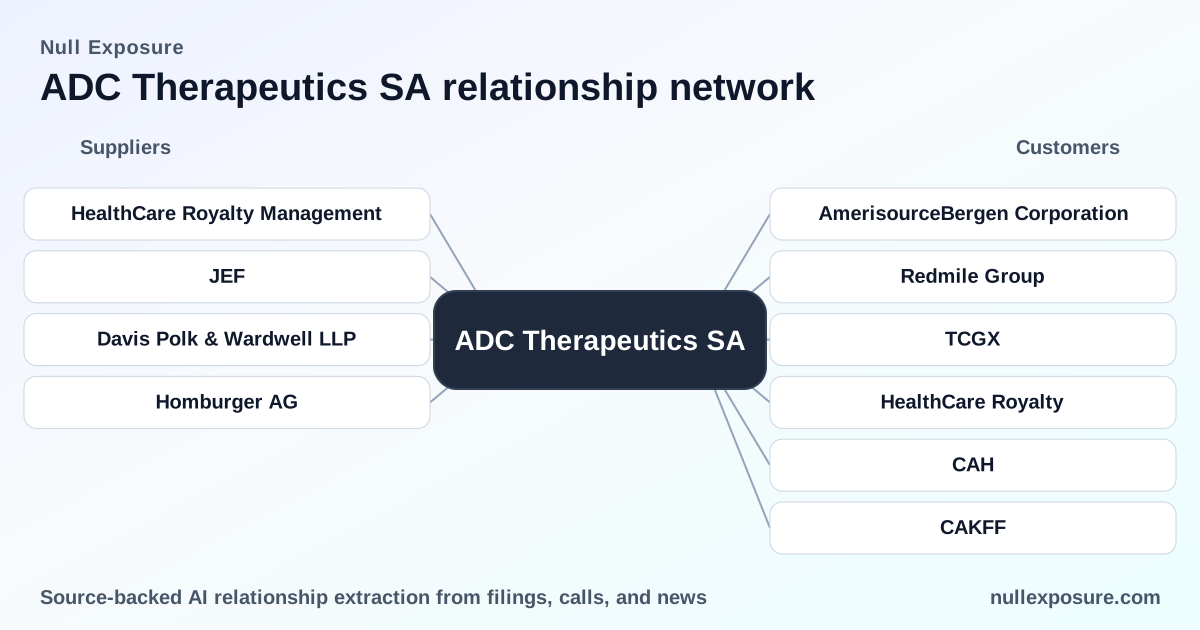
ADCT: Supplier relationships that shape near-term funding and product flow
ADC Therapeutics (ADCT) develops antibody–drug conjugates and monetizes through commercial sales of ZYNLONTA, milestone and royalty arrangements, and equity/financing transactions that convert clinical progress into working capital. The company outsources manufacturing, distribution and many trial functions to third parties, and supplements cash with structured financings and private placements—so supplier contracts and capital partners are operationally and financially consequential. For a focused review of the supplier-side counterparties and what they reveal about ADCT’s operating posture, read on. If you want ongoing tracking of these supplier dynamics, visit https://nullexposure.com/.
How ADCT runs its supply chain and why that matters for investors
ADC Therapeutics runs a lean, outsourced operating model: no owned manufacturing, broad reliance on CMOs and CROs, and short-duration third‑party obligations. That model lowers fixed capital but increases dependency on supplier performance and contractual flexibility. Financial levers—royalty financing and PIPE placements—supplement cash, so capital providers and legal advisors show up as key suppliers in the company’s ecosystem.
- Contracting posture: Predominantly third‑party service contracts rather than long-term vertical integration. ADCT’s obligations include non‑cancelable, short‑term manufacturing commitments (a disclosed $3.1 million due in 2025), indicating transactional, near-term commitments rather than multi-year captive capacity.
- Concentration and criticality: Outsourced manufacturing and distribution for ZYNLONTA are mission-critical—operational failure or contractual dispute would directly affect revenue and regulatory compliance.
- Maturity and flexibility: The supplier base and financing counterparties reflect a mix of commercial-stage responsibilities and transactional capital arrangements, suggesting high tactical flexibility but also exposure to refinancing and supplier renegotiation risk.
The counterparties investors need on their radar
Below are the supplier and service relationships surfaced in recent filings and press coverage. Each entry is concise and sourced on the public record.
HealthCare Royalty Management — royalty financing amendment
ADC Therapeutics amended its royalty financing agreement with HealthCare Royalty Management to update change‑of‑control and buyout terms, a move that alters the economics of existing royalty cash flows and affects potential M&A scenarios. This amendment was reported in March 2026 by TradingView summarizing the company announcement (FY2026). Source: TradingView press coverage, March 9, 2026.
Jefferies — placement agent for PIPE financing
Jefferies acted as placement agent on ADC Therapeutics’ recent $60 million private placement, positioning the bank as the transaction intermediary that enabled immediate capital inflows. The role was disclosed in company press releases reported by Yahoo Finance and BioSpace in March 2026 (FY2025). Source: Yahoo Finance and BioSpace press releases, March 9, 2026.
Davis Polk & Wardwell LLP — legal advisor to ADCT
Davis Polk & Wardwell LLP served as legal counsel to ADC Therapeutics on the private placement and associated documentation, representing transactional legal capacity for capital markets activity. This advisory role was noted in the company’s March 2026 press release and covered by Yahoo Finance and BioSpace (FY2025). Source: Yahoo Finance and BioSpace press releases, March 9, 2026.
Homburger AG — Swiss legal counsel to ADCT
Homburger AG acted as local legal advisor alongside Davis Polk, providing Swiss counsel for the placement and corporate matters, reflecting cross‑jurisdictional legal support for the financing. The engagement was disclosed in the same March 2026 company announcements (FY2025). Source: Yahoo Finance and BioSpace press releases, March 9, 2026.
(These four relationships are the full set of supplier contacts surfaced in the available results; each is transactional and tied to recent financing activity or royalty financing amendments.)
If you want this supplier map integrated into portfolio monitoring and alerts, explore more at https://nullexposure.com/.
What these relationships mean for risk and upside
The mix of counterparties—royalty financiers, placement agents, and legal advisors—tells a clear story about ADCT’s near-term priorities: preserve liquidity, preserve commercialization momentum for ZYNLONTA, and retain strategic optionality for corporate events. Operationally, the company’s reliance on third‑party CMOs/CROs (a company-level signal) creates several implications:
- Operational exposure: Outsourced manufacturing and distribution are critical for revenue; the company’s own disclosures emphasize reliance on CMOs and third‑party distribution. Supplier service quality and contract stability directly affect product availability and margins.
- Short-term contractual horizon: The company reports non‑cancelable manufacturing obligations totaling $3.1 million due in 2025, signaling near-term, finite commitments rather than lock‑in long-term capacity—this supports flexibility but raises rollover risk.
- Financing posture: The use of royalty financing and a recent PIPE placed by Jefferies indicates active balance‑sheet management and dependence on capital markets to fund operations and growth. Legal advisors’ participation signals well‑executed transactional readiness for further financings or structural changes.
- Concentration and leverage points: While the relationship list is limited in public disclosures, the roles (manufacturer, distributor, service provider) reported by the company imply that a small set of external partners hold outsized operational leverage.
What investors and operators should monitor next
- Track any changes to CMO/CMO contracts or expanded non‑cancelable commitments; an increase would signal de‑risking of supply but less flexibility.
- Watch royalty financing instruments and change‑of‑control clauses—amendments can materially affect acquisition economics and downside protection for debt/royalty holders.
- Monitor future capital raises and the continued role of placement agents and legal advisors; repeated PIPE activity signals recurring funding needs.
- Evaluate supplier performance indicators—timely supply, regulatory inspection outcomes, and distribution execution—as they directly flow to top-line recognition for ZYNLONTA.
For a practical supplier-risk scorecard and live monitoring of counterparties around ADCT, see our platform at https://nullexposure.com/.
Bottom line — action for investors
ADCT operates a capital‑intensive, outsourced clinical and commercial model where external suppliers and financing partners are core to near‑term performance. The recent royalty amendment and private placement demonstrate active capital management but also underscore dependence on third‑party manufacturing and transactional counterparties. Investors should prioritize monitoring supplier contract tenure, change‑of‑control economics in financing agreements, and the cadence of capital raises as primary drivers of operational continuity and valuation re‑rating.
If you evaluate healthcare suppliers or manage exposure to ADC Therapeutics, set up supplier alerts and review contract maturities on the company’s upcoming filings; our portal provides that capability at https://nullexposure.com/.