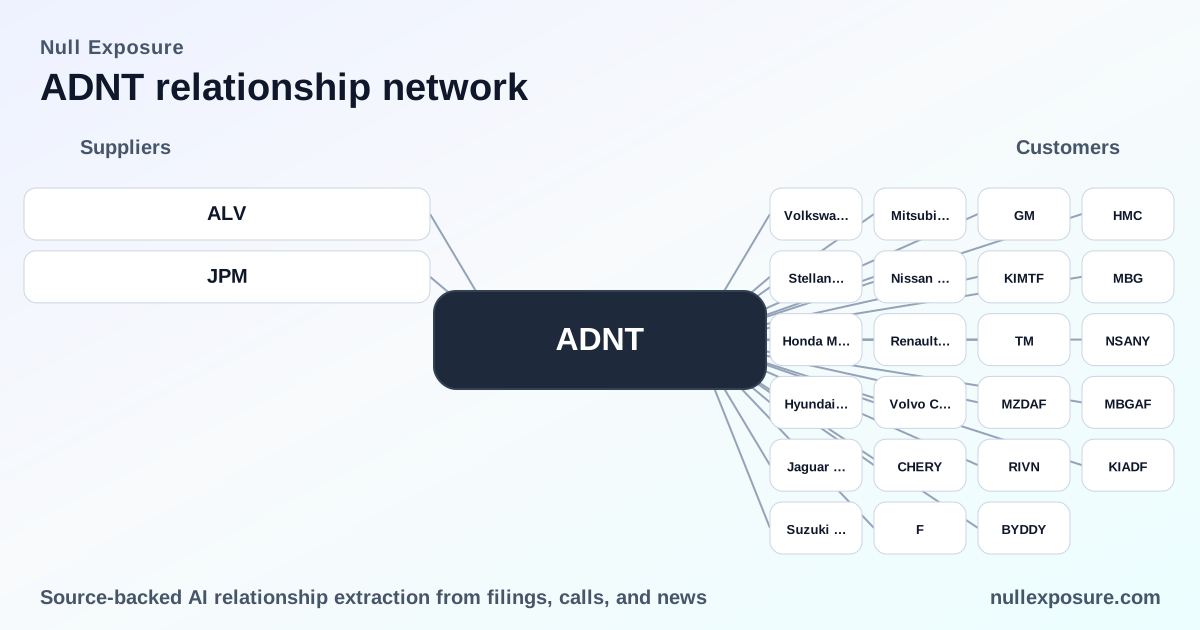
Adient PLC (ADNT): Supplier relationships that shape margins and execution
Adient designs and manufactures automotive seating systems and components and monetizes through long-term OEM supply contracts, aftermarket sales and joint development programs for safety and seating technologies. The business converts scale manufacturing into revenue (Revenue TTM $14.68B; EBITDA $762M) while procurement and capital structures directly influence working capital and margins. For investors and operators, the relevant question is how Adient’s supplier and financing relationships affect production continuity, margin volatility and the company’s ability to capture value from joint technology programs.
If you want a quick monitor of the supplier landscape for procurement and counterparty risk, see https://nullexposure.com/ for structured coverage.
What the supplier posture tells you about Adient’s operating model
Adient runs a global procurement network: the company discloses that it sources components and services from automotive suppliers around the world, which creates both scale advantages and exposure to geopolitical and logistics risk. Adient’s filings show material related-party purchases—$311 million in purchases from related parties in FY2025—illustrating a non-trivial concentration of spend tied to affiliated vendors. According to company disclosures, Adient also treats these supplier links as operationally active: supply agreements have been modified in recent fiscal years, including the introduction of performance-based rebates, which indicates a shift toward commercial terms that directly tie supplier economics to performance outcomes. These attributes together create a supplier profile that is: global in reach, buyer-dominant in contracting posture, materially concentrated in pockets of spend, and operationally mature enough to embed performance pricing.
A focused takeaway for investors: procurement terms and concentrated supplier spend are direct drivers of cost of goods sold and equity income volatility; track related-party purchase lines and rebate mechanics closely.
The two counterparties investors should log in the ledger
Autoliv — a product and technology partner, not just a vendor
Adient announced a joint development agreement with Autoliv on its Q4 2025 earnings call, positioning both companies to deliver enhanced safety solutions to automaker customers through collaborative engineering and product integration. This is a technology-linked commercial relationship that enhances Adient’s seating systems through integrated safety features. According to the Q4 2025 earnings call, the joint development agreement is an active initiative for product-level collaboration.
JPMorgan Chase Bank, N.A. — administrative and collateral agent on the credit facility
A recent filing referenced on StockTitan shows that JPMorgan Chase Bank, N.A. administers Adient’s credit facility as administrative and collateral agent, with Adient US LLC as the lead borrower, underscoring the bank’s role in coordinating secured financing and collateral matters for the group. This is a financing relationship that influences liquidity, covenant structures and the company’s ability to fund working capital and supplier payables (FY2026 filing context, StockTitan SEC filings).
(These two entries summarize every named relationship captured in the supplier-scope results for ADNT.)
How these relationships alter the commercial and financial profile
-
Contracting posture and bargaining power: Adient is predominantly a buyer when it comes to component sourcing and records meaningful purchases from related parties; this buyer role supports negotiating leverage but also implies operational dependency where affiliated vendors capture a material share of spend ($311M in FY2025). That concentration increases exposure if those vendors experience capacity or financial stress.
-
Commercial sophistication: The addition of performance-based rebates to supply agreements (noted in fiscal disclosures) signals a move from fixed-price supply toward outcome-linked contracts—this aligns supplier incentives with Adient’s cost and quality goals and reduces direct margin leakage when implemented effectively.
-
Financing overlay: The presence of a bank-administered secured facility (JPMorgan as agent) ties supplier payment flexibility to the broader capital structure. Financing arrangements that centralize collateral administration make liquidity more predictable but concentrate operational risk around covenant compliance and collateral availability.
-
Geographic risk and scale: Operating a global sourcing footprint provides scale benefits but elevates logistics, tariff and regional disruption risk—factors that have outsized impact on sequential margins in automotive supply chains.
Practical implications for investors and operators
-
Monitor related-party purchase disclosures and rebate mechanics. The FY2025 related-party purchases figure is a clear signal that some supplier relationships are large enough to influence margins. Quarterly updates and notes on rebate attainment will drive near-term margin revisions.
-
Treat joint development agreements as value levers, not pure cost centers. The Autoliv partnership is a commercial pathway to embed safety systems into seating, which can increase content per vehicle and create higher-margin OEM integration opportunities.
-
Factor financing structure into working-capital risk. The JPMorgan-administered facility centralizes collateral and liquidity management; any covenant pressure or draw restrictions would have immediate operational consequences for supplier payment terms and capital allocation.
If you want to benchmark Adient’s supplier footprint and supplier-linked financing risks against peers, visit https://nullexposure.com/ for comparative supplier intelligence.
What to watch next and recommended investor actions
- Quarterly filings: watch the related-party purchases line and any expansion or contraction in rebate programs; those entries directly alter COGS and equity income flows.
- Partnership milestones: track product launches and engineering milestones from the Autoliv joint development program; commercialization will be the primary value capture event for that collaboration.
- Liquidity and covenant language: review upcoming debt maturity and facility language administered by JPMorgan; covenant loosening or tightening will change the company’s ability to manage supplier payment cadence.
In summary, Adient’s supplier relationships are a blend of operational dependence, commercial sophistication and financing interdependence. Related-party spend is material, joint development agreements are strategically accretive, and bank-administered facilities centralize liquidity risk. For investors and operators, the near-term focus should be on rebate performance, JDA commercialization milestones and covenant headroom.
For a deeper, transaction-level view of Adient’s counterparties and supplier economics, explore our coverage at https://nullexposure.com/.