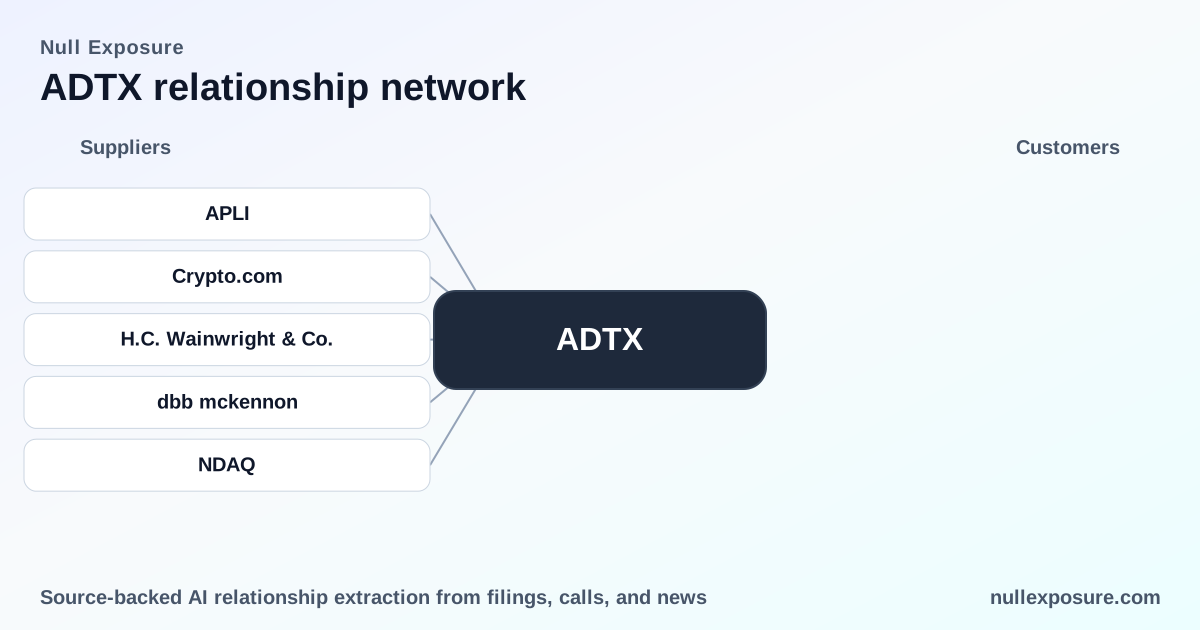
Aditxt (ADTX) supplier map: what counterparties reveal about operating risk and runway
Aditxt is a small-cap biotechnology company that licenses immune-modulation intellectual property, develops therapeutic candidates, and plans to commercialize assays and drug products; it monetizes through exclusive IP licenses, potential product sales and sublicensing, and transaction-driven capital raises. For investors and operators evaluating supplier and counterparty risk, the relevant signals are concentrated in long‑term licensing arrangements, outsourced manufacturing and distribution, targeted service engagements, and recent capital-market activity that affects liquidity and governance. For deeper monitoring of these counterparties and filings visit https://nullexposure.com/.
How to read the counterparty set: one operating posture, multiple external dependencies
Aditxt’s supplier and counterparty footprint reflects a classic small‑biotech operating model: core IP held via exclusive long‑term licenses, and non-core functions outsourced. That posture reduces fixed overhead but creates single‑point dependencies where a lost license or manufacturing failure would be immediately critical. Financially, the company is loss‑making with constrained liquidity, which amplifies the operational importance of each supplier relationship.
- Licenses are foundational and global: Aditxt holds exclusive worldwide license rights to key technologies from academic licensors, which gives it strategic control but concentrates value in a small number of legal agreements.
- Manufacturing and distribution are outsourced: Clinical‑grade drug substance production and product distribution rely on third parties, pointing to supplier concentration and quality/regulatory risk.
- Service providers drive near‑term strategy and costs: Investment banks, CROs, and auditors play outsized roles in funding, clinical progress, and reporting.
- Capital markets actions are material to runway: Recent equity offerings, a sales‑agent agreement, and a reverse split are explicit levers for maintaining listing and financing operations.
For a consolidated view of filings, counterparties, and risk flags, see https://nullexposure.com/.
What each counterparty relationship tells a buyer, partner, or investor
Appili Therapeutics Inc.
Aditxt agreed to acquire Appili through a transaction structure that included a termination fee of USD $1,250,000 payable by Aditxt under the Arrangement Agreement, reflecting a concrete contingent cash exposure tied to that deal. Source: Yahoo Finance report on the Appili termination fee (March 9, 2026) — https://finance.yahoo.com/news/appili-therapeutics-announces-formal-termination-111700407.html
Crypto.com
Aditxt intends to use Crypto.com for custody services for a planned digital asset treasury, signaling that the company is adopting crypto custody for part of its cash management strategy and introducing counterparty and regulatory footprint associated with custodial platforms. Source: TS2.Tech article on ADTX (December 5, 2025) — https://ts2.tech/en/aditxt-adtx-stock-on-december-5-2025-bitxbio-pivot-reverse-split-and-survival-risk-explained/
H.C. Wainwright & Co.
Aditxt executed a securities offering structure using H.C. Wainwright & Co. as sales agent, indicating active capital‑markets engagement to raise liquidity and the existence of placement‑related fees and dilution mechanics tied to near‑term funding. Source: TS2.Tech coverage referencing a Form 424B5 prospectus supplement (December 17, 2025) — https://ts2.tech/en/aditxt-adtx-stock-surges-after-proxy-filing-sets-up-reverse-split-vote-and-bitxbio-name-change-what-to-know-on-dec-17-2025/
dbb mckennon
The company ratified dbb mckennon as its independent registered public accounting firm for fiscal 2025, which is a governance and reporting touchstone for audits and financial disclosures going forward. Source: SEC filings aggregated by StockTitan (FY2026 filing pages) — https://www.stocktitan.net/sec-filings/ADTX/page-3.html
Nasdaq
Aditxt implemented a reverse stock split effective March 6, 2026, and its shares began trading on a split‑adjusted basis on Nasdaq on March 9, 2026, demonstrating the company’s use of corporate actions to maintain exchange listing standards and signal survival‑oriented governance choices. Source: Globe and Mail press release on the reverse split (March 2026) — https://www.theglobeandmail.com/investing/markets/stocks/ADTX-Q/pressreleases/607394/aditxt-implements-reverse-stock-split-to-maintain-nasdaq-listing/
What the constraints and contractual signals mean in practice
Aditxt’s disclosed constraints are consistent with a firm that controls valuable IP but runs a lean operating model dependent on external parties. These are company‑level signals to weigh when assessing counterparty risk and operational resilience:
- Long‑term exclusive licensing posture: The firm holds long‑dated, exclusive licenses (LLU and Stanford excerpts cite worldwide exclusivity), which creates strategic leverage but also concentration risk if those licenses were renegotiated or invalidated.
- Global reach for IP rights: Licenses grant worldwide rights, meaning revenue upside has no geographic limit, but also that regulatory and enforcement complexity increases.
- Outsourced manufacturing and distribution: GMP clinical‑grade drug substance production is handled by a contract manufacturer and distribution relies on third parties, highlighting manufacturing quality and supplier concentration as critical operational risks.
- Active service engagements with material fees: Engagements such as the Dawson James advisory fee ($1.85M contingent payment) and a $10–$24.5M consideration cited in asset transactions indicate meaningful near‑term spend commitments that influence cash runway and negotiating leverage.
- Relationship maturity and stage: Most relationships are active and operational, not merely exploratory; that raises the immediacy of counterparty risk for clinical timelines and cash outflows.
These signals collectively point to an operating model that is asset‑light on execution but asset‑heavy on licensed IP, where third‑party providers and capital‑market counterparties are determinative for timelines and solvency.
Investment and operational takeaways
- Counterparty risk is high‑impact: Losing a license, a contract manufacturer, or a primary distribution partner would directly stall development or commercialization. Monitor license status and supplier GMP performance as top priorities.
- Funding counterparties matter as much as scientific ones: Sales‑agent agreements and auditors influence capital access and reporting credibility; H.C. Wainwright and dbb mckennon are material to runway and investor confidence.
- New custody arrangements expand risk surface: The Crypto.com custody relationship introduces non‑traditional treasury counterparty risk and regulatory complexity.
- Corporate actions are governance signals: The reverse split and acquisition/termination fee exposures underline that Aditxt is actively reshaping its balance sheet and capital structure to remain listed and pursue M&A; these actions are both stabilizing and dilutive.
For a tailored monitoring plan across these counterparties and to link filings, news, and contractual signals, go to https://nullexposure.com/.
Recommended next steps for investors and operators
- Prioritize verification of license terms, expiration dates, and sublicensing rights; track any litigation or patent‑related disclosures.
- Require third‑party GMP certifications and recent audit reports from contract manufacturers and distributors.
- Treat treasury custody as a governance item: request custody agreements and insurance/segregation terms for any digital assets.
- Monitor capital markets activity (prospectus supplements and sales‑agent filings) for dilution schedules and fee commitments.
Aditxt’s supplier map shows a company that is strategically leveraging licensed IP but structurally dependent on a small set of external providers and capital partners; that concentration compresses upside and raises binary operational outcomes. For continuous tracking of these counterparties and updated filing signals visit https://nullexposure.com/ and subscribe for real‑time supplier intelligence.