AEAQ Supplier Landscape: Who Enables a SPAC Execution and What Investors Should Know
Activate Energy Acquisition Corp. (AEAQ) operates as a special purpose acquisition company focused on the energy sector; its business model is transactional and event-driven — capital is raised in a public offering, held in trust, and value is realized through a consummated business combination and sponsor economics. AEAQ monetizes by executing a clean IPO, managing the trust to support a future merger, and relying on underwriter, trustee, legal, and audit partners to deliver a swift capital-marketing execution. For an investor or operator evaluating supplier risk, the current vendor roster underscores a conventional SPAC architecture: trustee, underwriter, issuer and underwriter counsel, and auditor. If you want a consolidated view of counterparties and their likely roles, review the supplier map at https://nullexposure.com/.
Operational read: AEAQ is a classic sponsor-led SPAC with limited operating history and zero operating revenue; value creation depends on deal origination and flawless transaction execution. The supplier list is small and functionally concentrated — these suppliers are critical to IPO delivery and regulatory compliance, not to long-term operating performance. That concentration creates a short-term dependency profile that investors must price into liquidity and execution risk.
Who they work with (direct relationships documented)
-
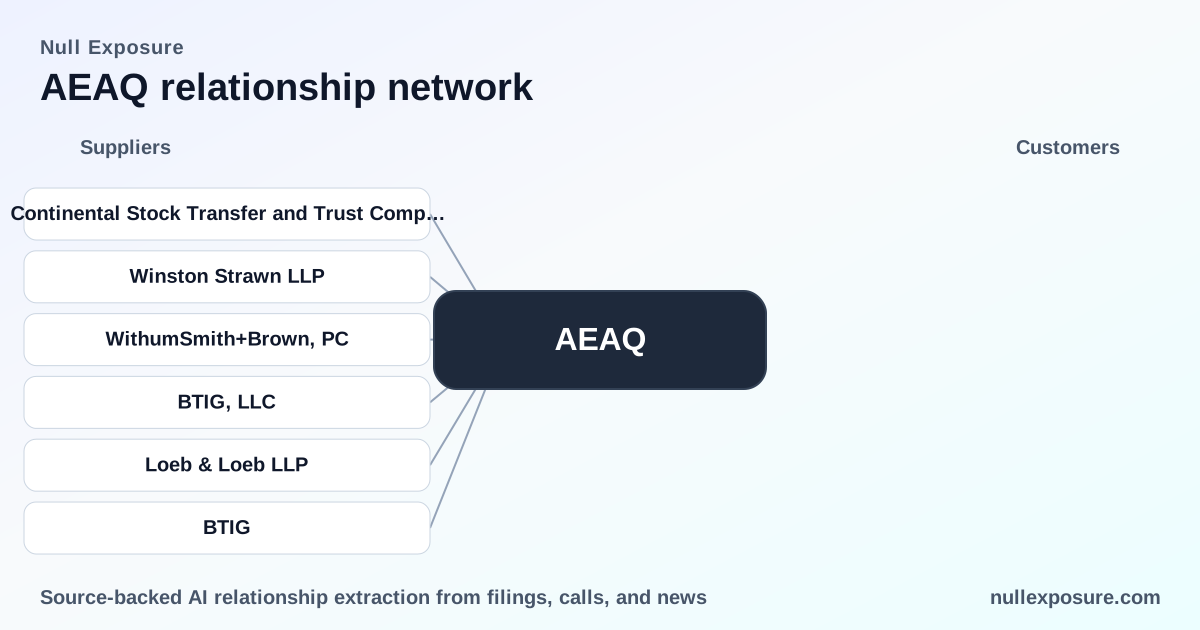
Continental Stock Transfer and Trust Company — Continental is acting as the SPAC’s trustee, the entity that holds offering proceeds in the trust and administers redemptions. This is the operational fulcrum of the IPO-to-merger lifecycle and is cited in SPACInsider’s March 9, 2026 coverage of the offering.
Source: SPACInsider (March 9, 2026). -
Winston Strawn LLP — Winston Strawn is serving as Issuer’s counsel, responsible for transactional documentation, SEC engagement, and public offering legal work on behalf of AEAQ. This role is documented in the SPACInsider report announcing the pricing of the offering.
Source: SPACInsider (March 9, 2026). -
Loeb & Loeb LLP — Loeb & Loeb is serving as Underwriter’s counsel alongside Winston Strawn’s issuer-side role; responsibility includes due diligence on behalf of the underwriter and structuring of underwriting agreements. SPACInsider identifies both law firms in its announcement.
Source: SPACInsider (March 9, 2026). -
WithumSmith+Brown, PC — Withum functions as AEAQ’s auditor, providing the financial statement and audit work necessary for the IPO registration and ongoing reporting. The auditor appointment is listed in the SPACInsider coverage of the transaction.
Source: SPACInsider (March 9, 2026). -
BTIG, LLC / BTIG — BTIG is the sole book-running manager on the deal and is identified across multiple market reports; Renaissance Capital and SPACInsider both record BTIG as underwriter/bookrunner for AEAQ’s offering. The underwriting lead controls pricing, allocation, and market distribution for the IPO.
Sources: SPACInsider (March 9, 2026); Renaissance Capital (March 9, 2026).
Constraints and company-level signals (what the supplier list implies about the business model)
-
Contracting posture: Standard transactional contracts govern every relationship — trustee agreements, underwriting agreements, engagement letters for counsel, and audit engagement letters. These are short-duration, performance-focused contracts tied to IPO execution and post-IPO reporting obligations rather than long-term supply commitments.
-
Concentration: Supplier concentration is high but conventional for a SPAC. AEAQ’s critical counterparties number fewer than a half-dozen and are specialized for capital markets execution, which compresses counterparty risk into a small set of firms.
-
Criticality: Each named supplier is mission-critical to the IPO lifecycle. Trustee and underwriter failures prevent capital formation or disrupt redemptions; counsel and auditor failures produce regulatory and disclosure risk that undermine deal validity.
-
Maturity: Organizational maturity is low by design. As a newly formed SPAC with no operating revenues or historical financials, AEAQ’s vendor reliance reflects a company built to execute a single strategic transaction rather than to operate a diversified, vendor-heavy business.
What this means for investors and operators
-
Execution risk is the primary supplier risk. The trustee and bookrunner are the operational choke points; investors should track any changes in those relationships because replacements at or after pricing create friction and potential dilution or delay.
-
Legal and audit partners shape deal defensibility. Issuer and underwriter counsel plus the auditor establish the disclosure and audit baseline that regulators and target investors will scrutinize during a business combination; their reputations reduce friction in diligence.
-
Vendor concentration accelerates reputational transmission. Problems at any single supplier transmit quickly to deal timelines and investor confidence; conversely, a small, high-quality roster streamlines communication and accountability.
Mid-article action item: for a consolidated, investor-focused supplier dossier and continuous monitoring of AEAQ counterparties, visit https://nullexposure.com/ and request the supplier risk briefing.
Practical risk checklist for due diligence
- Confirm trustee arrangements and redemption mechanics in offering documents; trustee clauses dictate liquidity flows.
- Review engagement letters for termination and replacement provisions for counsel, auditor, and underwriter.
- Assess underwriter mandates and bookrunning commitments for market distribution strength; sole bookrunners concentrate execution but streamline accountability.
- Validate auditor independence and prior experience with SPAC financial statements and pro forma disclosures.
Final takeaways and investor posture
AEAQ’s supplier roster is concise and composed of institutional market actors — trustee, underwriter (BTIG), issuer and underwriter counsel (Winston Strawn and Loeb & Loeb), and auditor (Withum) — which reflects a conventional SPAC go-to-market. For investors, the relevant risks are execution and disclosure rather than supply-chain complexity: track any supplier changes, scrutinize engagement terms for replacement risk, and weigh counterparty reputations as a proxy for deal reliability.
If you want regular updates on these counterparties and a structured supplier-risk scorecard for AEAQ, start here: https://nullexposure.com/. For asset allocators and operators evaluating sponsor-backed SPAC exposure, the supplier configuration is a leading indicator of transaction readiness and regulatory robustness — monitor it as closely as you monitor the sponsor pipeline.