Activate Energy Acquisition Corp. Warrant (AEAQW): A practical supplier-relationship briefing for investors
Activate Energy Acquisition Corp. Warrant (AEAQW) is a SPAC-issued warrant tied to a sponsor vehicle that raised capital through a public offering of units; the entity monetizes by executing a business combination in the energy sector and by creating tradable equity instruments (units, shares, warrants) that capture upside from a completed merger. AEAQW’s economics derive from SPAC mechanics—capital formation via an underwritten IPO and optional conversion or exercise events that crystallize value if a target is acquired. For quick reference to our coverage and tools, visit https://nullexposure.com/.
What the security is and how value is created
AEAQW is not an operating energy company; it is a financial instrument issued by a special purpose acquisition company focused on energy targets. The warrant is a contingent equity instrument that delivers asymmetric upside to investors if and when the SPAC completes a merger with a promising energy or clean-technology business. Public-market liquidity and price discovery for that upside depend on the SPAC’s progress toward a business combination, sponsor economics, and the trading environment for its unit and share classes.
Public profile data lists a market capitalization of approximately $4.1 million, signaling a small, early-stage public vehicle with limited standalone economic activity until a combination is announced. The offering and listing mechanics that enabled this instrument are central to understanding supplier relationships and operational risk.
Who helped get this vehicle to market — the disclosed supplier relationships
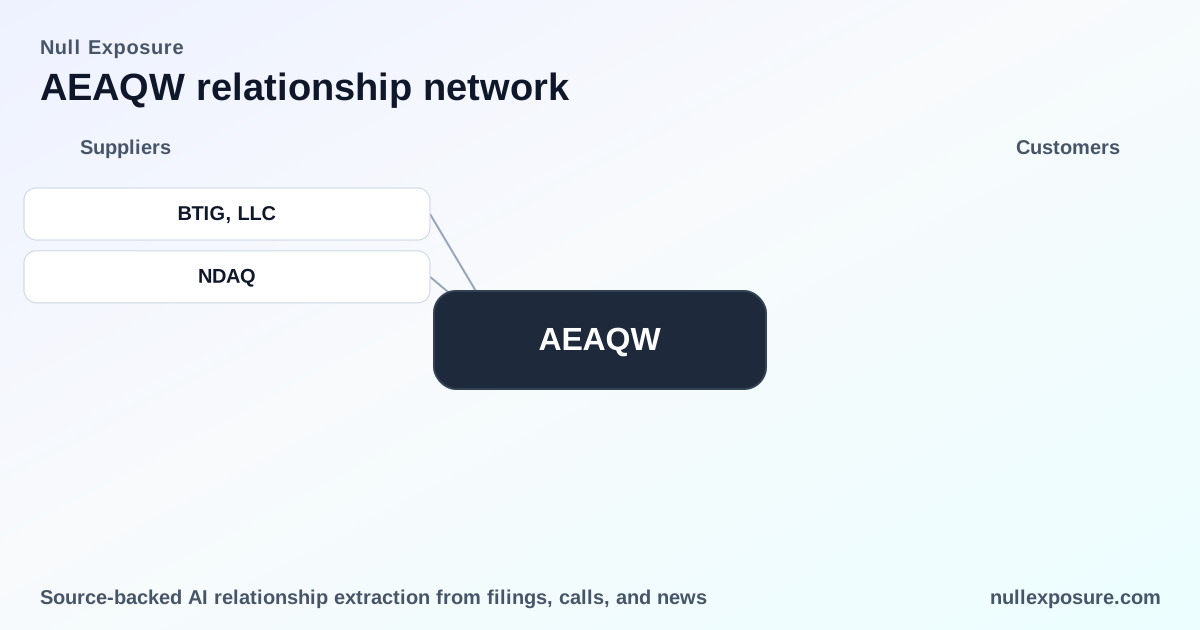
AEAQW’s public record identifies two material market partners involved with the offering and initial listing. Each relationship is summarized below with source attribution.
BTIG, LLC — sole book-running manager for the IPO
BTIG acted as the sole book-running manager in Activate Energy Acquisition Corp.’s initial public offering that raised $230 million, including full exercise of the underwriters’ over-allotment option. This positions BTIG as the primary capital markets intermediary that structured and executed the offering. According to a GlobeNewswire press release dated December 5, 2025, BTIG, LLC was named the book-running manager for the transaction.
The Nasdaq Stock Market LLC — listing venue for the units
The units began trading on The Nasdaq Global Market under the ticker symbol AEAQU on December 4, 2025, establishing the SPAC’s primary trading venue and disclosure regime. The GlobeNewswire release (Dec 5, 2025) documents the listing and trading start date on Nasdaq, which remains a core supplier relationship because continued listing status and exchange rules shape disclosure, timing, and investor access.
What these relationships imply for operating posture and concentration risk
AEAQW’s operating model is shaped by the classic SPAC playbook: rapid capital formation, sponsor-driven target search, and market-dependent value realization. From the disclosed supplier relationships the following operational characteristics emerge as material decision factors for investors:
- Contracting posture: The offering was underwritten with a single book-running manager. That contracting posture concentrates execution risk and places meaningful responsibilities for placement, pricing, and aftermarket stabilization on one intermediary.
- Supplier concentration: With BTIG as sole book-runner, execution concentration is high for the IPO phase. Investors should treat a single-manager structure as a short-term concentration risk that can influence deal terms and marketing reach.
- Criticality of exchange services: Nasdaq’s role is fundamental — listings determine liquidity, visibility, and regulatory obligations; the exchange relationship is functionally critical to the instrument’s tradability and to investor redemptions or conversions tied to an eventual business combination.
- Maturity and optionality: The vehicle is immature from an operational standpoint; until a business combination is announced and consummated, value is primarily optionality embedded in the warrant rather than cashflow generation.
For further context on how supplier relationships move SPAC economics, see our full platform at https://nullexposure.com/.
Constraints, disclosure gaps, and company-level signals
The source feed for AEAQW includes no explicit supplier constraints in the available records. This absence of constraint entries should be treated as a company-level signal: no disclosed supplier limitations were identified in the reviewed materials. That signal has two practical implications:
- It reduces the visibility of supplier friction in public filings and press materials, but it does not eliminate business execution risk related to target identification or deal negotiation.
- Because constraints are not registered in the feed, investors must rely on formal SEC filings and subsequent disclosures for a fuller read of financing covenants, sponsor commitments, and counterparty arrangements as the SPAC advances.
Do not treat the lack of constraint entries as confirmation of operational robustness; instead, incorporate active surveillance of future filings and press releases into any due diligence program.
Practical investor takeaways and risk considerations
- Underwriter concentration is a tactical risk. The sole-book-runner structure fast-tracked the transaction but places disproportionate influence on BTIG for pricing and allocation; investors should watch for any indications of aftermarket stabilization or strategic allocations that affect early trading behavior.
- Exchange listing is foundational. Nasdaq’s listing gives the vehicle market access and regulatory discipline; monitor any exchange notices or trading-tier changes as they materially affect liquidity and investor exit options.
- This is an optionality play, not an operating company. Valuation drivers will pivot on announced targets, deal terms (equity rollover, PIPEs), and sponsor alignment rather than operating metrics.
If you are assessing SPAC instruments as a supplier risk exercise or portfolio allocation, our platform provides structured supplier and counterparty views for public vehicles — explore it at https://nullexposure.com/.
Bottom line — where this fits in a portfolio
AEAQW is a small-cap SPAC warrant whose short-term value is tightly coupled to IPO mechanics and the SPAC’s ability to source and close a compelling energy-sector combination. Investor focus should be on sponsor incentives, the single manager’s aftermarket behavior, and upcoming SEC filings that will disclose target-level agreements and financing commitments. Monitor the timeline to an announced business combination and any new counterparty disclosures as the primary drivers of risk and return.
For ongoing coverage and a supplier-centric perspective on capital markets instruments, return to our hub: https://nullexposure.com/.