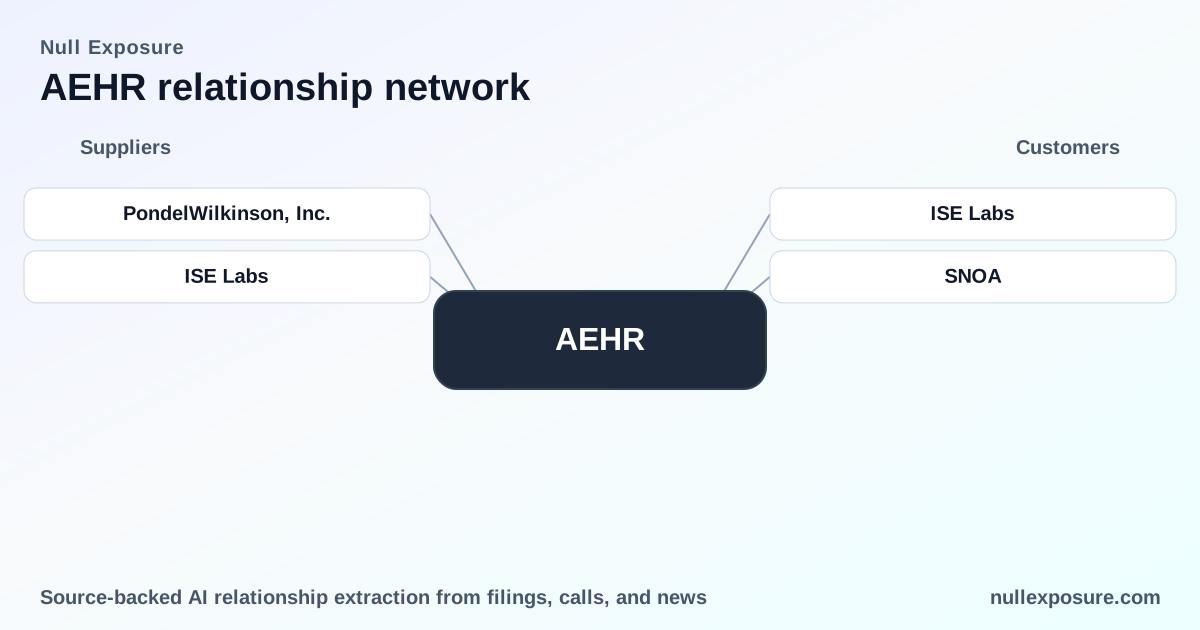
Aehr Test Systems (AEHR) — supplier relationships that shape product delivery and investor risk
Aehr Test Systems designs and sells test and burn-in equipment used to qualify semiconductor devices for high-performance computing and data center applications, monetizing through equipment sales, service contracts, and strategic wafer-level test partnerships. The company’s revenue base is concentrated in specialized capital equipment cycles driven by AI/HPC demand; profitability remains negative despite healthy gross margins, so supplier relationships and service partnerships directly influence delivery cadence and margin recovery. For investors and operators, the supplier picture is a mix of professional services (investor relations), outsourced components for assemblies, and strategic test-service partnerships that expand addressable revenue beyond pure equipment sales. For a deeper supplier-risk analysis, visit https://nullexposure.com/.
How Aehr’s supplier posture translates into operational constraints and risk
Aehr assembles complex capital equipment from a range of third‑party components — environmental chambers, power supplies, printed circuit assemblies, ICs, and specialized interconnects — and runs extensive quality programs to monitor those suppliers. This operational model creates several company-level constraints that shape contracting posture, concentration, criticality, and maturity:
- Contracting posture: Aehr operates as an integrator and manufacturer that buys specialized subsystems rather than vertically integrating all parts. Purchasing patterns will favor technical vendors with long lead times and qualification requirements, implying multi‑year supplier relationships and negotiated supply agreements.
- Concentration: Reliance on externally sourced critical components creates single‑source and supplier‑concentration risk for system shipments and service SLAs; any supplier disruption propagates to revenue recognition for capital equipment.
- Criticality: Components are mission‑critical to product performance and yield; warranty and service obligations are sensitive to component quality, which impacts operating margin and after‑sales costs.
- Maturity: The company runs active quality and warranty programs, indicating a mature supply‑management process, but warranty exposure still affects profitability when failure rates or correction costs spike.
These signals come directly from company disclosures describing assembly from externally manufactured parts and the influence of component quality on warranty obligations. Investors should weight supplier stability and qualification timelines as key variables in revenue cadence and margin recovery.
The specific supplier and partner relationships on the record
PondelWilkinson, Inc. — investor relations firm and communications supplier
Aehr lists PondelWilkinson, Inc. as its investor relations contact for conference and investor meetings, and the firm is explicitly named in multiple 2026 press releases as the contact for scheduling meetings with Aehr management. Source: Aehr press release announcing participation in the Oppenheimer Emerging Growth Conference (Feb 3, 2026) and Susquehanna Technology Conference materials (Jan–Feb 2026), which direct inquiries to PondelWilkinson (jbyers@pondel.com). (https://www.aehr.com/2026/01/aehr-test-systems-to-participate-in-the-11th-annual-oppenheimer-emerging-growth-conference-on-february-3-2026/, https://www.aehr.com/2026/02/aehr-test-systems-to-participate-in-the-susquehanna-15th-annual-technology-conference-on-february-26-2026/)
ISE Labs — strategic wafer‑level test and burn‑in services partner
Aehr announced a strategic partnership with ISE Labs to deliver wafer‑level test and burn‑in services targeted at next‑generation HPC and AI processors, positioning Aehr to capture service revenues alongside equipment sales and to shorten customer qualification cycles. Source: Aehr fiscal 2026 second‑quarter financial results press release (reported January 2026) which describes the ISE Labs partnership as supporting advanced wafer‑level test and burn‑in for AI/HPC applications. (https://www.aehr.com/2026/01/aehr-test-systems-reports-fiscal-2026-second-quarter-financial-results-and-reinstates-guidance-driven-by-improved-visibility-for-ai-processor-and-data-center-semiconductor-test-and-burn-in-systems/)
Why these relationships matter for investors and operators
- Professional services like PondelWilkinson are not revenue drivers but critical for market access and investor communications. Consistent IR relationships reduce information friction and help manage perception during cyclical order flows.
- The ISE Labs partnership is strategically important: it converts specialized equipment capability into recurring service revenue and shortens customer qualification timelines, which improves equipment adoption velocity and utilization economics.
- Component supplier dependence underpins execution risk: because Aehr assembles systems from many third‑party parts, procurement lead times and qualification cycles are first‑order drivers of shipment timing and margin variance.
Aehr’s financial profile reinforces why supplier and partner execution is pivotal: trailing twelve‑month revenue stands at approximately $53.2 million with gross profit of about $17.7 million, yet operating margins remain negative and EPS is a loss of ~$0.30 — meaning improvements in supply stability, warranty costs, and service monetization directly influence the path to profitability. Investors should reconcile these operational levers with valuation multiples (Price/Sales ~21.6; EV/Revenue ~20.1) that imply high growth expectations.
For actionable supplier intelligence and to monitor relationship shifts, visit https://nullexposure.com/.
Practical implications for contract negotiation and operations
Operators and procurement teams should prioritize:
- Securing long‑lead component inventories or multiple qualified sources for critical subsystems to reduce shipment volatility.
- Tightening supplier quality metrics and warranty cost allocation in purchase agreements to limit post‑shipment exposure.
- Formalizing service‑revenue contracts around wafer‑level testing partnerships to capture recurring margins and reduce capital equipment seasonality.
Quick checklist for investors evaluating Aehr supplier risk
- Confirm supplier concentration for environmental chambers, power supplies, and wafer contact interfaces.
- Review warranty reserve trends against shipment growth and failure rates.
- Evaluate the commercial scope and revenue attribution of the ISE Labs partnership versus pure equipment sales.
- Assess whether investor communications suppliers (IR firms) provide market access consistent with planned capital‑markets activity.
Bottom line: positioning and investor action
Aehr’s core business converts specialized test/ burn‑in equipment into customer qualification capacity; supplier and partner relationships are the hinge between product capability and repeatable revenue. The company’s assembly model creates concentration and warranty exposures that require active procurement and supplier‑quality management. Strategic service partnerships like ISE Labs materially change commercial dynamics by adding recurring service revenue and reducing qualification friction. For investor and operator diligence, prioritize supplier diversification, warranty trajectory, and the commercial terms of strategic partnerships.
Explore more supplier‑level intelligence and monitoring tools at https://nullexposure.com/ to track relationship changes and prioritize due diligence.