Aflac’s supplier posture: outsourced IT scale, Japan concentration, and a strategic HR tie-in with Workday
Aflac monetizes primarily through supplemental insurance premiums across the U.S. and Japan, supported by investment income and disciplined capital allocation; the company runs a complex vendor ecosystem to support policy administration, IT operations and employee benefits delivery. From a supplier-risk vantage point, Aflac combines large, multiyear outsourcing commitments in Japan with a pattern of shorter-term application licenses and maintenance contracts — a mixed contracting posture that creates both scale economies and renewal concentration risk. For more structured supplier intelligence and relationship mapping, visit https://nullexposure.com/.
Why the Workday tie-in matters to investors today
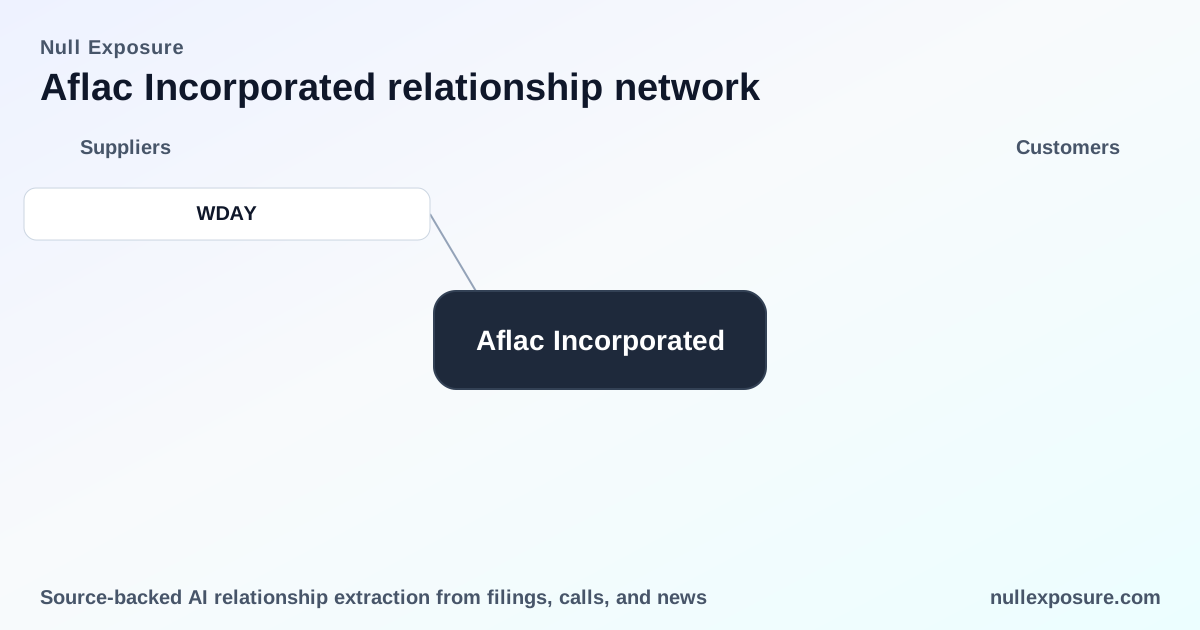
Aflac joined the Workday Wellness Partner Program to create a more personalized benefits experience for employees and plan participants. The move positions Aflac to integrate benefits delivery with modern HR and wellbeing workflows, improving engagement and distribution efficiency without significant capital investment. According to a StockTitan news item dated March 9, 2026, Aflac announced the partnership to provide a more personalized employee benefit experience (https://www.stocktitan.net/sec-filings/AFL/form-4-aflac-inc-insider-trading-activity-19545ddd9a17.html).
Takeaway: this is a strategic, low-capex channel partnership that supports benefits distribution and employee experience rather than a material technology outsourcing spend.
The supplier footprint behind the headline: multiband spend and APAC criticality
Aflac’s SEC disclosures (December 31, 2024 filing) reveal a layered supplier model:
- Licensing and cloud software commitments: multiple enterprise agreements to license cloud-based software have remaining terms up to five years and aggregated costs reported in Japanese yen (e.g., ¥8.0 billion ≈ $51 million), signaling medium-term software spend for the Japan business.
- Large outsourcing contracts for Aflac Japan: multiyear arrangements for mainframe and mid-range operations carry the largest exposure, including an agreement with a remaining term of four years and an aggregate remaining cost of ¥43.4 billion (≈ $274 million).
- Cloud hosting and managed services: an outsourcing agreement for cloud hosting with a remaining term of three years and $54 million of remaining cost indicates material infrastructure spend outside the balance sheet.
- Short-term maintenance and development agreements: several application maintenance and development contracts have remaining terms under a year with aggregated costs in the single-digit millions (¥0.9–¥1.8 billion ≈ $6–$11 million).
These disclosures come from Aflac’s filings as of December 31, 2024 and related public reports in early 2025–2026.
Key signal: Aflac’s third-party exposure is concentrated in the APAC/Japan segment and spans both high-dollar, long-term outsourcing and smaller, short-term development contracts — a structure that delivers operational scale but concentrates renewal and operational risk geographically.
If you want a deeper supplier map tied to contract terms and spend bands, see https://nullexposure.com/.
How the contract mix frames operational risk and negotiation posture
Aflac’s contract profile implies several company-level characteristics investors should weigh:
- Contracting posture: a mix of long-term outsourcing and shorter licensing/maintenance agreements means the company pursues vendor stability for core operations while keeping flexibility in application-level contracts. This hybrid posture reduces day-to-day vendor churn but concentrates strategic leverage with a handful of large providers.
- Concentration and criticality: the largest exposures are to vendors servicing Aflac Japan (mainframe, policy admin, application maintenance). These relationships are operationally critical — disruptions there would disproportionately affect insurance administration in Japan.
- Maturity and vendor type: evidence shows Aflac relies on established technology and consulting corporations, cloud hosting vendors, and software licensors rather than boutique providers, indicating mature enterprise sourcing but also higher switching costs.
- Financial magnitude: multiple contracts fall in the $10m–$100m band, while at least one relationship exceeds $100m in remaining cost, highlighting material future cash commitments for vendor services.
- Risk offsets: Aflac reports no material letters of credit or guarantees as of December 31, 2024, which limits contingent liability exposure from supplier arrangements.
One-paragraph profiles of every relationship in the public results
Aflac’s indexed relationship results include the following counterparty:
- Workday — Aflac joined the Workday Wellness Partner Program to enhance personalized benefits delivery and employee health support; the public notice was reported on March 9, 2026 (StockTitan news item: https://www.stocktitan.net/sec-filings/AFL/form-4-aflac-inc-insider-trading-activity-19545ddd9a17.html).
Why it matters: this is a strategic partnership focused on benefits integration and engagement rather than a material outsourcing or capital commitment.
For completeness, Aflac’s filings also enumerate a broader set of unnamed vendors across categories (cloud hosting, mainframe operations, application maintenance and development, and software licensing) with varying terms and dollar bands; those company-level disclosures come from Aflac’s 2024 filings and related investor materials.
Investor implications and watch points
- Operational concentration in Japan is the dominant supplier risk. Large multiyear outsourcing commitments tied to Aflac Japan create renewal and vendor-concentration exposure that can translate into operational disruption risk if not actively managed. Aflac’s filings indicate ¥43.4 billion (≈ $274 million) of remaining cost on a key four‑year agreement.
- Contract term diversity is a governance lever. Shorter-term maintenance contracts (≤ 1 year) give Aflac tactical flexibility, while longer-term outsourcing locks in service continuity but raises switching cost risk; active oversight of contract milestones and SLAs is now a material governance issue for investors.
- Financial exposure is non-trivial but visible. Several agreements fall in the $10m–$100m band and at least one exceeds $100m remaining cost, providing clear lines of sight to contingent outflows and budget pressure on technology spend.
If you want structured alerts on supplier term expiries and concentration metrics, consider exploring our platform at https://nullexposure.com/.
Bottom line and next steps for investors
Aflac combines a stable insurance revenue model with a supplier network that amplifies its operational footprint in Japan and relies on both large outsourcing partners and modern HR/benefits integrations such as Workday. The dominant investor focus should be on contract renewal concentration, vendor SLAs for Japan operations, and the company’s approach to mitigating switching risk. Monitor upcoming contract expiries disclosed in quarterly filings and any incremental partnerships that shift the balance between strategic integrations and core outsourcing.
For a detailed supplier-risk briefing and ongoing monitoring of counterparties tied to Aflac, visit https://nullexposure.com/.