Forafric Global (AFRI): supplier relationships that shape capacity and distribution
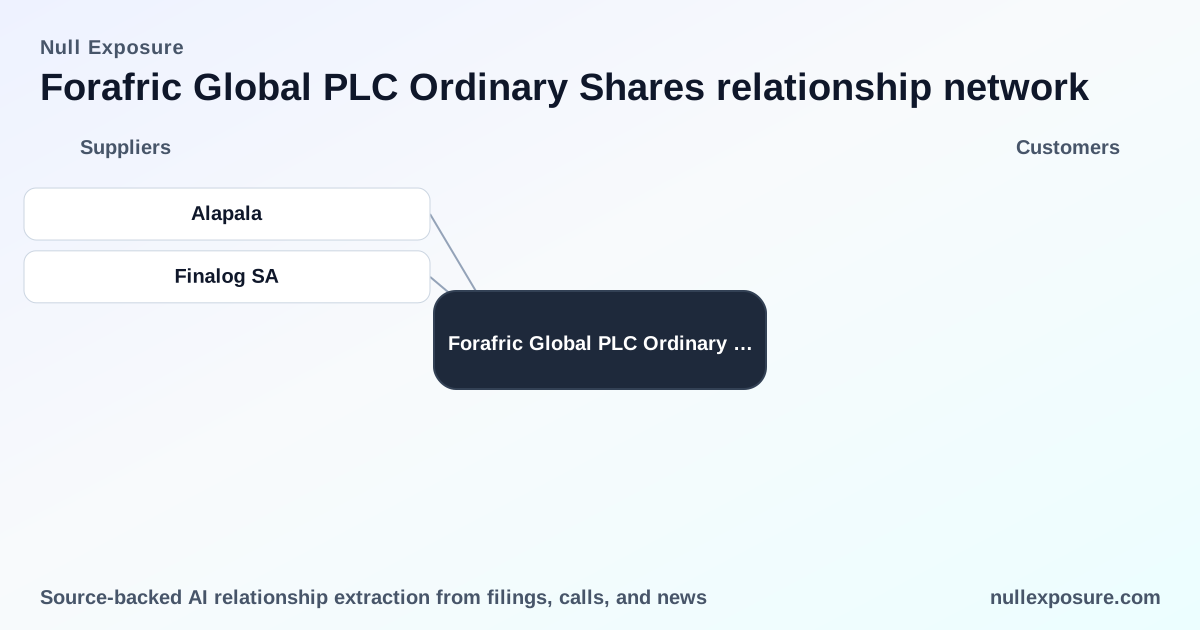
Forafric Global PLC operates regional grain processing and flour milling businesses across Africa and monetizes through the sale of milled grain products and related food ingredients to industrial and retail buyers. The company grows revenue by expanding processing capacity and outsourcing specialist services—capital equipment providers and third‑party logistics partners are therefore central to Forafric’s ability to convert raw grain into salable product and protect margin. For an investor or counterparty, the supplier map is short but strategically important: equipment suppliers deliver capacity expansion while logistics providers underpin throughput and inventory flows. Explore more supplier-risk intelligence at https://nullexposure.com/.
How Forafric’s operating model informs supplier strategy
Forafric is a mid‑sized publicly listed processor with an asset‑intensive business model. Management finances growth through selective capital projects and relies on third parties for specialist installations and logistics. Several company-level signals define counterparty risk and negotiating posture:
- High insider concentration and low institutional ownership: insiders hold roughly 79.7% of shares while institutions own about 2.3%, giving management and founding stakeholders strong control over supplier selection and contract terms.
- Liquidity and market depth constraints: the public float is small—about 3.28 million shares versus 26.9 million shares outstanding—limiting market scrutiny and secondary-market pressure on procurement decisions.
- Thin operating profitability relative to scale: trailing revenue is $201.9M with EBITDA of ~$3.0M, negative EPS (-$0.78), and EV/EBITDA of ~64.6x, placing a premium on operational continuity and cost control for suppliers servicing the group.
- Project and transaction orientation: the recent expansion of milling capacity through installed turnkey plants indicates project-based contracting for capital equipment and an ongoing reliance on third‑party logistics for storage and handling.
These signals imply a contracting posture that is selective, project-focused, and driven by management control, not by dispersed market governance. For suppliers, that translates to concentrated negotiation counterparties and potential for repeat work tied to measured capex cycles. For investment due diligence on counterparties, keep an eye on Forafric’s capacity additions and any changes in ownership that would alter procurement leverage. For supplier risk monitoring and deeper counterparty due diligence, visit https://nullexposure.com/.
Identified supplier relationships and what they mean for investors
Alapala — equipment and plant installation partner
Forafric commissioned two advanced flour mills—120 TPD at Sanabil and 250 TPD at Moulins De Had Soualem—installed by global equipment provider Alapala, expanding wheat processing capacity by 370 TPD. This is a clear example of Forafric using external engineering partners for capital expansion and technology transfer. (Reported by Milling Middle East, March 9, 2026: https://millingmea.com/forafric-global-appoints-khalid-assari-as-chairman/)
Finalog SA — logistics, handling and storage in Morocco
Finalog SA operated as Forafric’s logistics provider in the Casablanca Mita logistics zone, responsible for transport, handling and storage of cereals for the group—indicating reliance on local third‑party warehousing and freight capacity to sustain mill throughput. (Reported by Le Nouvelliste, March 9, 2026: https://www.lenouvelliste.ma/forafric-rebat-les-cartes-un-virage-strategique-vers-le-ble-tendre/)
What these supplier ties imply for risk and opportunity
The two relationships identified are complementary and typical for a food-processing operator: Alapala supplies the capital equipment that determines capacity and unit economics; Finalog provides the logistics backbone that converts installed capacity into salable inventory throughput.
- Counterparty criticality: Alapala is high‑criticality for capacity expansion projects—equipment downtime or delayed installation materially affects revenue ramp. Finalog is operationally critical for day‑to‑day supply chain continuity in Morocco.
- Concentration risk: the small number of named suppliers in public reports indicates concentrated supplier relationships for specialized services, increasing bargaining power for counterparties if they provide differentiated technology or coverage.
- Contracting posture: project contracts with equipment vendors are likely to be one‑off but high value; logistics contracts are recurring and operational, so pricing discipline and service SLAs are the primary negotiation levers.
- Financial discipline pressure: with narrow EBITDA and negative net income, Forafric will prioritize supplier terms that protect cash flow—deferred payments, performance milestones, and warranty terms will be common negotiating instruments. Suppliers should expect rigorous credit checks and staged payments tied to commissioning.
Practical takeaways for investors and supplier managers
- Suppliers with capital equipment or logistics capabilities are strategically positioned for repeat commercial opportunities as Forafric scales milling capacity.
- Governance concentration and low institutional oversight amplify execution risk, so counterparty diligence should verify contract enforcement mechanisms and operational readiness beyond press releases.
- Financial metrics point to margin pressure and the importance of uptime: with slim EBITDA and negative EPS, any disruption to output yields immediate financial impact for both Forafric and its suppliers.
If you are underwriting equipment contracts, negotiating logistics terms, or assessing credit exposure, prioritize contractual protections tied to commissioning milestones, availability guarantees, and escrowed progress payments. For a focused supplier-risk scorecard and tracking of counterparties to Forafric, start with the vendor map at https://nullexposure.com/.
Closing investment note
Forafric’s supplier profile is concise but strategic: capital-equipment partners like Alapala drive capacity and unit economics; logistics firms like Finalog enable throughput and inventory resilience. Given high insider control, limited float, and tight operating margins, investors and suppliers must treat each contract as material to cash flow and execution. For deeper monitoring and supplier‑level insights that feed investment decisions, visit https://nullexposure.com/.
Bold final takeaway: Forafric’s short list of specialized suppliers creates concentrated operational dependencies—these are opportunities for well‑positioned vendors and stress points for creditors and investors if execution falters.