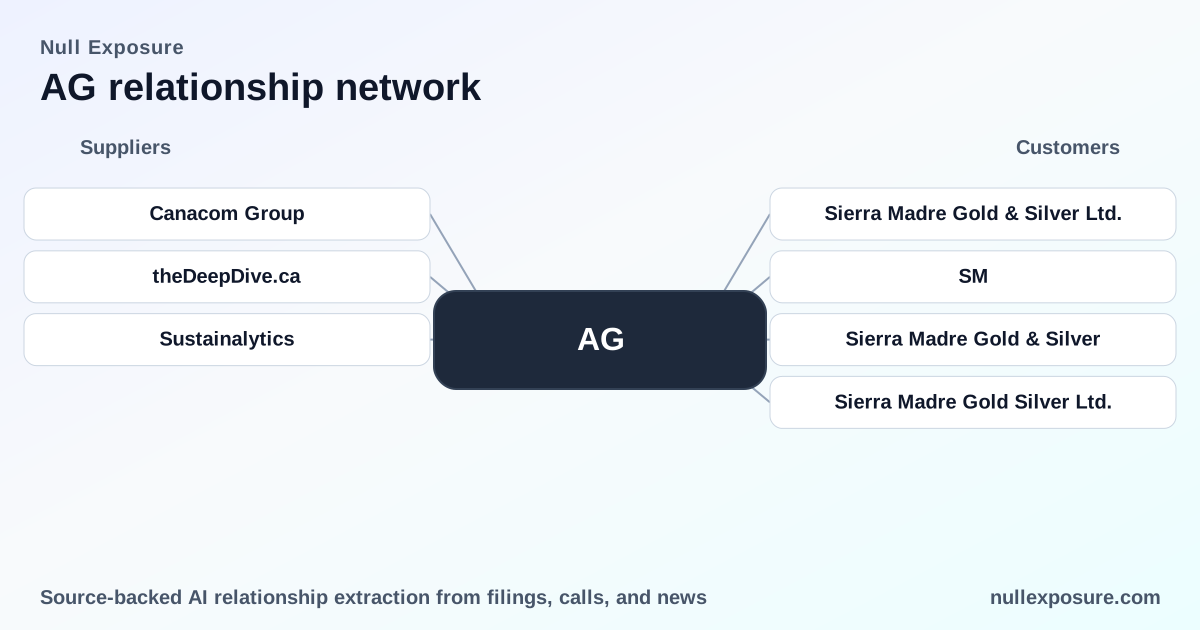
First Majestic Silver (AG) — Supplier Relationship Review
First Majestic Silver is a primary silver producer that monetizes through mined metal sales and downstream cash generation, returning capital via a modest dividend while funding development through operating cash flow and selective capital markets access. The company’s economics are driven by metal production volumes, realized silver prices, and operating margins; for context, First Majestic reported roughly $1.26 billion in trailing revenue and $610.8 million EBITDA with a market capitalization near $10.95 billion as of the latest reported quarter. Investors evaluating supplier risk should treat external relationships as primarily reputational and disclosure-focused rather than operationally critical. For a centralized view of supplier exposure and relationship signals, visit https://nullexposure.com/.
Why supplier relationships matter for a miner like First Majestic
Supplier relationships for a mining company split into two broad categories: operational suppliers (equipment, contractors, reagents) that affect production continuity, and informational/market-facing suppliers (media, ratings, advisors) that influence investor perception and access to capital. The relationships surfaced here are in the latter bucket: communications and ESG services, which have outsized impact on cost of capital and investor sentiment even if they do not interrupt ore processing.
- Contracting posture: First Majestic’s observed supplier ties are transactional and external-facing, focused on disclosure and reputation management rather than running mine sites.
- Concentration and criticality: Current signals show low vendor concentration risk among public-facing suppliers; none of the relationships identified are critical to ore production.
- Maturity: The engagements cited are long-established vendor types for mid-cap miners — communications, sponsored media, and ESG ratings — and therefore reflect standard market practice rather than bespoke strategic dependencies.
If you want ongoing coverage and deeper signal aggregation for supplier exposures, check https://nullexposure.com/ for updates and watchlists.
What the data found — every identified supplier relationship
Canacom Group
First Majestic has a disclosed commercial relationship with Canacom Group, the parent company of The Deep Dive, where the company is listed as a client. According to a March 9, 2026 article on The Deep Dive, First Majestic’s engagement with Canacom is disclosed as a client relationship in the coverage piece about the company’s 2025 production and dividend announcement (https://thedeepdive.ca/first-majestic-hits-2025-guidance-producing-31-1-million-silver-equivalent-ounces-increases-dividend/).
theDeepDive.ca
First Majestic is also identified explicitly as a sponsor of theDeepDive.ca in the same March 9, 2026 publication, which means the company pays for promotional or sponsored coverage on that media channel; the sponsorship disclosure is printed in the publisher’s coverage of First Majestic’s 2025 results (https://thedeepdive.ca/first-majestic-hits-2025-guidance-producing-31-1-million-silver-equivalent-ounces-increases-dividend/).
Sustainalytics
First Majestic’s ESG standing is documented via Sustainalytics, with the company reporting a 30.0 ESG risk rating for 2025 according to the company press release distributed via Newsfile on March 9, 2026; that release cites Sustainalytics as the provider of the ESG score (https://www.newsfilecorp.com/release/284469/First-Majestic-Reports-Q4-2025-and-Full-Year-2025-Financial-Results-Announces-Quarterly-Dividend-Payment).
What these relationships imply for investors and operators
These supplier ties collectively shape reputation, investor communications, and ESG signaling rather than operational continuity. That produces three concrete implications:
- Reputational exposure is the primary risk vector. Paid sponsorships and media relationships accelerate message dissemination and require tight disclosure controls to avoid governance issues. Investors should track disclosure compliance and the frequency of sponsored messaging relative to independent coverage.
- ESG scoring is a cost-of-capital lever. The reported Sustainalytics score (30.0) is a measurable input to investor screening and financing terms for sustainable debt; changes in scoring will influence investor appetite and access to ESG-linked capital.
- Low supplier concentration reduces single-vendor risk, but the company remains exposed to the reputational volatility of its chosen outlets and rating providers.
For investor dashboards that track how reputational suppliers interact with corporate disclosure, visit https://nullexposure.com/.
Practical steps for investor due diligence
Operators and buy-side analysts should prioritize three actions:
- Review contracts and disclosure practices for paid media and sponsorships to ensure transparency and governance discipline.
- Monitor ESG rating trajectories and underlying metrics used by firms like Sustainalytics, because ratings feed into financing spreads and institutional buying patterns.
- Maintain a watchlist of media mentions tied to paid relationships to quantify the share of promotional versus editorial coverage in public communications.
Constraints and company-level signals
There are no supplier-specific constraints surfaced in the available relationship records. As a company-level signal, absence of documented supply constraints indicates that public-facing vendor engagements are not currently flagged as contractually restrictive or concentration risks. That said, investors should treat the lack of disclosed constraints as a neutral datapoint; operational supplier exposure (mining contractors, critical equipment vendors) is not represented in this set and requires separate procurement-level review.
Bottom line — what investors should take away
First Majestic’s disclosed supplier footprint in this review is concentrated in reputation and ESG services rather than production-critical vendors. That composition means monitoring should emphasize compliance, disclosure quality, and ESG rating movements over supply-chain continuity. For continuous monitoring and supplier-signal aggregation that supports investment and operational oversight, visit https://nullexposure.com/.
Investors and operators who require a deeper, subscription-grade look at supplier relationships and continuous signal updates can find model-driven coverage and alerts at https://nullexposure.com/.