AGNCP: How the preferred plays the repo–GSE spread
AGNCP (AGNC Investment Corp. preferred) is a mortgage REIT that earns a spread by owning residential mortgage-backed securities (pass-throughs and CMOs) that are largely guaranteed by government-sponsored enterprises and agencies, while funding those positions almost entirely through collateralized repurchase agreements. The company monetizes through net interest income and retained spread between asset yields and short-term financing costs, and it returns cash via dividends on its preferred and common capital structures. For a quick reference on supplier-risk and relationship screening, visit https://nullexposure.com/.
The business model in plain English — what actually powers returns
AGNCP’s operating model is straightforward: asset exposure to guaranteed mortgage securities + leverage via repo funding = spread. The company concentrates funding in collateralized borrowings (repurchase agreements) and supplements interest-rate exposure management with swaps that run from one to ten years. Those funding lines are large in scale — AGNC reported $60.8 billion of repo outstanding as of December 31, 2024 — and therefore central to the firm's liquidity and return profile (company filings, Dec 31, 2024).
Key company-level characteristics that investors and operators must internalize:
- Contracting posture: a mix of short-term repo (typically <1 year) and longer-dated interest-rate swaps (1–10 years), which creates a recurring refinancing dynamic and interest-rate sensitivity.
- Concentration and scale: funding is large (>$60bn in repo), which implies counterparty management and access to tri-party services are strategic priorities.
- Counterparty profile: AGNC limits counterparties to major financial institutions, registered clearinghouses and U.S. government agencies — a deliberate tilt toward large-enterprise counterparties.
- Criticality: repo access is critical to the business; interruptions to tri-party or FICC GCF access would be materially disruptive to funding and portfolio turnover.
- Relationship posture: AGNC acts as a buyer of guaranteed MBS and contracts with a mix of external service providers, while also operating a captive broker-dealer (Bethesda Securities, LLC) to access clearing and repo channels (company filings).
If you are tracking supplier and counterparty risk for mortgage REIT exposure, see more at https://nullexposure.com/ — the market intelligence there helps prioritize counterparties and funding counterpart exposures.
Who AGNCP relies on: the three government mortgage counterparties
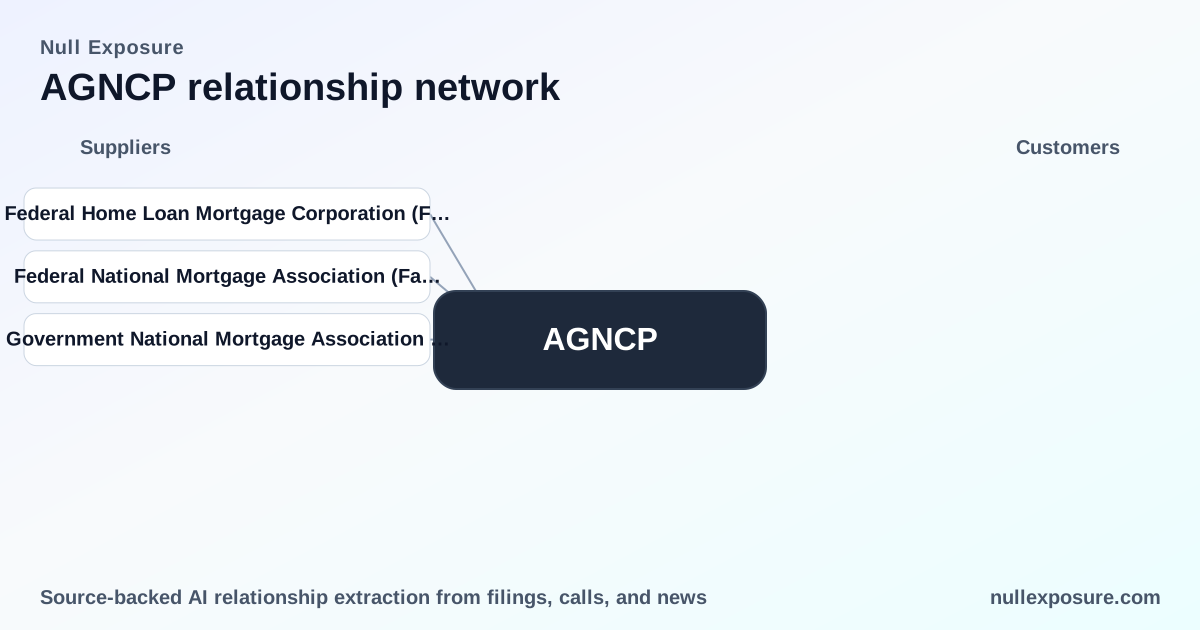
The public reporting highlights three explicit issuer/guarantor relationships that underpin AGNC’s asset base. Each plays a predictable role: providing credit guarantees on the mortgage paper AGNCP owns, which materially changes credit risk while leaving prepayment and rate risk with the REIT.
Federal Home Loan Mortgage Corporation (Freddie Mac)
AGNCP holds mortgage pass-throughs and CMOs for which principal and interest payments are guaranteed by Freddie Mac, thereby transferring issuer credit risk away from the REIT to the GSE guarantee. According to a March 9, 2026 news summary of AGNC’s Q4 results, Freddie Mac-guaranteed securities are part of the company’s invested assets (Intellectia news, Mar 9, 2026: https://intellectia.ai/news/stock/agnc-investment-q4-earnings-miss-consensus-expectations).
Federal National Mortgage Association (Fannie Mae)
Fannie Mae-guaranteed residential mortgage securities are also a component of AGNC’s portfolio, reducing credit exposure on those instruments while leaving interest-rate and prepayment risk with AGNC. The same March 9, 2026 report catalogs Fannie Mae as a guarantor for a portion of AGNC’s pass-throughs and CMOs (Intellectia news, Mar 9, 2026: https://intellectia.ai/news/stock/agnc-investment-q4-earnings-miss-consensus-expectations).
Government National Mortgage Association (Ginnie Mae)
Ginnie Mae-guaranteed securities (agency-guaranteed by a government agency rather than a GSE) are explicitly listed among AGNC’s investments, providing full government-backed payment guarantees on those pools. The March 9, 2026 filing summary lists Ginnie Mae alongside Fannie and Freddie as guarantors of AGNC’s residential MBS holdings (Intellectia news, Mar 9, 2026: https://intellectia.ai/news/stock/agnc-investment-q4-earnings-miss-consensus-expectations).
What those relationships mean for counterparty and operational risk
The presence of Fannie, Freddie and Ginnie as guarantors is credit-neutral for issuer default, but it does not remove other key risks that drive preferred-holder outcomes:
- Liquidity and funding risk dominate: because AGNCP funds with large-scale repos (>$60.8bn outstanding at year-end 2024, per AGNC filings), any stress to repo markets, clearing access, or the captive broker-dealer channel would compress spreads or force deleveraging.
- Operational dependency: AGNC uses a wholly-owned broker-dealer (Bethesda Securities) and participates in FICC’s GCF Repo; the company notes that continued access to those services is necessary to maintain borrowing capacity (company filings).
- Contract maturity mismatch: assets are long-dated MBS exposures with prepayment uncertainty, while repo financing is typically short-term, producing recurring rollover risk and sensitivity to short-term funding rates. These are structural traits of the business — credit guarantees reduce default risk but do not eliminate liquidity, basis, or prepayment exposure.
For deeper supplier-risk prioritization and counterparty scoring, visit https://nullexposure.com/ and compare counterparties across funding, clearing and guarantor roles.
Investment takeaways and what to monitor next
- Primary strength: exposure to GSE/Ginnie guarantees materially lowers issuer credit risk on mortgage holdings, supporting predictable principal and interest flows for those bonds.
- Primary vulnerability: large-scale reliance on repo financing creates systemic funding sensitivity; monitor tri-party and FICC participation metrics and any policy shifts affecting repo liquidity.
- Operational watch items: health and regulatory standing of Bethesda Securities and counterparties, breadth of repo counterparties, and the tenor mix of interest-rate swaps are immediate governance items for investors and counterparties.
- Capital signals: AGNCP’s dividend yield and the company’s balance-sheet metrics (market cap and book value) reflect a leveraged asset-funding model that reacts to rate moves and repo spreads; preferred holders should track near-term funding spreads and prepayment speeds reported by the company.
If you need a prioritized counterparty map or a focused supplier-risk memo for portfolio stress-testing, start here: https://nullexposure.com/.
Bottom line
AGNCP leverages government-guaranteed mortgage securities to generate spread, but the business is fundamentally a funding-driven arbitrage: guarantees solve credit, not liquidity or duration mismatch. For anyone underwriting AGNCP exposure, the trade is simple: accept prepayment and interest-rate risk in exchange for credit guarantees, while actively monitoring repo access, clearing relationships, and the captive broker-dealer’s functional capacity. For tools and supplier-ranking insights tailored to this profile, explore https://nullexposure.com/ — structured intelligence accelerates decision-making and risk prioritization.