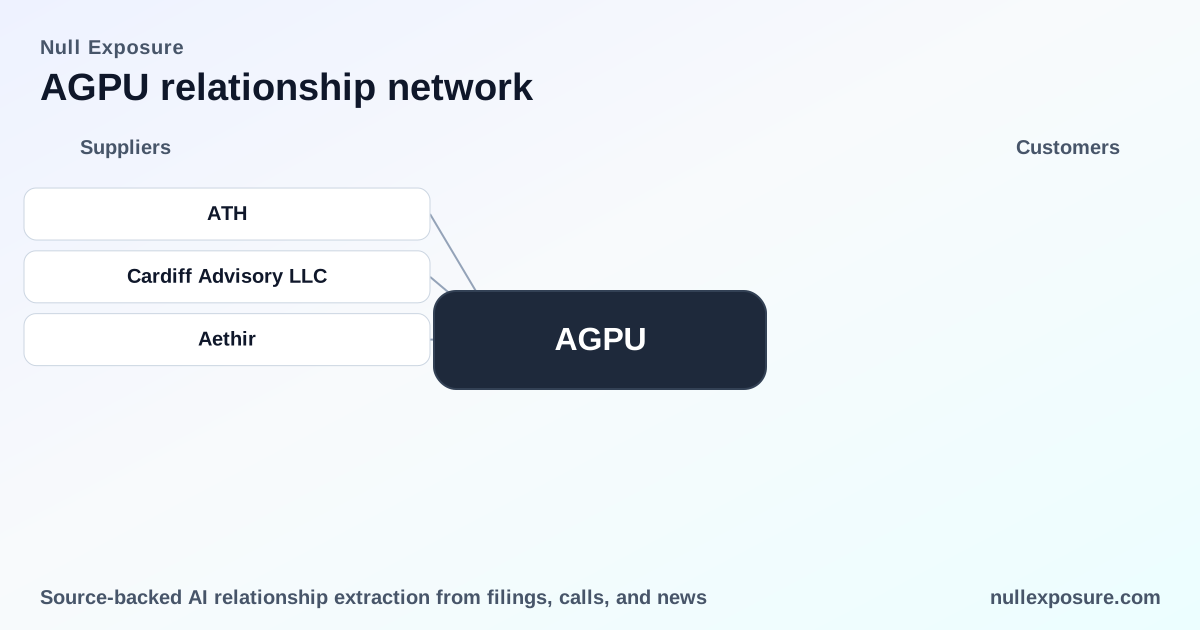
Axe Compute (AGPU): Supplier relationships that shape an AI-enabled oncology play
Axe Compute applies artificial intelligence to accelerate cancer-therapy discovery and operates an AI compute infrastructure that sells compute capacity and molecular-diagnostics services through its Helomics business. The company monetizes by charging for compute access and analytics services to researchers and drug developers and by selling diagnostic and data products from Helomics; near-term strategic activity includes exploring alternatives for Helomics while securing global GPU capacity through third-party providers.
For a consolidated view of supplier signals and how they affect valuation and operational risk, visit https://nullexposure.com/.
How Axe Compute earns revenue and where suppliers fit in
Axe Compute generates revenue from two interlocking streams: AI compute services (selling access to GPU-backed infrastructure to life‑science customers) and diagnostic/analytics services through Helomics. The company’s operating model requires continuous access to specialized hardware (bare-metal GPUs) and reagents/lab inputs for molecular tests, so supplier relationships are both an operational input and a commercial enabler. Financially, the firm is small and early-stage — trailing twelve month revenue of $1.664 million and market capitalization around $5.46 million — which makes supplier negotiations and continuity particularly important to short‑ and medium‑term performance.
Key business-model drivers:
- Compute availability and pricing determine gross margin on AI services; access to global GPU capacity enables scale and customer acquisition.
- Lab reagents and single-source items underpin Helomics test delivery and represent a potential bottleneck that can interrupt revenue flow.
- Advisory and strategic relationships influence corporate options for monetizing or restructuring Helomics and broader capital strategy.
Supplier relationships you need to know
Aethir — GlobeNewswire (January 2026)
Axe Compute leverages a relationship with Aethir to secure access to decentralized global GPU capacity, enabling the company to deliver GPU-backed AI compute services at scale and offer instant bare-metal access to customers. This relationship underpins the company’s ability to monetize compute services and expand commercial reach. According to a GlobeNewswire release in January 2026, the partnership is material to delivering revenue-backed AI compute infrastructure.
Source: GlobeNewswire release on January 15, 2026.
Cardiff Advisory LLC — StockTitan (March 2026)
Axe Compute engaged Cardiff Advisory LLC to advise on strategic alternatives for its Helomics business, signaling a formal, advisor-led review of the diagnostics unit that could lead to a carve-out, sale, or restructuring to unlock value. StockTitan reported the engagement in March 2026, indicating active strategic work on the company’s non-compute assets.
Source: StockTitan news report, March 2026.
Aethir — StockTitan (March 2026)
A separate StockTitan article in March 2026 reiterated that Axe Compute intends to deliver Aethir-provided decentralized infrastructure to give customers instant access to bare-metal GPUs, reinforcing Aethir’s role as a core infrastructure supplier for compute services. This duplicate reporting confirms market awareness of the same supplier relationship from a different media outlet.
Source: StockTitan news report, March 2026.
What the constraints tell investors about operational posture
The company disclosures contain conflicting but actionable signals about supplier exposure. On one hand, Axe Compute states that the loss of any one supplier would not “materially adversely affect” business, which reads as a diversified, resilient procurement posture for many inputs. On the other hand, the filings explicitly state that the company relies on sole suppliers for certain materials used in molecular diagnostic tests and that reagent sourcing is single‑source for some items, creating a class of critical single points of failure.
Translate those clauses into actionable operating-model characterizations:
- Contracting posture: Mixed — broadly diversified supplier lists for commodity inputs but sole‑source arrangements for specialized reagents and molecular-test materials, which increases negotiation leverage for those vendors.
- Concentration: Moderate to high for diagnostic inputs; low for general compute suppliers if Aethir is one among multiple capacity partners, but public reporting emphasizes Aethir as a key provider.
- Criticality: High — compute and diagnostic reagents are operationally critical; interruptions would directly impact revenue and service delivery.
- Maturity: Early stage — relationships are active but not deeply institutionalized; the company’s small scale and low institutional ownership indicate limited bargaining power and execution margin.
From an investor perspective, the combined signal is clear: the compute supplier relationship (Aethir) is strategically important to scaling AI revenue, while Helomics retains concentrated supplier risk that could disrupt diagnostic revenues if single-source vendors fail.
Risk and strategic implications for valuation
- Vendor concentration in diagnostics raises execution risk. Sole-supplier reagent exposure translates into possible test interruptions and revenue volatility; that risk is asymmetric for a company with small revenue and negative EBITDA.
- Compute-supply access is a value enabler. Aethir’s infrastructure relationship supports the company’s revenue-backed compute thesis and is a positive signal for scaling gross margins if utilization improves.
- Advisor engagement signals optionality on Helomics. Hiring Cardiff Advisory demonstrates management’s willingness to monetize non-core assets or restructure operations to focus capital on the compute business.
These points should factor directly into any valuation or partnership assessment. Operational continuity for both hardware and lab inputs is a binary variable for near-term viability; investors must model scenarios that reflect supplier disruption, successful Helomics monetization, and improved compute utilization.
If you want a consolidated supplier-risk scorecard for AGPU or comparisons across small-cap AI-in-life-science vendors, start here: https://nullexposure.com/.
Practical next steps for operators and investors
- For investors: insist on contractual detail — ask management for duration, termination rights, and SLAs for Aethir capacity and for contingency plans for single-source reagents.
- For operators: prioritize dual-sourcing or validated substitutes for critical diagnostic inputs and formalize capacity commitments with compute providers to lock favorable pricing as scale grows.
- For advisors and potential partners: use the Helomics strategic review as an entry point to negotiate joint ventures or asset acquisitions while evaluating latent synergies with compute assets.
Final recommendation: treat Aethir as an operational lever that can accelerate revenue growth if utilization ticks up, and treat Helomics supplier concentration as the principal operational risk to underwrite any investment or partnership.
Explore deeper supplier mapping and strategic implications for AGPU on the home page: https://nullexposure.com/.