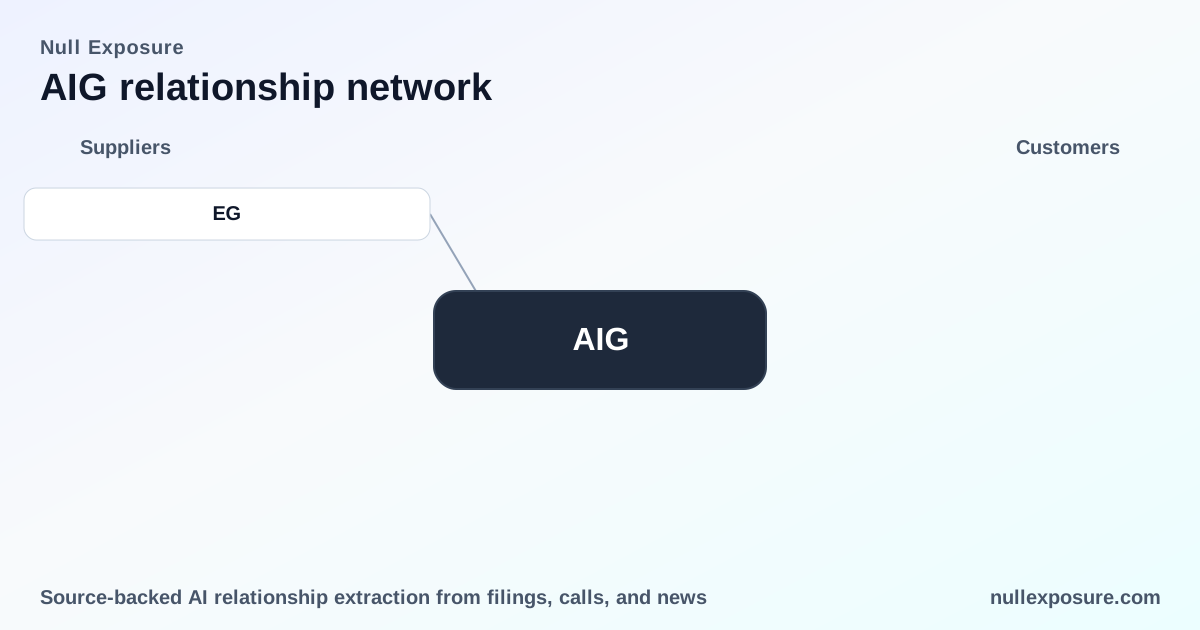
AIG’s supplier footprint: what investors should price in
Thesis: American International Group (AIG) operates as a diversified insurer that monetizes through underwriting across General Insurance and Life & Retirement, complemented by investment income and a technology-enabled subsidiary; supplier and reinsurance relationships are integral to underwriting capacity and capital management and therefore directly affect loss absorption, capital volatility, and expense leverage. Evaluate supplier effects through the lens of counterparty credit, contract tenor, and the operational burden of absorbed business. For a consolidated supplier-risk view, visit https://nullexposure.com/.
How AIG structures counterparties and why it matters
AIG underwrites risk globally and transfers portions of that risk through reinsurance and third‑party arrangements while engaging counterparties for administrative, technology, and derivative services. Reinsurance and service providers are not optional offsets for AIG’s obligations — AIG remains directly liable to policyholders even when risks are ceded, so counterparty credit and collateral arrangements are core to enterprise risk management. The company uses both short‑duration and long‑duration reinsurance, standard ISDA master agreements for derivatives, and outsources several administrative functions, creating a mix of short‑term operational dependencies and long‑term credit exposures.
- Contracting posture: AIG uses standard financial industry frameworks (ISDA for derivatives) and legally binding reinsurance agreements, with substantial collateral arrangements disclosed in filings. These create enforceable but multi‑year linkages with counterparties.
- Concentration and criticality: Reinsurers and major service providers are critical — failure of a counterparty does not remove AIG’s obligations and therefore counterparty failure converts into direct credit and operational risk to AIG.
- Maturity profile: The business mixes short‑duration and long‑duration exposures, producing both immediate operational dependencies and sustained credit exposures; investors should treat reinsurance as a capital-risk lever rather than an across-the-board mitigant.
- Operational posture: The firm’s reliance on third parties for business and administrative services increases operational concentration risk, particularly when AIG absorbs renewal rights or blocks of business that require integration.
These characteristics are drawn from AIG’s public disclosures and regulatory filings describing credit exposure to reinsurers, collateral holdings, and the use of ISDA master agreements for derivatives (AIG regulatory filings, FY2026).
Relationship snapshot: Everest Group
Everest Group — AIG absorbed renewal rights for 30–40% of Everest Group’s insurance business, announced March 2, 2026, a transaction that increases AIG’s near-term underwriting volume and creates integration and underwriting selection workstreams. A TradingKey report covering market moves on March 3, 2026, highlighted the potential operational and underwriting challenges if the transferred business includes historically less‑profitable lines. (TradingKey, March 3, 2026).
Why the Everest move matters to investors and operators
Absorbing renewal rights for a significant portion of Everest Group’s book is a classic scaling-for-share strategy: it buys premium volume and distribution but also delivers immediate strain on underwriting, claims handling, and reinsurance programs. Expect three immediate consequences:
- Underwriting mix shift: Increased exposure to lines previously under Everest’s oversight changes AIG’s loss-cost profile and reinsurance usage.
- Operational integration: Claims, policy servicing, and actuarial harmonization are front-loaded costs that will influence near‑term expense ratios and reported combined ratios.
- Reinsurance and collateral effects: More ceded or assumed business shifts counterparty exposures and collateral balances — relevant given AIG’s disclosure that reinsurers’ failures create direct credit exposure for AIG.
The TradingKey coverage (March 3, 2026) reported the March 2 announcement and specifically flagged the potential for operational and underwriting challenges tied to the transfer.
Constraints and what they signal for supplier risk
AIG’s public constraints and risk disclosures reveal company-level signals that affect supplier relationships:
- Credit exposure to reinsurers (short‑ and long‑term): AIG explicitly discloses credit exposure for both short‑duration and long‑duration reinsurance; this underlines that reinsurance counterparties are a direct credit vector to AIG rather than a detached mitigant (AIG filings, FY2026). Investors must treat reinsurer credit and collateral as capital‑sensitive indicators.
- Framework contracts for derivatives: AIG transacts derivatives directly under ISDA Master Agreements; these framework contracts reduce friction but create systemic counterparty linkages across portfolios (AIG filings). Derivatives counterparties are therefore formalized and enforceable exposures.
- Reliance on third‑party service providers: AIG acknowledges dependence on third parties for business and administrative services and holds substantial collateral for reinsurance agreements (AIG filings). Operational continuity and supplier performance directly affect policyholder service and loss settlement.
These constraints are company-level characteristics drawn from AIG’s disclosures and should inform counterparty monitoring, stress-testing, and contract negotiations.
What investors should watch next
Monitoring three streams of data will separate informed investors from the crowd:
- Claims and loss trends on the transferred Everest business: Watch quarterly combined ratios and source-level loss development for indications of adverse selection or reserve strain.
- Reinsurance counterparty health and collateral movements: Track counterparty ratings, letters of credit, and collateral posting trends in AIG’s segment disclosures and regulatory schedules.
- Operational integration costs and service-provider continuity: Review operating expense trends and any vendor‑related disclosures that could signal backlogs in claims processing or increased leakage.
If you want a consolidated view of supplier-related risk across AIG and peer insurers, visit https://nullexposure.com/ for tools and reporting that track counterparty exposures and contract tenors.
Practical takeaways for portfolio and operations teams
- Underwriting volume bought through portfolio transfers is not free leverage — it alters loss cost and capital utilization immediately.
- Treat reinsurance as a credit lever: reinsurer stress translates into AIG’s capital and liquidity stress because AIG retains primary obligations.
- ISDA and framework contracts discipline exposures but also establish long-dated legal linkages that matter in stressed markets.
- Operational dependency is measurable and actionable: service providers and integration execution create actual P&L and reserve risk, not just operational annoyance.
- Disclosure-driven monitoring is paramount: AIG’s filings contain explicit language about reinsurance credit exposure and collateral that should be embedded in investor due diligence.
For an ongoing supplier-risk dashboard and tailored alerts on AIG and its counterparties, start at https://nullexposure.com/.
Closing: The Everest transaction crystallizes the trade-off between growth and near‑term underwriting friction for AIG — growth through acquired renewal flows lifts top line but transfers counterparty and operational risk into the insurer’s balance sheet and income statement. Investors should underwrite that trade-off explicitly in valuation and capital stress workstreams.