Senmiao (AIHS) — Supplier relationships with BYD and what they mean for investors
Senmiao (ticker AIHS) operates as an auto leasing and sub‑leasing operator that monetizes by leasing company‑owned and third‑party vehicles for short terms and by selling cars through dealer channels. Revenue is driven by high turnover of leased assets, ancillary services, and occasional vehicle sales; the firm’s margins and growth depend on vehicle procurement cost, utilization rates, and the stability of third‑party service providers that support operations. For a concise repository of supplier signals and relationship context see https://nullexposure.com/.
What the public relationship headlines are saying about BYD
-
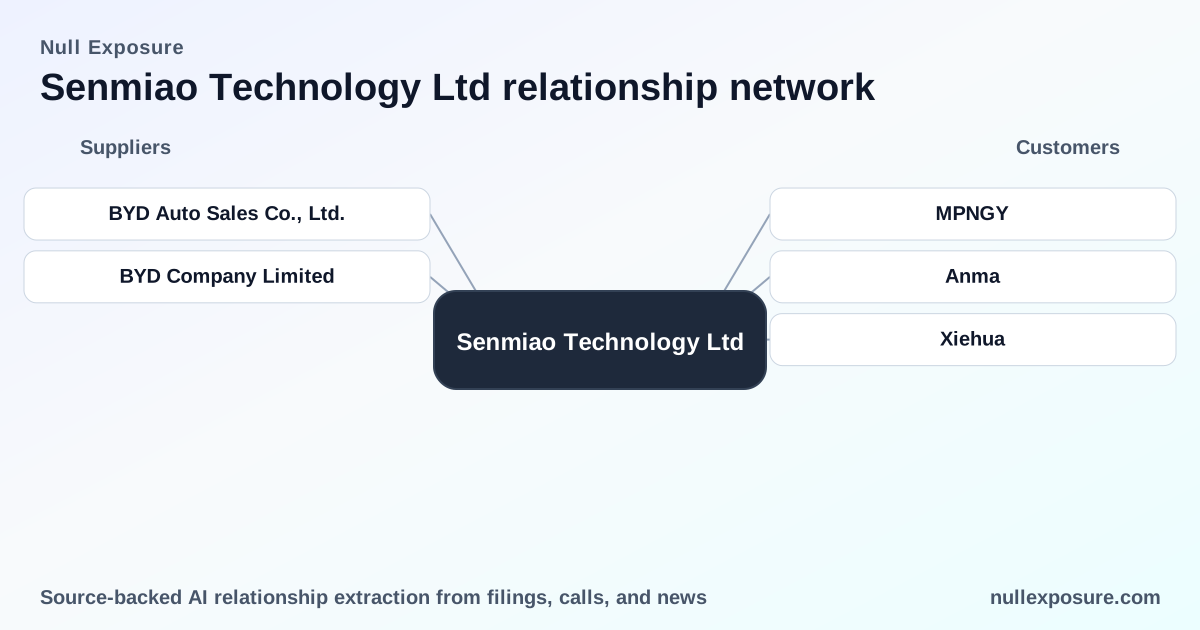
Senmiao reported a delivery of BYD‑manufactured electric vehicles that were procured through an authorized dealer of BYD Auto Sales Co., Ltd., underscoring a direct procurement and distribution relationship with BYD’s channels. According to a PR Newswire release on March 9, 2026, the delivery was tied to a framework agreement to purchase BYD vehicles and promote EV use in China’s ride‑hailing market. (PR Newswire, March 9, 2026: https://www.prnewswire.com/news-releases/senmiao-technology-continues-its-cooperation-with-byd-in-a-celebration-of-the-latest-delivery-of-electric-vehicles-for-ride-hailing-301253849.html)
-
The same release specifies that the delivered EVs were manufactured by BYD Company Limited and supplied via an authorized BYD Auto Sales Co., Ltd. dealer, anchoring Senmiao’s fleet refresh strategy to BYD’s OEM and dealer network. The PR Newswire note explicitly names BYD Company Limited (HK:1211 / SZSE:002594) as the manufacturer. (PR Newswire, March 9, 2026: https://www.prnewswire.com/news-releases/senmiao-technology-continues-its-cooperation-with-byd-in-a-celebration-of-the-latest-delivery-of-electric-vehicles-for-ride-hailing-301253849.html)
How these supplier ties translate into operating realities
The relationship evidence with BYD and dealer channels fits into a consistent operating pattern disclosed by the company: short lease tenors, reliance on third‑party distribution and services, and modest direct vendor spend. Company filings through March 31, 2025 show that Senmiao leases vehicles for terms of no more than twelve months, generates revenue from leasing and sub‑leasing, and has shifted focus from sales to operating rental since 2020. This creates a business model with the following characteristics:
- Contracting posture — short‑term and high turnover. Leases are explicitly limited to one year or less, which increases asset turnover and revenue velocity but raises sensitivity to rental utilization trends and remarketing costs (company filings through March 31, 2025).
- Criticality — core dependence on infrastructure and external services. The company states the performance and availability of its technology and network infrastructure are critical to attracting and retaining customers, making third‑party data centers and insurers strategically important suppliers (company filings through March 31, 2025).
- Role flexibility — buyer, distributor and service consumer. Senmiao acts as a buyer of new vehicles (it executed a purchase agreement for 100 cars for about $1.5 million that was later terminated on March 31, 2025), purchases from dealers for resale, and relies on insurers and data center operators for core operations (company filings).
- Maturity and spend profile — active but modest vendor balances. Relationships are active and ongoing, yet the company reports relatively small outstanding operating lease payables (e.g., $10,365 and $51,741 for two recent year‑end comparisons) and rental payments to shareholders in the low five‑figure range, indicating limited single‑counterparty exposure by spend but potential concentration by function (company filings through March 31, 2025).
If you want a consolidated view of supplier exposures and how they affect credit and operational risk, review the full supplier signal set at https://nullexposure.com/.
Risks that flow from these supplier dynamics
- High operational leverage to third‑party infrastructure. With technology and network availability defined as critical, any outage or degradation at hosted data centers or payment processors directly affects revenue and reputation (company filings through March 31, 2025).
- Asset remarketing and residual value pressure. Short‑term leases raise remarketing frequency and thus exposure to used‑car price swings and seasonal demand cycles; procurement decisions with OEMs like BYD therefore influence cost of capital and margins.
- Concentration by channel rather than spend. While spend per counterparty is low, the company’s business model concentrates activity on vehicle dealers and a small set of service providers; disruption at a major dealer channel or a key insurer would be operationally disruptive.
- Strategic pivot signals. The termination of a 100‑car purchase agreement (entered September 23, 2022 and terminated March 31, 2025) signals management responsiveness to market or balance‑sheet pressures, but it also demonstrates procurement volatility in a capital‑intensive business (company filings through March 31, 2025).
Practical due‑diligence checklist for investors and operators
- Validate contract tenors and termination rights: confirm that the majority of leases truly are sub‑12 months and assess remarketing costs.
- Assess counterparty concentration: map dealer and OEM relationships (BYD is a visible example) and test fallback suppliers for procurement and spare parts.
- Verify third‑party service SLAs and disaster recoveries: inspect data center providers, insurance coverage, and business continuity plans that the company depends on.
- Reconcile related‑party transactions and small‑balance exposures: the company discloses small but nontrivial outstanding lease payments and rental expenses to shareholders, which deserve governance scrutiny (company filings through March 31, 2025).
If you need a tailored supplier risk scorecard for AIHS, NullExposure’s platform aggregates these signals — start your analysis at https://nullexposure.com/.
Bottom line: opportunity with concentrated operational risk
Senmiao’s tie‑up with BYD and its authorized dealers is commercially sensible for rapid EV fleet deployment: it lowers procurement friction and plugs the company into a mainstream OEM supply chain. However, the operating model is built on short‑term leases and third‑party infrastructure that are critical to revenue generation, so investors should treat supplier relationships as an operational lever rather than a simple procurement detail. Confirm resiliency of data center, insurance and dealer channels and monitor remarketing economics closely.
For investors focused on supplier risk and operational resilience, an informed next step is a focused review of contractual terms and contingency plans — more supplier signal analysis is available at https://nullexposure.com/.
Bold takeaway: Senmiao’s BYD relationship accelerates fleet growth but exposes the company to concentrated operational dependencies; active monitoring of third‑party providers and remarketing economics is essential for valuation and risk assessment.