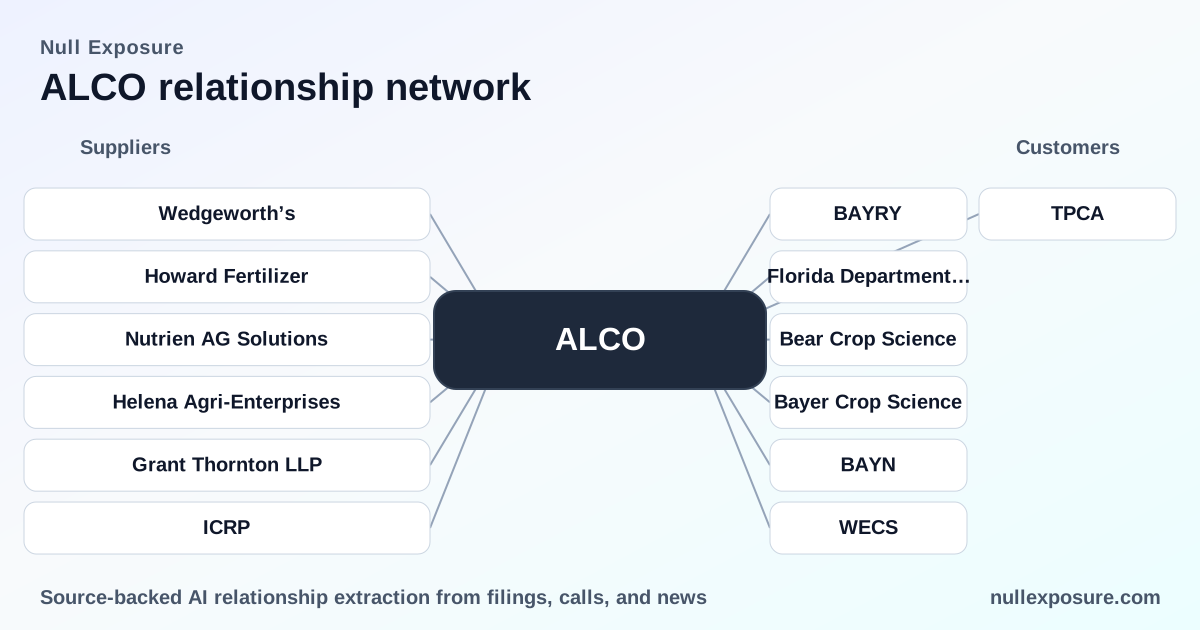
Alico (ALCO) — Supplier Map, Contracting Posture, and Why it Matters to Investors
Alico operates as a vertically focused agricultural producer that cultivates citrus and other crops and monetizes through crop sales and land-management activities. The company purchases fertilizers, herbicides, insecticides and fuel on a transactional basis, contracts independent harvest and hauling services, and generates revenue through crop sales and land leases. Investors should view Alico as a commodity-exposed operator with spot-sourced inputs and a service-heavy execution model, where supplier relationships influence margins and operational continuity. For a consolidated view of supplier exposures and operating signals, visit https://nullexposure.com/.
How Alico sources production inputs and labor — the operating model in plain English
Alico’s procurement posture is transactional and low-commitment. The FY2025 10‑K states that raw materials are “purchased on an order basis without long‑term commitments”, which establishes a clear spot-purchase dynamic for key inputs. Independent contractors supply harvesting and hauling services and are expected to manage their labor to meet contractual obligations. The company also disclosed the termination of its Grove Management Agreement as of December 31, 2024, and reported no significant third‑party grove management agreements as of September 30, 2025.
- Contracting posture: Predominantly spot purchasing for raw materials; limited long-term supplier lock‑ins.
- Service model: Reliance on independent contractors for harvesting and hauling increases operational flexibility, but shifts execution risk to counterparties.
- Maturity and criticality: Inputs like fertilizer and crop protection are routine, commoditized purchases; however, timely delivery of these inputs and effective harvesting services are critical to seasonal yield and cash flow.
- Concentration: The 10‑K lists several key suppliers rather than a single dominant source, signalling a diversified vendor base for inputs.
These company-level signals should inform valuation and operational diligence: spot procurement reduces contractual price risk but increases exposure to short-term input price swings and delivery disruption, while the contractor model limits fixed overhead but raises counterparty execution risk. For further supplier intelligence and dashboards, see https://nullexposure.com/.
The supplier and advisor roster — relationship-by-relationship
Wedgeworth’s
Alico lists Wedgeworth’s among its key suppliers for fertilizer, herbicides and insecticides in the FY2025 Form 10‑K, indicating the firm is a regular input vendor for crop protection and nutrition. According to the FY2025 10‑K, Wedgeworth’s is named alongside other major suppliers for agronomic inputs.
Howard Fertilizer
Howard Fertilizer is cited in the FY2025 10‑K as one of Alico’s key fertilizer and crop protection suppliers, implying recurring order-based purchases for crop nutrient needs. The FY2025 filing identifies Howard Fertilizer in the same supplier group for fertilizers, herbicides and insecticides.
Nutrien AG Solutions
Nutrien AG Solutions appears in the FY2025 10‑K as a named supplier of fertilizers, herbicides and insecticides, signaling access to a large national supplier network for crop inputs. Alico’s FY2025 disclosure groups Nutrien with other primary input providers.
Helena Agri‑Enterprises
Helena Agri‑Enterprises is listed in the FY2025 10‑K among the company’s key providers of fertilizer and crop protection products, confirming Helena’s role in supplying routine agronomic inputs for the company’s crop program.
(Each of the four agronomic suppliers above is referenced in the FY2025 Form 10‑K as part of the company’s key input network, reflecting Alico’s reliance on multiple vendors for commodity agricultural inputs.)
Grant Thornton LLP
Shareholders ratified Grant Thornton LLP as Alico’s independent registered public accounting firm for the fiscal year ending September 30, 2026, as disclosed in an 8‑K reported via StockTitan in March 2026; vote totals were recorded in that filing. This engagement is a governance and assurance relationship that affects financial reporting quality and audit risk.
ICR (Investor relations)
ICR is listed in press materials announcing Alico’s first quarter 2026 financial results and investor contact information, with citations on GlobeNewswire (January 2026) and Yahoo Finance (February 2026). ICR functions as Alico’s investor-relations provider, facilitating communications with the investment community.
What the relationship list implies for risk, margins, and execution
The supplier mix and constraints point to a low-contractual-friction, high-operational-dependency model. Because raw inputs are procured on a spot basis, input-price volatility translates quickly to cost of goods sold, pressuring margins in periods of fertilizer or crop‑protection inflation. The contractor-based harvest model reduces fixed costs but concentrates execution risk in third‑party operators; failure in harvesting/hauling can compress yields and revenue in a single season.
- Price risk: Spot purchases expose Alico to input-price cycles; hedging is not indicated in the cited disclosures.
- Operational risk: Reliance on independent contractors shifts labor and timing risk outside the company’s direct payroll control.
- Diversification: Listing multiple suppliers (Howard Fertilizer, Wedgeworth’s, Nutrien AG Solutions, Helena Agri‑Enterprises) signals vendor diversification for inputs, reducing single‑vendor concentration risk for commodities.
- Governance and market access: Auditor ratification (Grant Thornton) and retained IR support (ICR) support credible financial reporting and investor outreach.
Midway takeaway: Alico’s cost structure is variable and timing-sensitive, with supplier relationships designed for flexibility rather than long-term price certainty. Investors tracking margin sensitivity and seasonal cash flow should monitor input price trends and contractor availability closely. If you want consolidated supplier exposure reports for diligence, visit https://nullexposure.com/.
What investors should monitor next
- Input-cost inflation trends for fertilizers and crop protection chemicals and their pass-through to gross margins.
- Contractor market tightness during peak harvest windows and any operational shortfalls reported in quarterly results.
- Any shift toward longer-term supply agreements or vertical integration that would change the current spot-purchase posture.
- Continued auditor and IR engagements as signals of governance continuity.
Conclusion: what this means for valuation and engagement
Alico’s supplier landscape is operationally critical but contractually lightweight. That profile supports capital-light operations and flexibility, while amplifying sensitivity to commodity cycles and counterpart execution. For active investors and operators, the practical playbook is to stress-test models for input-price shocks, verify harvesting contractor capacity during diligence calls, and monitor any movement from spot purchasing to term contracting as an indicator of strategic change.
For a targeted, investor-ready exposure review and ongoing monitoring of supplier and governance relationships, visit https://nullexposure.com/ — the hub for supplier intelligence and engagement signals.