Alamo Group (ALG) — supplier posture, advisor roster, and what it means for investors
Alamo Group operates as a diversified manufacturer of agricultural, landscape, and industrial equipment and monetizes through product sales, aftermarket parts, and strategic tuck‑in acquisitions that extend its addressable markets and distribution footprint. Recent deal activity around the purchase of Petersen Industries shows management is executing an M&A-led growth play that relies on external financial and legal advisors to accelerate transaction velocity and integration. For investors and operators evaluating ALG supplier and partner relationships, the combination of global sourcing, immaterial single‑supplier exposure, and a mix of in‑house manufacturing plus contract manufacturing for critical components defines the company’s operational profile and counterparty risk.
Explore deeper supplier intelligence and relationship signals at https://nullexposure.com/.
Why the advisor roster matters to supply‑chain and acquisition risk
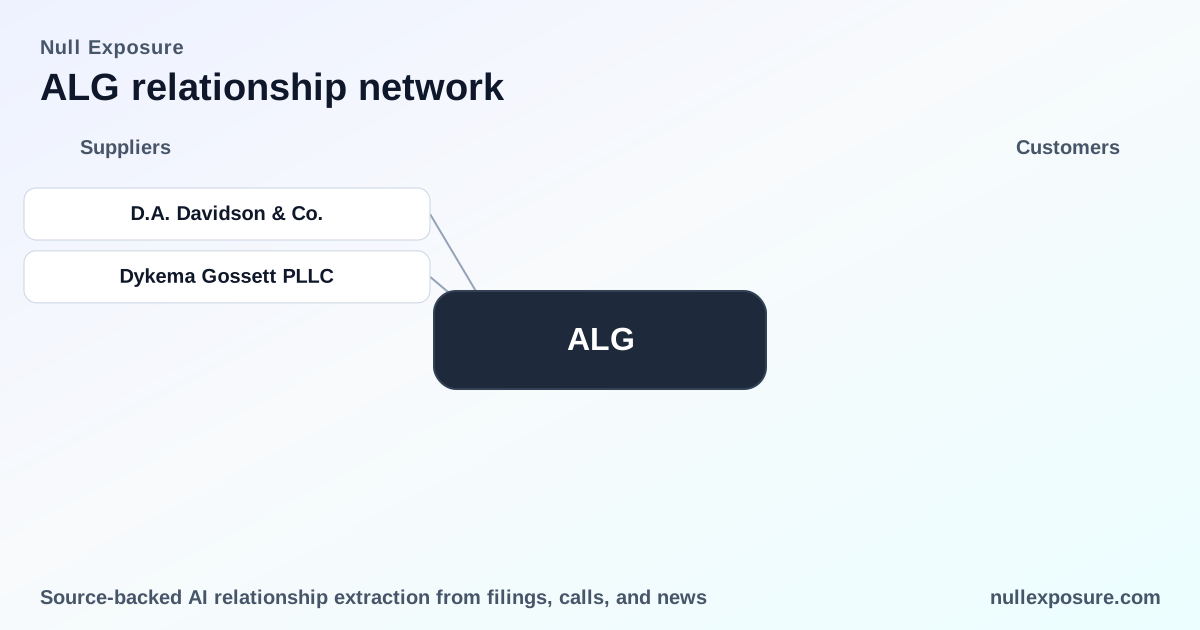
ALG’s recent advisors are a clear signal that the company is focused on transaction execution rather than one‑off vendor dependence. D.A. Davidson & Co. provided the financial advisory services for the Petersen deal, while Dykema Gossett PLLC acted as legal counsel — a conventional but important combination for mid‑market strategic acquisitons. Strong, specialist advisors accelerate deal timelines and reduce execution risk, which has downstream implications for supplier contracts, integration of purchased inventory, and vendor renegotiations.
Advisor relationships: the facts investors should record
-
D.A. Davidson & Co. served as financial advisor to Alamo Group on its purchase of Petersen Industries. According to a company announcement filed in March 2026, D.A. Davidson acted as exclusive financial advisor on the transaction (reported March 9, 2026 by Bastille Post and covered across trade outlets).
Source: Bastille Post / coverage dated March 9, 2026 and related press items on the Petersen acquisition. -
Dykema Gossett PLLC served as legal counsel to Alamo Group for the Petersen acquisition. Multiple news reports from March 2026 list Dykema as the legal advisor supporting the transaction, documenting the legal advisory layer on the deal.
Source: Pulse2 and InsiderMonkey coverage dated March 9, 2026.
These two relationships are transaction‑specific but important: financial and legal advisors reduce deal friction, which shortens the window of supplier disruption during integration and limits surprises in vendor contracts and warranties.
Company‑level constraints that shape supplier strategy
ALG’s supplier posture is shaped by four company‑level signals surfaced in recent filings and reports. Treat these as operational rules that guide procurement, contract negotiation, and risk exposure.
-
Long‑term financing structure. The company operates under a Term Facility that requires equal quarterly principal payments of $3.75 million with a five‑year amortization schedule, plus a final balloon payment. That debt profile enforces a predictable repayment cadence and constrains free cash flow available for opportunistic supplier prepayments or inventory build‑outs. Investors should view capital allocation decisions through the lens of scheduled debt service.
-
Global sourcing footprint. ALG sources purchased goods from both international and domestic suppliers. Global sourcing lowers dependence on any single geography but increases exposure to freight volatility, tariffs, and multi‑jurisdictional compliance during integrations.
-
Immaterial single‑supplier concentration. Filings state that no single supplier accounts for more than 10% of principal raw materials or purchased goods, which reduces counterparty concentration risk and increases negotiating leverage with vendors.
-
Hybrid manufacturing model. The company manufactures many parts internally but purchases a significant percentage of complex components — driveline assemblies, gearboxes, industrial engines, and hydraulic modules — from outside manufacturers that build to ALG specifications. That model preserves design control while outsourcing specialized production capacity.
Together these signals define a supplier ecosystem that is broad, engineered, and contractually predictable. The financing cadence limits liquidity flexibility; global procurement increases exposure to logistics risk; immaterial concentration reduces supplier bargaining power; and outsourced manufacture of critical assemblies introduces engineered dependency without single‑source constraint.
What to watch for in the next 12 months
For investors and procurement operators, the practical implications of ALG’s supplier posture and recent advisor activity crystallize into a short list of monitoring items:
-
Integration risk from M&A activity. With D.A. Davidson and Dykema engaged on the Petersen transaction, investors should track inventory harmonization, supplier contract novations, and warranty liabilities as the new assets fold into ALG’s supply chain. The faster the integration, the lower the window of supplier disruption.
-
Cash flow sensitivity to scheduled debt service. Quarterly principal repayments are a fixed drain on liquidity. Watch working capital trends and gross margin stability because the company’s ability to accelerate supplier payments or hedge logistics costs is constrained by the Term Facility schedule.
-
Logistics and geopolitical exposure. Global sourcing diversifies supply but creates exposure to ocean freight, lead‑time variability, and tariff shifts — factors that affect inventory carrying costs and on‑time delivery for dealers.
-
Critical purchased components. Although no single supplier exceeds 10% of inputs, purchased drivelines, engines, gearboxes, and hydraulics are functionally critical; ensure disclosures on supplier redundancy and qualification programs are current.
Place risk monitoring and supplier diligence at the center of your investment checklist. For a practical supplier risk dashboard tailored to industrial manufacturers, visit https://nullexposure.com/.
Operator playbook: contracting posture and procurement priorities
For operators managing ALG relationships or benchmarking counterparties, the business model points to three actionable priorities:
-
Negotiate flexibility in supplier contracts that align payment terms with the company’s debt service schedule and seasonal cash flow patterns. Fixed quarterly loan amortization increases the value of flexible payable terms.
-
Invest in supplier qualification and dual‑sourcing for the key purchased assemblies (drivelines, gearboxes, engines, hydraulics), preserving design control while reducing single‑vendor operational risk.
-
Hedge logistics exposure selectively around long‑lead imported components to protect integration timelines from transit volatility.
These actions reflect the company’s hybrid manufacturing approach and its stable but constrained financing posture.
Bottom line — what investors should conclude today
ALG runs a broad, engineered supply base supported by deliberate financial and legal advisory relationships for its recent M&A. The combination of immaterial single‑supplier concentration and global sourcing is a strength for negotiating power and scale, but the company’s fixed-term debt schedule imposes cash‑flow discipline that constrains aggressive supply‑chain plays. Monitor the Petersen integration, working capital trends, and supplier qualification transparency to assess whether the acquisition improves margins without elevating supply disruption risk.
For ongoing supplier and counterparty signals and to track how advisor rosters map to deal pipelines, visit https://nullexposure.com/ for curated relationship intelligence and investor briefings.