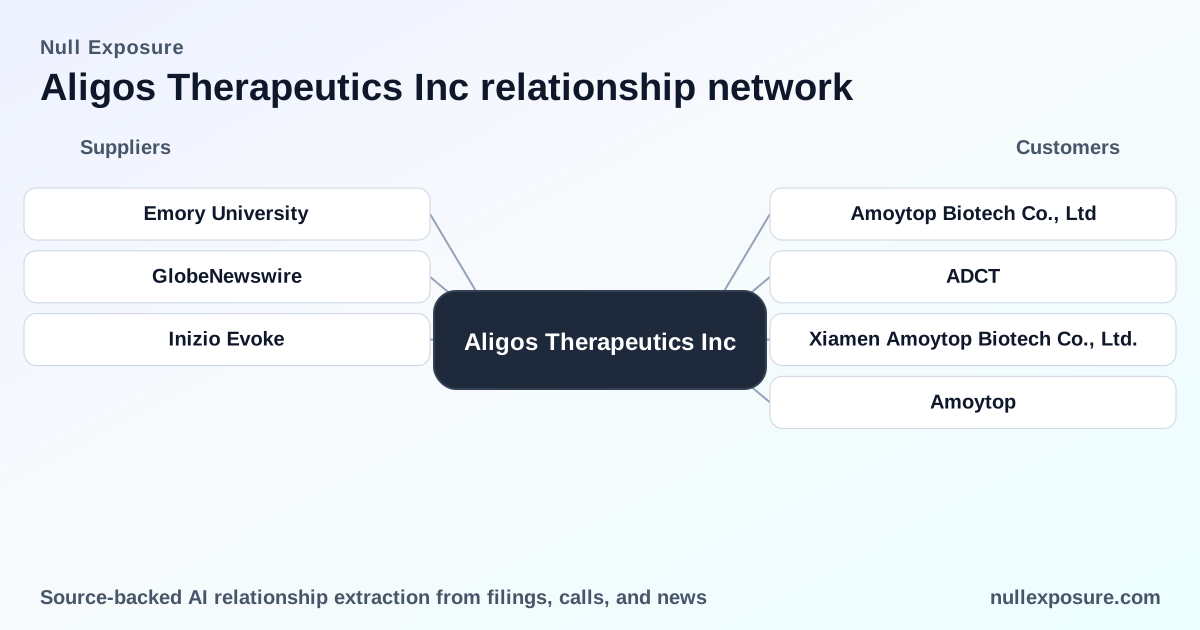
ALGS supplier map: what investors need to know about Aligos’s external relationships
Aligos Therapeutics builds value by advancing small-molecule and oligonucleotide drug candidates from licensed academic IP through clinical development, then commercializing candidates via in‑house and outsourced manufacturing and clinical services; the company monetizes through milestone-driven licensing, eventual product sales, and value accretion tied to clinical progress. For investors, the practical takeaway is simple: Aligos is a development-stage bio‑pharma that leverages academic licensing and third‑party service providers to de‑risk discovery and accelerate trials, creating both concentration and operational dependency risks that are material to valuation. Learn more about how we surface these relationship signals at https://nullexposure.com/.
Market context and what the supplier map implies for risk and upside Aligos’s supplier footprint reflects a classic small‑cap biotech operating model: academic IP origins, targeted licensing arrangements, and heavy reliance on contract development and manufacturing organizations (CDMOs) and clinical service providers to execute trials. That structure delivers capital efficiency — controlling fixed costs while accessing external scale — but it introduces specific risk vectors: IP chain-of-title and license economics, single-source manufacturing interruptions, and regulatory/distribution dependencies across APAC, EMEA and North America. For portfolio managers, these are the factors that should tilt diligence and scenario analysis.
A concise read on contract posture and maturity Aligos’s material contracts show a mix of exclusive licensing and long-term real estate commitments, plus routine outsourcing of CMC and clinical functions. The company operates as a licensee for key IP, retains an internal CMC team that orchestrates outside manufacturers, and uses third parties for clinical execution and waste handling — a mature but still concentrated outsourcing posture that demands active counterparty monitoring.
Relationships in the record
Emory University Pevifoscorvir sodium (formerly ALG‑000184) traces back to IP originally licensed from the laboratory of Dr. Raymond Schinazi at Emory University and was subsequently optimized by Aligos during preclinical development. This is the academic origin of at least one lead clinical candidate, establishing an upstream licensing relationship that underpins commercial rights. (InvestingNews, March 9, 2026; StockTitan/QuiverQuant press coverage, FY2025–FY2026)
Inizio Evoke Inizio Evoke is listed as the media/communications contact on multiple Aligos press distributions, with Jake Robison identified as Vice President and media contact for corporate announcements. This indicates a retained PR/IR services relationship used to manage investor and media communications. (QuiverQuant/StockTitan press copies, FY2025–FY2026)
GlobeNewswire Aligos used GlobeNewswire to distribute at least one formal press release announcing adoption of the nonproprietary name for ALG‑000184, establishing GlobeNewswire’s role as a distributor for corporate communications. The press distribution channel confirms a standard public relations workflow and broad news reach for material events. (QuiverQuant and ManilaTimes republishing of GlobeNewswire release, FY2025)
Interpreting the constraints: what contract excerpts tell you about operational risk The structured constraints extracted from filings and corporate disclosures reveal practical operating characteristics that affect execution risk and valuation:
- Licensing is central to the model. A documented license agreement (December 19, 2018) with Luxna shows Aligos functions as a licensee for oligonucleotide IP and paid an upfront fee, highlighting recurring dependency on third‑party IP estates and the importance of license economics to future cash flow and freedom to operate.
- Real estate commitments are long-term. South San Francisco leases expire in 2027 but include extension options into the early 2030s, signaling a fixed cost base and capital planning horizon consistent with a company positioning itself for late‑stage development or commercialization.
- Geographic footprint spans APAC, EMEA and North America. Clinical activity and offices in Belgium plus trials in jurisdictions such as Hong Kong and New Zealand indicate regulatory and operational complexity across regions — this increases the importance of robust global supply chains and local regulatory strategy.
- Outsourcing is material and mature. Aligos maintains an internal CMC team but relies substantially on CDMOs, CROs, clinical investigators and contract labs, exposing the company to supplier concentration, manufacturing disruption, and study execution risk; these are operationally critical relationships rather than peripheral vendors.
Each of these constraints is an operational signal: licensing and outsourcing concentration govern upside capture and downside exposure; long leases increase fixed-cost leverage; multinational trials expand regulatory runway but raise execution complexity.
What this means for due diligence and portfolio risk Investors should treat Aligos as a development-stage company whose valuation is tightly coupled to clinical outcomes and the stability of a handful of upstream licensors and downstream manufacturers. Due diligence priorities:
- Confirm chain‑of‑title and royalty/option economics for Emory‑originated IP and the Luxna license language. Licensing terms directly affect margin on any future products.
- Map manufacturing providers and contingency plans for single‑source materials; CMC outsourcing is a primary operational risk.
- Monitor regulatory and trial execution in APAC/EMEA jurisdictions given the company’s active international footprint.
- Track public communications and timing via retained PR distributors (GlobeNewswire) and agencies (Inizio Evoke) as early signals of material events.
A middle‑article note on monitoring For active investors and operators looking for structured signals on supplier relationships and news flow, a consistent watch on press distributions and filings is high‑signal: press releases distributed through GlobeNewswire and agency contacts at Inizio Evoke have been the earliest public indicators of name adoption and trial progress. Visit https://nullexposure.com/ to see how our platform aggregates these relationship cues into actionable alerts.
Final thoughts and actions Aligos executes a disciplined biotech playbook: leverage academic IP, outsource capital‑intensive functions, and concentrate on clinical advancement to create value. That model creates asymmetric return potential but leaves substantial execution risk tied to licensors, CDMOs, CROs and multinational trial logistics. Investors should prioritize legal diligence on license terms, supplier resilience for CMC, and watch PR channels for timing of milestones.
If you want systematic, supplier‑level intelligence to support investment decisions, explore our coverage and alerting capabilities at https://nullexposure.com/. For bespoke diligence or portfolio integration, contact our team through the same homepage to schedule a demo.