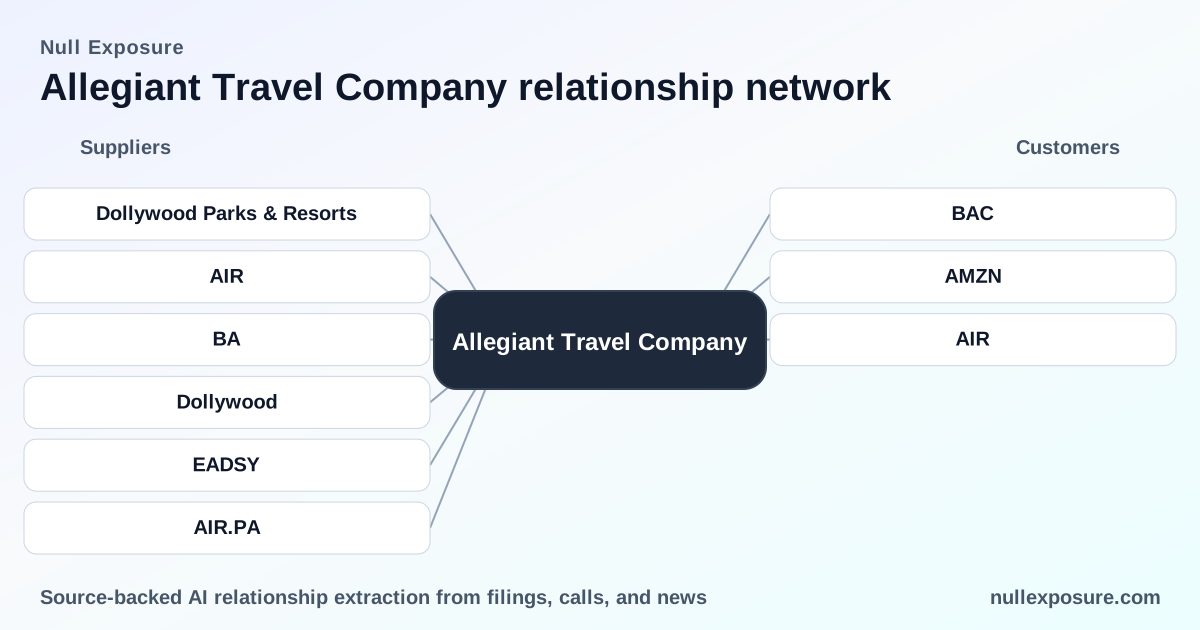
Allegiant Travel (ALGT) — supplier relationships that drive cost, capacity and risk
Allegiant Travel operates as an ultra‑low‑cost, leisure‑focused carrier that monetizes through a blend of ticket revenue and high-margin ancillaries (bundled vacation packages, seat upsells, baggage and resort partnerships), while funding growth through committed aircraft purchases and selective third‑party service contracts. Revenue generation depends on tight unit cost control (fleet strategy and fuel) and monetization of add‑ons and partner experiences, while capital commitments to aircraft and software investments define its medium‑term cash profile. For deeper supplier mapping and exposure analytics, visit the NullExposure homepage: https://nullexposure.com/.
What to look for: the simple mechanics behind supplier risk and leverage
Allegiant’s relationships concentrate around three operational levers: aircraft manufacturers (capacity and fleet economics), maintenance/service providers (airworthiness and cost control), and commercial partners (ancillary revenue and marketing). The disclosed evidence and news reporting show a highly contractual procurement posture on aircraft, material exposure to fuel prices, a deliberate software modernization program, and significant purchase commitments that shape cashflow timing.
Key company-level signals
- Long-term aircraft contracts are explicit and binding. Company disclosures record multi‑year orders and amendments with Boeing, including firm aircraft due by end of 2027.
- Fuel is a material cost driver. Fuel expense represented 22.8% of operating expenses in 2024; fuel price and availability materially affect margins.
- Service relationships underpin operations. Allegiant uses FAA‑approved third parties for major maintenance and overhaul.
- Software and ERP modernization is underway. The airline migrated to Navitaire and implemented ERP systems (SAP, Trax), increasing capitalized software amortization and altering depreciation and operating leverage.
- Capital commitments are large. Reported purchase commitments total roughly $1.58 billion as of Dec 31, 2024, concentrating near‑term cash obligations.
Supplier relationships: who matters and why
Below I list the distinct counterparties shown in recent coverage and filings and what each relationship means for investors.
Boeing — the anchor for a multi‑year fleet transition
Allegiant has an explicit long‑term purchase agreement with The Boeing Company for 50 firm 737 MAX aircraft and options for up to 80 additional jets, with amended terms in 2023 and 2024 to accelerate deliveries so the 50 firm orders are due by the end of 2027; this creates a high contractual cash and delivery dependency on Boeing. According to the company filing language disclosed in 2024, Allegiant’s amended Boeing agreement is a core element of its fleet modernization plan. (Company disclosure, filing language cited in constraints.)
News coverage also documents delivery timing and supply‑chain friction: Allegiant is working through supply‑chain related delays with the 737 MAX program that affect schedule and unit costs, and analysts have flagged Boeing delivery timing as a meaningful operational variable in FY2026 reporting. (Reporting from Simply Wall St and Yahoo Finance, March 9, 2026.)
Airbus — the incumbent fleet and transition partner
Historically, Allegiant’s network has been flown largely on Airbus A320 family aircraft (A319/A320), and recent coverage highlights the airline’s strategy to retire older Airbus jets as it brings MAX aircraft online, which will change maintenance profiles and unit economics. Industry reporting describes Allegiant’s existing Airbus fleet and how the mix will shift as MAX deliveries ramp. (Airlineratings and Simply Wall St coverage, March 9, 2026.)
This dual‑vendor exposure means transition timing between Airbus and Boeing frames near‑term schedule and maintenance complexity, and public commentary has identified Airbus‑related delivery issues and fleet renewal dynamics as factors in FY2026 cost forecasts. (TradingView/Finviz summaries, March 9, 2026.)
Dollywood Parks & Resorts — an ancillary revenue and marketing partner
Allegiant has executed branded, experiential flights and vacation packages with leisure partners; most recently, the carrier launched a themed “Destination Dollywood” flight experience (Flight #925) from Orlando/Sanford to Knoxville, offered with park perks and discounted resort packages that extend the airline’s vacation product suite. This partnership is representative of Allegiant’s strategy to monetize routes through branded partnerships and bundled experiences. (Simply Wall St reporting, March 9, 2026.)
Middle‑game analysis: costs, concentration and operational posture
Allegiant’s supplier map shows concentrated, high‑stakes relationships that drive both upside and risk. The Boeing agreement is the principal strategic lever — it locks in growth timing and capital outflows; simultaneously, Allegiant retains a sizeable Airbus footprint that requires coordinated retirement and transition planning. Fuel remains a high‑impact operating input and will continue to compress margins when prices rise. The company’s shift to Navitaire, SAP and Trax signals improved revenue and inventory management but also elevates near‑term capitalized expenses and amortization, changing reported EBITDA conversion in the medium term.
- Concentration: aircraft purchase commitments and a two‑vendor fleet strategy concentrate counterparty risk with Boeing and Airbus, while maintenance outsourcing creates operational dependency on FAA‑approved service providers.
- Criticality: fuel and timely aircraft deliveries are critical variables that directly affect available seat miles and unit costs.
- Maturity: the software and ERP migration indicates a move from legacy systems to commercial platforms, which raises short‑term amortization and long‑term efficiency.
- Spend scale: with over $1.5bn of purchase commitments, procurement is a major cash‑flow driver for the company.
If you want a full exposure breakdown for strategic supplier diligence and stress testing, see the NullExposure homepage: https://nullexposure.com/.
Investment implications and recommended diligence steps
For investors and operators evaluating Allegiant supplier relationships, the practical focus is on delivery schedules, contractual protections, fuel hedging strategy, and the operational implications of the Airbus→Boeing transition.
- Review Boeing delivery timetables and any contractual remedies or delay penalties disclosed in the company filings; delivery risk translates to capacity and revenue timing. (Company filing language and FY2026 commentary.)
- Model fuel price sensitivity given fuel’s 22.8% share of operating expenses; stress tests should assume sustained price shocks to evaluate margin resilience. (Company disclosure on fuel materiality.)
- Assess execution risk on the Navitaire/SAP/Trax rollout and the near‑term impact on depreciation/amortization and cashflow. (Company disclosures on software conversion in 2023–2024.)
- Track ancillary partner rollouts (e.g., Dollywood) as incremental revenue streams that improve yield per passenger and diversify marketing channels. (Simply Wall St coverage of Destination Dollywood, March 2026.)
For a consolidated supplier exposure view and to operationalize these findings into procurement or investment actions, visit NullExposure: https://nullexposure.com/.
Bottom line
Allegiant’s commercial model extracts high ancillary revenue while depending on a concentrated set of suppliers for aircraft, maintenance and software. The Boeing purchase agreement is a determinative contractual commitment that anchors growth — and risk — through 2027, while fuel and transition costs remain principal margin levers. Investors should prioritize scrutiny of delivery timelines, contractual protections, and Allegiant’s execution on software modernization when sizing downside scenarios and valuation sensitivity.