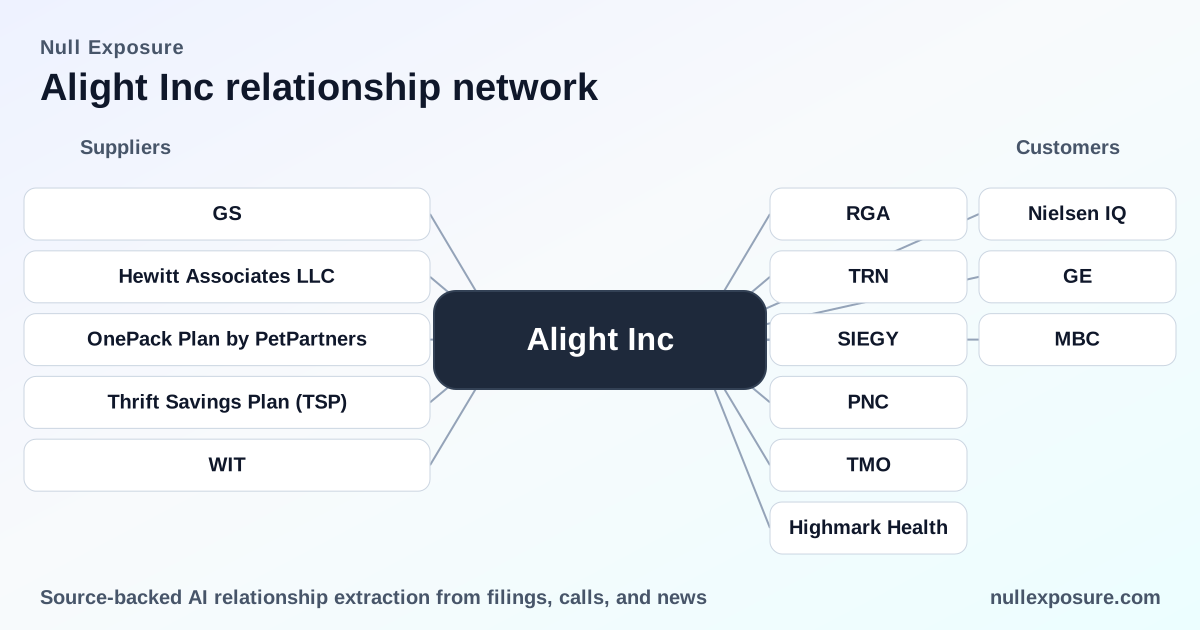
Alight, Inc. (ALIT) — Supplier relationships that determine execution risk and margin profile
Alight operates a cloud-based human capital platform and sells technology-enabled services across benefits administration, retirement plan administration, and advisory solutions; the company monetizes through recurring platform fees, outsourced service contracts, and sub-advisory or integration arrangements that carry high revenue visibility but also high fixed supplier and vendor cost obligations. Investors should value Alight as a services platform with durable revenue but material contract-driven cost structure and execution risk. For a broader supplier-risk view and ongoing monitoring, visit https://nullexposure.com/.
Why supplier relationships matter for Alight's P&L and valuation
Alight's model is a two-sided services business: it collects fees from employers and participants for benefits and retirement administration while outsourcing significant components of infrastructure and delivery to third parties. That structure produces recurring revenue with operating leverage, but also large, long-dated, non-cancellable cost commitments that compress free cash flow if execution slips or contract terms shift.
Company disclosures and recent reporting show two salient operating constraints as firm-level signals:
- Long-term contracting posture: the company has disclosed multi-year commitments for cloud and managed services, including a $286 million five-year cloud commitment disclosed in a March 2024 filing. This establishes a predictable cost base but reduces flexibility as volumes fluctuate.
- High absolute spend concentration: Alight reports multi-year expected cash outflows tied to strategic partners (for example, the Wipro arrangement has scheduled obligations in the mid-hundreds of millions across 2025–2028), which places a premium on contract performance and supplier stability.
These elements make supplier performance a core driver of margins, working capital, and headline operational risk, not peripheral procurement details. For ongoing supplier-risk analysis and alerts, see https://nullexposure.com/.
The relationships investors need on their radar now
Below I cover each relationship surfaced in recent reporting and news, with a plain-English take and the source.
-
Goldman Sachs Asset Management — Goldman Sachs will serve as a sub-advisor on Alight’s Defined Contribution solution and the Alight IRA product, integrating via the Alight Worklife platform to deliver investment management services to retirement clients. This is a distribution and capability partnership that expands Alight’s product shelf and positions the company to capture asset-based or advisory fees tied to plan flows (StockTitan, March 9, 2026).
-
Hewitt Associates LLC — In litigation tied to a legacy purchase, a court found Alight entitled to judgment because the portion of the business acquired from Hewitt did not perform the contract at issue and did not transfer related liability. The ruling reduces contingent liability related to that claim and clarifies historical contractual exposure from acquisitions (PlanAdviser coverage, 2026).
-
OnePack Plan by PetPartners — Alight and OnePack Plan announced a partnership that integrates employer-based pet insurance into Alight’s enrollment experience, enabling clients to offer pet insurance as an elective benefit. This is an ancillary benefits integration that broadens the client value proposition and supports incremental per-participant revenue opportunities (SahmCapital press release, February 3, 2026).
-
Thrift Savings Plan (TSP) — Class-action litigation alleges that Alight and partners botched the migration of TSP services, claiming technological and staffing shortfalls that disrupted participant services; plaintiffs describe significant operational breakdowns. This is material execution risk for Alight given the public scale and visibility of the TSP engagement (FedScoop report, 2026).
-
Wipro — Alight has a long-standing strategic partnership with Wipro, with explicit non-cancellable service obligations and multi-year cash outflow projections (notably $162m–$178m annually for 2025–2028 in company reporting), and termination provisions that include fees and a 25% residual payment on remaining minimums if terminated for convenience. The arrangement is central to Alight’s operating model because it offloads large portions of IT and delivery while creating large fixed cost commitments that influence margin resilience (Alight SEC filings summarized in a TradingView news item, 2026).
What these relationships collectively tell investors about Alight's operating constraints
-
Contract maturity and rigidity: Multiple excerpts from company filings describe multi-year, non-cancellable obligations; this establishes a high fixed-cost base and reduces short-run flexibility to right-size costs when revenue underperforms. That dynamic elevates operating leverage and downside volatility in cash flow.
-
Dual role as buyer and service provider: Alight is simultaneously a buyer of significant cloud and managed services and a provider of mission-critical administration services to large clients. This dual posture concentrates counterparty risk—supplier failure or pricing shifts directly impact both cost and revenue continuity.
-
Concentration of high-dollar commitments: The disclosed $286m five-year cloud commitment and Wipro’s scheduled obligations are not nominal; they are material to cash flow forecasting and put a premium on contract management and escalation clauses. Investors must treat these as structural constraints when modeling margins.
-
Execution risk is critical: Litigation around TSP migrations and other contract disputes (e.g., the Hewitt matter) underscore that operational execution drives valuation because service failures translate quickly into litigation, remediation costs, client churn, and reputational damage.
Risk and opportunity synthesis for investment decisions
Alight sits at the intersection of scale and execution complexity. Key takeaways:
- Opportunity: Partnerships with investment managers (Goldman Sachs) and product integrations (pet insurance) expand monetizable distribution and per-user revenue without proportional increases in fixed costs when executed through platform APIs and enrollment flows.
- Risk: Large, long-term vendor commitments and the company’s outsourced delivery model create high fixed spending and concentration risk; adverse events (migration failures, litigation) produce outsized P&L and cash impacts.
- Operational focus is strategic: Management must show consistent improvement in program migrations, vendor governance, and SLA compliance to de-risk the balance sheet exposure embedded in multi-year contracts.
If you evaluate supplier exposure as part of your diligence, prioritize documented SLAs, termination economics, and the quantum of non-cancellable obligations in the notes and 10‑K. For deeper supplier-level monitoring and tailored alerts, visit https://nullexposure.com/.
Bottom line and next steps for investors
Alight’s business model creates durable recurring revenue on one hand and material fixed-cost obligations and execution-dependent risk on the other. Investment theses should price disciplined growth against the probability of supplier or migration failures that trigger remediation and litigation. Active monitoring of Wipro and cloud contracting economics, along with remediation outcomes from the TSP litigation, is essential for short- to mid-term valuation updates.
For ongoing supplier risk intelligence and to track Alight’s vendor exposure in real time, go to https://nullexposure.com/.