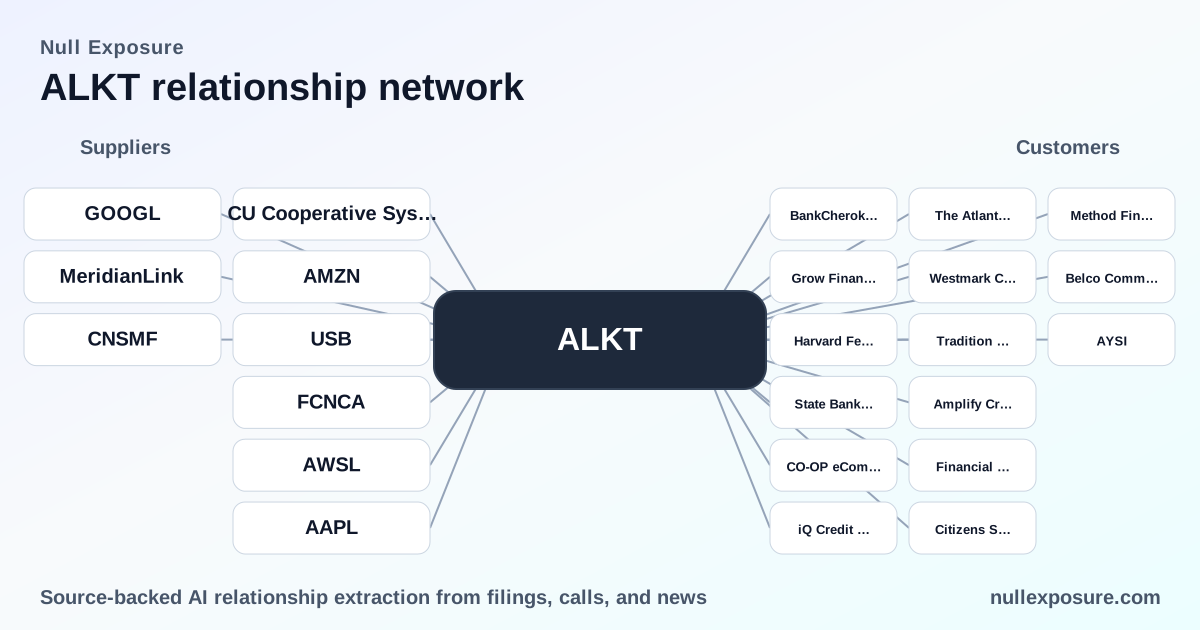
Alkami Technology (ALKT) — supplier map and what it means for investors
Alkami Technology operates a cloud-native digital banking platform sold to banks and credit unions across the U.S., generating revenue from platform subscriptions, implementation and support services, and value-added integrations and resale arrangements with partner vendors. The company positions itself as a single-platform provider for digital account servicing and member/customer engagement, and its supplier relationships reflect a cloud-first delivery posture, strategic distribution through app stores, and reliance on third-party integrators and financing partners. For investors assessing counterparty risk and operational concentration, these supplier ties frame both Alkami’s scalability and its key vulnerabilities.
Discover more supplier intelligence at https://nullexposure.com/.
How Alkami’s supplier footprint creates value — and creates risk
Alkami’s business model depends on two practical axes: technology hosting and commercial distribution. Hosting and operations are concentrated on Amazon Web Services, which underpins platform availability and scaling, while distribution and integration come through app stores and third‑party fintech partners that extend Alkami’s product into lending, account opening and mobile channels. The financing and credit facilities in place are material for liquidity and capital structure decisions. Together, these relationships deliver predictable delivery and growth capacity — but they also create concentrated counterparty exposure and operational single points of failure that investors must price.
CTA: For a structured supplier risk review and live monitoring, visit https://nullexposure.com/.
The supplier relationships you need to know (one-by-one)
Below are every supplier and partner relationship surfaced in public filings and industry coverage. Each entry contains a plain-English summary and the source reference.
-
CU Cooperative Systems, Inc. — Alkami paid $6.2 million for services that were resold to Alkami’s clients in the year ended December 31, 2023, indicating a reseller/third‑party services arrangement that contributes to client delivery. According to Alkami’s annual report as republished on StockTitan (filed in the Form 10‑K disclosure reported in March 2026).
Source: StockTitan copy of Alkami 10‑K (FY2026 filing context). -
Amazon Web Services (AWS) — Alkami depends on AWS data centers and third‑party internet hosting for its operations, explicitly identifying AWS as its principal hosting provider; disruptions to AWS would directly affect Alkami’s service delivery. According to Alkami’s Form 10‑K (fiscal year ended Dec 31, 2024) and subsequent company risk disclosures republished in March 2026.
Source: Alkami 10‑K (FY2024) and related filing excerpts. -
U.S. Bank Trust Company, National Association — U.S. Bank serves as the trustee under Alkami’s $345 million 1.50% Convertible Senior Notes due 2030, formalizing Alkami’s debt securities and trustee relationship for capital markets activity. The indenture naming U.S. Bank is disclosed in Alkami’s filings.
Source: Alkami 10‑K (republished March 2026). -
Silicon Valley Bank, a division of First‑Citizens Bank & Trust Company — Alkami entered into a Second Amendment to its Amended and Restated Credit Agreement with Silicon Valley Bank as Administrative Agent, reflecting bank‑provided credit facilities that support liquidity and working capital. This amendment is recorded in the same 10‑K filing.
Source: Alkami 10‑K (republished March 2026). -
AWS (architected solution mention) — In addition to the risk statement, Alkami states it has architected its solutions to use AWS processing and storage capabilities, underscoring that AWS is not just a provider but the foundational cloud architecture for the platform. This confirms a deep technical dependency.
Source: Alkami Form 10‑K (FY2024) filing text. -
Apple’s App Store — Alkami distributes its mobile applications through Apple’s App Store, using platform distribution channels to reach retail and institutional end users on iOS devices. This is listed as part of the company’s application availability strategy.
Source: Alkami 10‑K excerpt republished in March 2026. -
Google Play Store — Alkami makes applications available through Google Play to reach Android users, mirroring its iOS distribution and creating dependence on mobile store policies and compliance. The App Stores are mentioned collectively in Alkami’s disclosure.
Source: Alkami 10‑K excerpt republished in March 2026. -
MeridianLink — MeridianLink is named in industry coverage as a partner integrated with Alkami’s MANTL unit to enable account opening and lending workflow integrations for financial institutions, expanding Alkami’s product scope into loan origination touchpoints. This partnership is covered in Sahm Capital industry commentary (February 2026).
Source: Sahm Capital news coverage (Feb 2026). -
MANTL — Alkami’s MANTL unit has been integrated into customer deployments, and news sources describe MANTL integration into the Alkami Platform to support connected account opening experiences, confirming Alkami’s strategy of embedding third‑party onboarding/lending technology. Reported by Finviz and sector press in early 2026.
Source: Finviz press coverage (reported March 2026).
What the constraints say about Alkami’s operating model
A company‑level signal extracted from filings shows Alkami uses external service providers for security assessments and other operational tasks, an explicit confirmation of outsourcing practices. This, combined with the AWS architecture statements, yields several operational conclusions:
- Contracting posture: Alkami contracts with specialized third parties for hosting, security testing and application distribution rather than maintaining on‑premises infrastructure. That posture reduces capital intensity but increases supplier governance needs.
- Concentration: AWS is a single, material cloud provider; concentration risk is high for core operations. App store distribution creates secondary dependence on platform policies managed by Apple and Google.
- Criticality: AWS and the bank lenders/trustees are critical counterparties — an availability incident at AWS or a material financing upheaval would have immediate operational and financial consequences.
- Maturity: The presence of formal credit agreements, convertible notes and incremental amendments shows a maturing corporate finance posture, moving from early-stage cap table dynamics to structured debt and institutional trustee relationships.
These constraints are company-level structural signals, not tied to a single supplier, and they define where governance and monitoring should be concentrated.
Investment implications — what to watch next
- Concentration on AWS is the top operational risk; investors should track AWS SLAs, Alkami’s multi‑AZ/multi‑region architecture comments, and any plans for multi‑cloud diversification.
- Resale and integration partners (CU Cooperative, MANTL/MeridianLink) provide revenue leverage but also embed third‑party control over parts of client delivery — monitor magnitude of resold fees in upcoming filings.
- Financing relationships (U.S. Bank trustee, SVB/First‑Citizens credit amendment) influence liquidity and cost of capital; watch covenant language and cash runway metrics each quarter.
Quick checklist for monitoring:
- Quarterly disclosure of resold services revenue and major vendor concentrations.
- Any material AWS service disruptions or contractual changes.
- Amendments to credit agreements or trustee arrangements that change covenants or seniority.
CTA: For ongoing supplier impact scoring and alerts tied to these signals, visit https://nullexposure.com/.
Bottom line
Alkami’s supplier architecture is strategically simple and operationally concentrated: AWS provides the technical backbone, app stores and fintech integrators extend distribution, and banks/financial institutions provide capital and trustee services. For investors, this structure supports efficient scaling and partner-driven go‑to‑market growth but requires disciplined vendor governance and active monitoring of cloud and financing counterparties. The company’s filings and market commentary make clear where exposure sits — investors should treat AWS dependency and third‑party resales as primary risk levers when modeling downside scenarios.
For deeper supplier intelligence and tailored monitoring for ALKT, see https://nullexposure.com/.