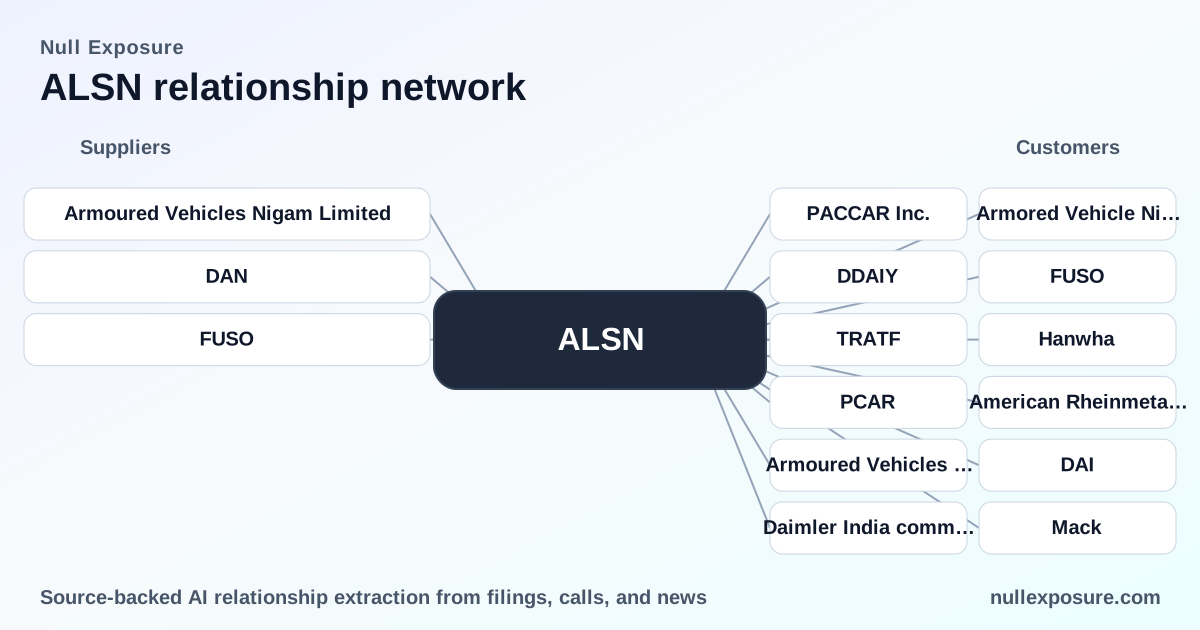
Allison Transmission (ALSN): Supplier relationships that shape propulsion-market expansion
Allison Transmission designs, manufactures and sells fully‑automatic transmissions for commercial and defense vehicles and monetizes through direct sales of propulsion systems, aftermarket parts and service contracts, and now through strategic inorganic expansion into off‑highway drive systems. Revenue derives from OEM equipment sales, recurring aftermarket parts and service, and recently enlarged product scope via the Dana off‑highway acquisition. For investors evaluating Allison as a supplier partner or operator, the company blends scale manufacturing with concentrated purchased‑component spend—an operational profile that creates both margin upside and supplier execution risk. Learn more about supplier exposures and operational signals at https://nullexposure.com/.
What investors need to know up front
Allison is the largest global manufacturer of medium‑ and heavy‑duty fully automatic transmissions, and it functions both as a manufacturer and a large buyer of direct materials (over $1.1 billion of direct materials purchased in 2024). The firm’s model combines high gross margins on proprietary transmissions with incremental growth from aftermarket and the newly acquired off‑highway business. Key commercial relationships now include defense OEMs, global truck manufacturers such as FUSO, and the newly acquired Dana off‑highway assets—each altering product mix and distribution reach.
For a deeper supplier-risk profile and relationship map, visit https://nullexposure.com/ for tailored supplier analytics and sourcing intelligence.
The strategic constraints that define Allison’s supplier posture
Allison’s filings and public comments reveal a clear set of operational constraints that shape supplier relationships and procurement strategy:
- Concentration profile: No single supplier accounted for 10% or more of materials purchased in recent years, indicating supplier spend is not highly concentrated by single vendor lines, even though total purchased components are substantial.
- Cost structure reliance: Approximately 65% of cost of sales consists of purchased components, with aluminum and steel making up a substantial portion—this makes commodity and supplier cost stability a material operating lever.
- Buyer-manufacturer duality: Allison operates as both manufacturer (design and manufacturing of transmissions) and as a large buyer (over $1.1 billion of direct material purchases in 2024), implying sophisticated supplier management and scale procurement teams.
- Service contracting: The company contracts third parties for engineering services and records those under net sales, indicating selective outsourcing of technical capability rather than full vertical integration.
- Spend magnitude: Direct materials spend places Allison in the $100M+ supplier spend band, a scale that enables negotiation leverage but also creates exposure to input-cost swings.
These constraints are company‑level signals for suppliers and investors: Allison has negotiating scale, material exposure to metal commodities, and diversified supplier relationships that moderate single‑vendor dependency while leaving procurement as a core operational risk.
Supplier and partner relationships you should track
Below are every relationship captured in the most recent public materials, with concise summaries and source citations.
Armoured Vehicles Nigam Limited — a defense MOU expands defense channel
Allison signed a memorandum of understanding with Armoured Vehicles Nigam Limited, the Indian government‑owned defense manufacturer, to explore collaboration on defense vehicle propulsion solutions. This positions Allison to extend its defense sales pipeline in international markets. Source: Allison’s 2025 Q4 earnings call disclosure (first seen March 7, 2026).
Dana Incorporated — transformative off‑highway acquisition completed
Allison completed the acquisition of Dana Incorporated’s Off‑Highway Drive & Motion Systems business in January 2026, enlarging Allison’s addressable market in off‑highway and non‑road equipment and representing a material strategic extension of product capability; media reports indicate the transaction closed at roughly $2.7 billion. Source: Allison 2025 Q4 earnings call (March 7, 2026) and market reports including Marketscreener (Jan 2, 2026) and Fleet Equipment Magazine (March 9, 2026).
FUSO / Daimler India commercial vehicles — integration into exported medium‑duty trucks
Allison’s 3000 Series fully‑automatic transmissions are being shipped integrated into FUSO‑badged medium‑duty trucks manufactured by Daimler India and exported to South Africa, demonstrating Allison’s role as a global OEM supplier on international vehicle platforms. Source: Allison’s 2025 Q4 earnings call (first seen March 7, 2026).
How each relationship changes the investment case
- Defense partnerships (Armoured Vehicles Nigam Limited) strengthen Allison’s political‑risk diversified defense backlog and support higher margin, long‑life contracts that are less cyclical than commercial vehicle OEM sales.
- Dana off‑highway acquisition is the biggest near‑term supply/market structural change: it materially expands product scope into new end markets, increases component sourcing complexity, and raises integration and working capital demands while creating new aftermarket revenue streams. Markets are already pricing the strategic upside—analyst target prices have been updated following the deal.
- OEM integrations like FUSO sustain core OEM aftermarket and replacement part economics and validate Allison’s transmission platform on international vehicle lines, underpinning recurring revenue.
Practical risk and opportunity checklist for operators and investors
- Strong upside: expanded TAM, aftermarket leverage, and defense contract durability.
- Execution risk: post‑acquisition integration, commodity exposure (steel/aluminum), and supplier delivery reliability given $1.1B+ direct material purchases.
- Contracting posture: Allison blends insourced manufacturing with contracted engineering services, implying targeted outsourcing rather than wholesale dependency.
For operational intelligence on supplier concentration, commodity exposure, and integration readiness, see tailored analyses at https://nullexposure.com/.
Final takeaways and what to watch next
Allison is executing a deliberate expansion strategy: scaling product breadth via acquisition while retaining a manufacturing backbone and significant direct‑materials purchasing scale. Investors should monitor integration progress for the Dana off‑highway business, defense contract conversions from the Armoured Vehicles Nigam MOU, and sustained OEM wins (such as FUSO) that reinforce aftermarket revenues. Each relationship increases commercial reach but raises procurement and integration complexity—factors that determine margin trajectory and capital allocation outcomes.
To track supplier exposures, contractual maturity, and post‑deal operational milestones, visit https://nullexposure.com/ for ongoing coverage and supplier‑level intelligence.