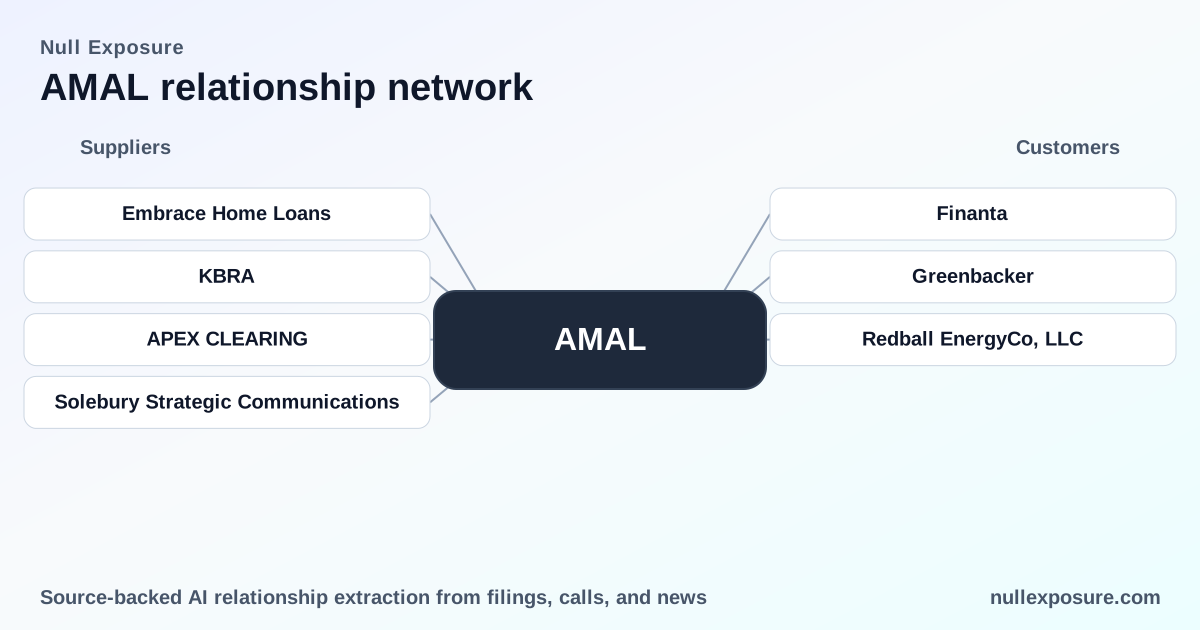
AMAL supplier map: who Amalgamated Bank leans on and why it matters to investors
Amalgamated Financial Corp (AMAL) operates as a bank that leverages third‑party providers and market funding lines to run core banking, lending, and customer delivery without carrying all infrastructure in‑house. The company monetizes through traditional bank channels—deposits and lending margins—while increasing product breadth and scaling distribution by contracting out mortgage origination/servicing, clearing/custody functions, investor relations, and other outsourced systems. This supplier posture reduces fixed costs but raises vendor concentration and operational dependence that investors must price into valuations and operational stress tests. For a closer look at partner exposure and material supplier risks, visit https://nullexposure.com/.
The partner roster you need to know
Below are the relationships surfaced in public disclosures and news for AMAL, with a plain‑English take on each connection.
-
Embrace Home Loans — Embrace will provide residential mortgage financing for Amalgamated Bank’s customers and will originate and service mortgage loans through a platform tailored for the bank’s clientele. This is a delegated mortgage origination and servicing arrangement that routes mortgage demand to Embrace. According to a GlobeNewswire press release on February 5, 2026, Amalgamated will direct customers to Embrace, which will both originate and service the loans (FY2026).
-
KBRA — KBRA revised Amalgamated’s outlook to positive during annual credit rating surveillance, a development the company highlighted on its Q3 2025 earnings call. That upgrade is a third‑party credit opinion that influences borrowing costs and market perception (FY2025 earnings call transcript reported by InsiderMonkey).
-
APEX CLEARING — APEX Clearing is listed in AMAL’s public filings (address block shown in a 2026 SEC filing), indicating a clearing/custody or intermediary role recorded in the company’s vendor/contract disclosures. The appearance in the FY2026 filing signals an active operational relationship with clearing/custody functions (SEC filing as published via StockTitan, FY2026).
-
Solebury Strategic Communications — Solebury is identified as the investor relations contact on Amalgamated’s FY2026 quarter and year announcement materials, reflecting an outsourced investor communications/PR function supporting earnings and shareholder outreach (news release distributed via StockTitan, FY2026).
What the supplier mix says about AMAL’s operating model
Amalgamated runs a deliberately outsourced operating model with two defining characteristics: exposure to long‑dated contractual commitments and reliance on short‑term liquidity facilities.
-
Long‑term commitments are material. The company has explicit long‑dated obligations such as purchase commitments for PACE assessment securities (a commitment increased to $250 million and extended to December 2026), subordinated notes maturing in 2031, and multi‑year real estate leases that house branches and corporate offices. Those items create scheduled cashflows and fixed obligations that influence leverage capacity and strategic flexibility.
-
Short‑term liquidity levers are available. AMAL maintains borrowing capacity with FHLBNY and approximately $890.7 million of additional borrowing capacity with the Federal Reserve’s discount window secured by portfolio securities, signaling active management of funding duration and contingency liquidity.
-
Outsourcing is core to delivery. The firm outsources significant processing and customer‑facing services—loan servicing, payment processing, online banking platforms—making service providers functionally critical to day‑to‑day operations.
-
Relationship posture is mixed but active. The company exhibits both buyer behavior (leasing real estate) and service‑provider dependencies (outsourced system and servicing arrangements), and public evidence indicates these supplier relationships are active and embedded in operations.
These characteristics create a profile of a bank that keeps capital light on infrastructure while accepting counterparty, operational, and funding execution risk; investors should underwrite both the benefits of lower fixed costs and the fragility from concentrated vendor dependencies.
(For a deeper breakdown of supplier exposures and vendor concentration analysis, see https://nullexposure.com/.)
Relationship‑level implications and risk signals
Embrace Home Loans
- Amalgamated’s referral and servicing arrangement with Embrace outsources mortgage origination and servicing, reducing upstream infrastructure needs but concentrating customer mortgage experience, regulatory compliance, and servicing continuity in a single partner. Source: GlobeNewswire press release, February 5, 2026 (FY2026).
KBRA (credit rating agency)
- A positive outlook from KBRA improves the bank’s credit profile in the near term, lowering potential funding spreads and supporting capital markets access; it is a market signal rather than a supplier contract but materially affects cost of capital. Source: Q3 2025 earnings call transcript as reported by InsiderMonkey (FY2025).
APEX CLEARING
- APEX’s presence in AMAL’s SEC filing implies use of an established clearing/custody intermediary, which reduces settlement complexity but introduces third‑party operational and counterparty risk tied to trade/asset servicing. Source: SEC filing extract published via StockTitan (FY2026).
Solebury Strategic Communications
- Engaging Solebury for investor relations centralizes external communications and earnings distribution, improving message discipline but adding reliance on an external PR/IR specialist during earnings cycles and material events. Source: fourth quarter and full‑year press materials published via StockTitan (FY2026).
How these supplier signals should change your diligence
-
Stress‑test vendor interruption scenarios. Given the outsourcer role for mortgage and payment systems, construct scenarios where Embrace or a clearing provider experiences service degradation and quantify customer attrition, fee loss, and remediation costs.
-
Monitor funding flexibility and covenant timing. Long‑dated commitments (e.g., PACE purchase commitments, subordinated notes to 2031, long leases) compress near‑term capital flexibility; pair those obligations against available FHLBNY and Fed discount window capacity when modeling liquidity under stress.
-
Track rating agency actions as market signals. KBRA’s upgraded outlook reduces near‑term credit risk; incorporate rating trajectories into refinancing assumptions and deposit cost forecasts.
For hands‑on supplier exposure dashboards and to keep real‑time watch on partner changes, go to https://nullexposure.com/.
Bottom line: trade‑offs are explicit — lean operations, concentrated dependencies
Amalgamated’s supplier strategy delivers scale and product breadth with limited capital investment, but it also concentrates operational criticality in a small set of external providers and creates layered funding commitments that investors must quantify. The KBRA outlook improvement is a positive offset to funding risk; however, the potential for vendor disruption and long‑dated contractual cashflows requires active oversight.
If you are assessing AMAL for portfolio inclusion or counterparty exposure, focus diligence on vendor SLAs, contingency funding plans, and the timetable of long‑term commitments. For a consolidated view of these supplier relationships and an investor‑grade risk summary, visit https://nullexposure.com/ for more analysis and source documents.