AMCI (supplier) — Supplier relationship profile and operating constraints investors should price in
Thesis: AMCI monetizes through product sales and associated services while relying on a small set of external service providers for capital, administrative support, and investor relations; its supplier posture is short-term and subscription-heavy, with meaningful reliance on sponsor-affiliated services and a modest but real cost base for underwriting and administrative arrangements. Investors should price in concentration risk in sponsor-provided services, predictable monthly overheads, and limited maturity of vendor commitments when modeling margins and contingent funding needs. For a quick vendor-oriented read, visit https://nullexposure.com/ for broader supplier intelligence.
What AMCI does and how suppliers fit into the model
AMCI sells robotics and security solutions and outsources non-core functions—office, administrative support, and investor relations—to external parties while using short-term financing to bridge liquidity needs. The company’s commercial model is product-driven, but its operating model is characterized by subscription fees for administrative services and short-term financing arrangements that introduce refinancing and counterparty exposure risks. This creates predictable recurring supplier spend (monthly fees) but exposes AMCI to sponsor concentration and short lender timelines during capital events such as an IPO or business combination.
Who AMCI works with — the relationship list you need
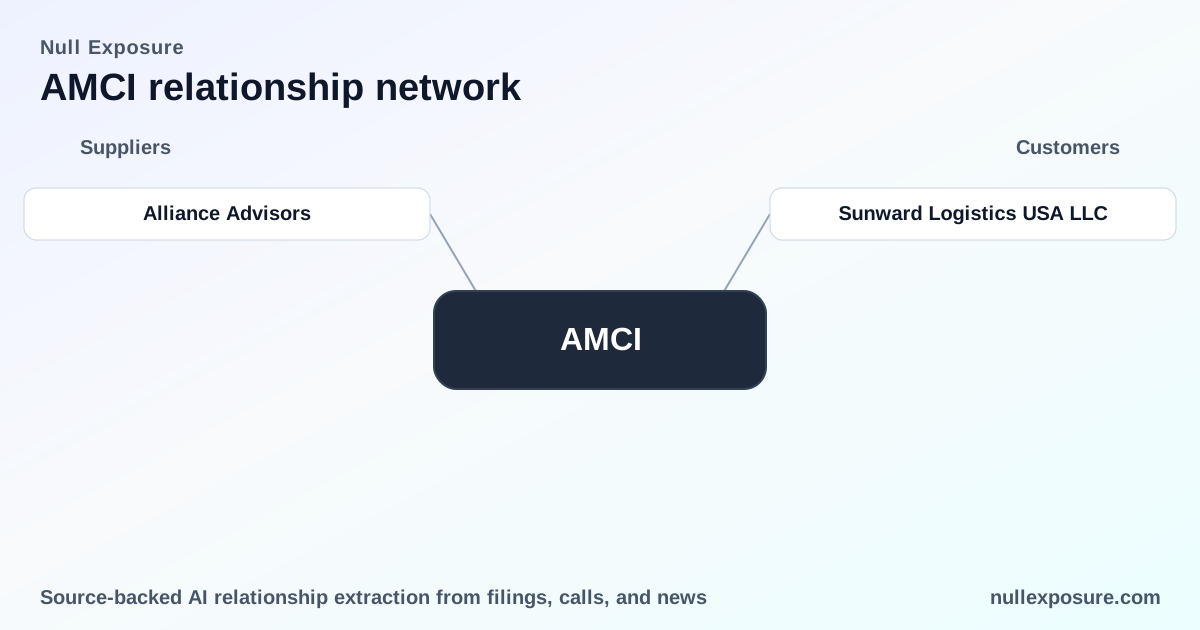
- Alliance Advisors — Alliance Advisors is listed as the investor and media contact for AMCI’s robotics business, with Craig Mychajluk named as Managing Director – Investor Relations and an AMCRoboticsIR email provided; this role positions Alliance Advisors as the external IR and communications vendor for public and media engagement. Sources: Business Insider markets report (Mar 9, 2026) and an identical StockTitan repost (Mar 9, 2026).
(These two press items repeat the same contact information and confirm Alliance Advisors’ role in investor and media outreach.)
What the disclosures and constraints tell investors about supplier risk
The company’s public disclosures and extracted constraints reveal a consistent pattern of short-duration financing and subscription-style administrative relationships. These constraints form the backbone of AMCI’s supplier risk profile:
-
Short-term borrowing posture. Company disclosures show a promissory note issued March 12, 2024 that permitted borrowing up to $400,000 with a maturity six months later, and an outstanding balance of $287,046 as of December 31, 2024. This establishes a near-term refinancing cadence for liquidity planning and indicates that working capital gaps are handled with short-dated credit facilities. (Company filings, March–December 2024.)
-
Subscription administrative services to a sponsor affiliate. AMCI agreed to pay TenX Global Capital LP a monthly fee of $10,000 for office space, utilities, and secretarial/administrative support; the company recorded $120,000 of such fees for the year ended December 31, 2024. This is a recurring, predictable cost line and indicates operational dependence on sponsor-affiliated services rather than on long-term vendor contracts. (Company disclosures.)
-
Service-provider relationship posture. The filings describe an administrative services agreement executed December 22, 2022 under which the sponsor provides general and administrative services. That relationship positions the sponsor (and its affiliates) as critical vendors for day-to-day operations rather than distant, replaceable contractors. (Company disclosures.)
-
Active relationships with measured spend. The relationship stage is documented as active and spend bands fall in the $100k–$1m and $1m–$10m ranges for specific items (administrative fees and underwriting discounts, respectively). The underwriting cash discount totaled $1,725,000 upon IPO closing, evidencing a material one-time fee layered on smaller recurring administrative spend. (Company filings, underwriting disclosures.)
Taken together: short-term financing + recurring sponsor-sourced admin fees + meaningful one-time underwriting costs define the supplier risk landscape. These elements create predictable near-term cash outflows but also concentration risk tied to the sponsor / TenX affiliate.
Investment implications and operational risks to model
-
Counterparty concentration is elevated. A sponsor-affiliated administrative arrangement creates single-source exposure for office and support services; any dispute or termination would require rapid vendor substitution and likely elevated costs. Model contingency scenarios with a replacement-cost premium for administrative services.
-
Liquidity sensitivity to refinancing events. Short-dated promissory notes and outstanding balances mean liquidity is sensitive to capital markets and the timing of any business combination or IPO-related proceeds. Stress-test balance-sheet models for a delayed financing event and elevated short-term borrowing rates.
-
Predictable recurring cost base. The $10k/month administrative fee gives financial modelers a stable overhead line to include in 12-month rolling forecasts; the $120k run-rate should be treated as committed operating cash outflow while the agreement is in effect.
-
One-time capital market fees are material. The underwriting discount of $1.725M is a material IPO-related charge and reduces net proceeds; include similar issuance costs when modeling equity raises or public listings.
-
Supplier maturity is low-to-moderate. Supplier relationships are active but not long-termed—they combine short financing arrangements and subscription administrative contracts rather than multi-year outsourced service agreements. This lowers long-run stickiness but raises near-term operational execution risk.
How operators and procurement teams should act
- Negotiate transition terms and documentation with sponsor-affiliated providers to reduce single-source risk and secure defined notice/transfer provisions for office and admin services.
- Build liquidity cushions equal to short-term borrowings plus three months of subscription fees to mitigate refinancing timing risk.
- Factor underwriting and one-time transaction fees into capital raise models and adjust equity expectations accordingly.
If you want a structured vendor-risk brief or to benchmark AMCI’s supplier posture against peers, start with a supplier scorecard and procurement-led transition clauses — more on this at https://nullexposure.com/.
Bottom line and next steps
AMCI’s supplier profile is defined by short-term financing and subscription-based administrative support from sponsor-related parties, creating predictable operating costs but concentrated counterparty exposure and refinancing sensitivity. For investors and operators, the priority is to price in liquidity timing risk and sponsor concentration while tracking IR and communications partners like Alliance Advisors for public-market signaling.
For a deeper supplier-risk comparison across robotics and security suppliers, visit https://nullexposure.com/ and request a tailored vendor assessment.